




Menu

Hidden Moisture Detection in Kansas City – Expert Tools That Find Water Before It Destroys Your Home

Our advanced infrared cameras, moisture meters, and hygrometers locate trapped water behind walls, under floors, and in ceilings that standard inspections miss, preventing mold growth and structural damage throughout the Kansas City metro.

Slider Image 1
Slider Image 2
Slider Image 3
Slider Image 4
Slider Image 5
Slider Image 7
Slider Image 8
Slider Image 9
Slider Image 10
Slider Image 11

Why Kansas City Homes Hide Water Damage So Effectively

You smell something musty in your basement. Your ceiling has a faint discoloration. Your hardwood floors buckle in one corner. These are not small problems. They are symptoms of hidden moisture that has been destroying your home for weeks or months.

Kansas City's dramatic temperature swings create the perfect storm for concealed water damage. Summer humidity pushes 80 percent while winter plunges below freezing. This freeze-thaw cycle drives moisture deep into foundation cracks common in our expansive clay soil. Water seeps behind brick veneer on historic homes in neighborhoods like Hyde Park and Brookside. It pools under crawl spaces in ranch-style properties throughout Overland Park and Lenexa.

The problem is simple. By the time you see visible water stains, the actual damage extends far beyond what your eyes can detect. Drywall wicks moisture vertically and horizontally. Insulation absorbs water like a sponge and holds it against wooden studs. Subfloors trap water between layers where air cannot reach it.

Detecting invisible leaks requires technology, not guesswork. Your standard home inspection will not find water trapped inside wall cavities. A visual check will not reveal dampness concealed beneath vinyl flooring or behind shower tile. Identifying unseen water intrusion means using thermal imaging to map temperature differentials that indicate moisture. It means inserting probe meters into materials to measure saturation levels you cannot see or touch.

The longer hidden moisture sits, the more it costs you. Mold colonies establish in 24 to 48 hours. Wood rot begins degrading structural framing. The question is not whether you have hidden water damage. The question is how much damage has already occurred while the water stayed invisible.

Why Kansas City Homes Hide Water Damage So Effectively
How We Locate Water Others Cannot See

How We Locate Water Others Cannot See

Finding trapped water requires a systematic approach that combines multiple detection technologies. We do not rely on one tool or one method. We cross-reference data from infrared cameras, pin-type and non-invasive moisture meters, thermal hygrometers, and borescope cameras to build a complete moisture map of your property.

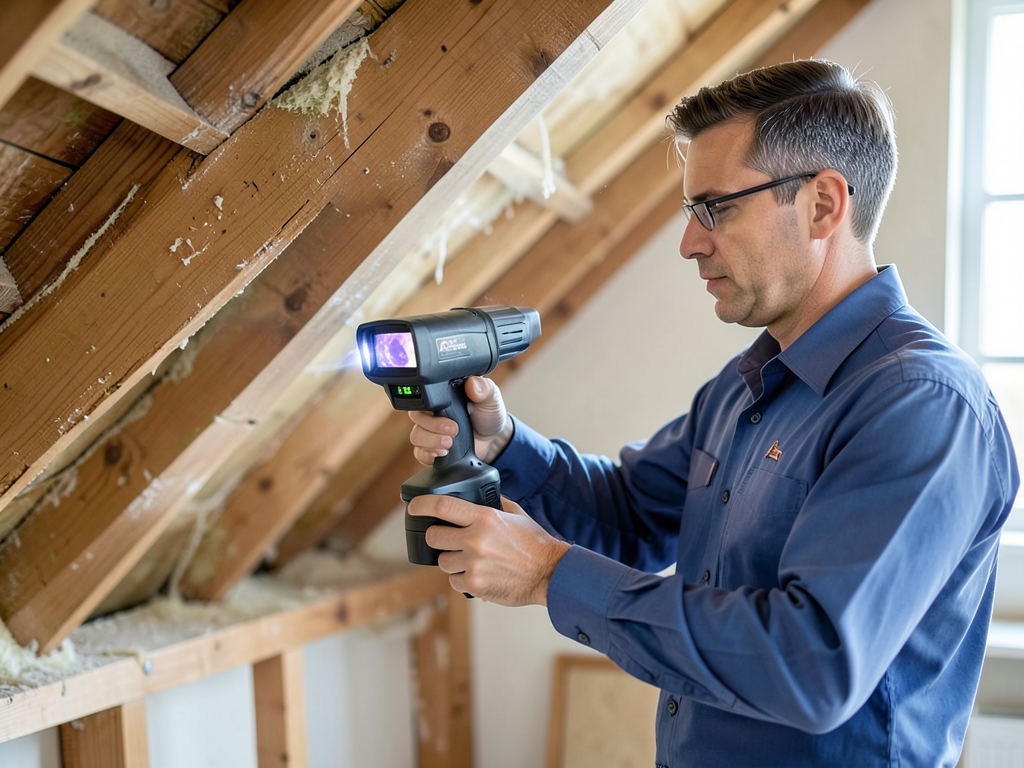
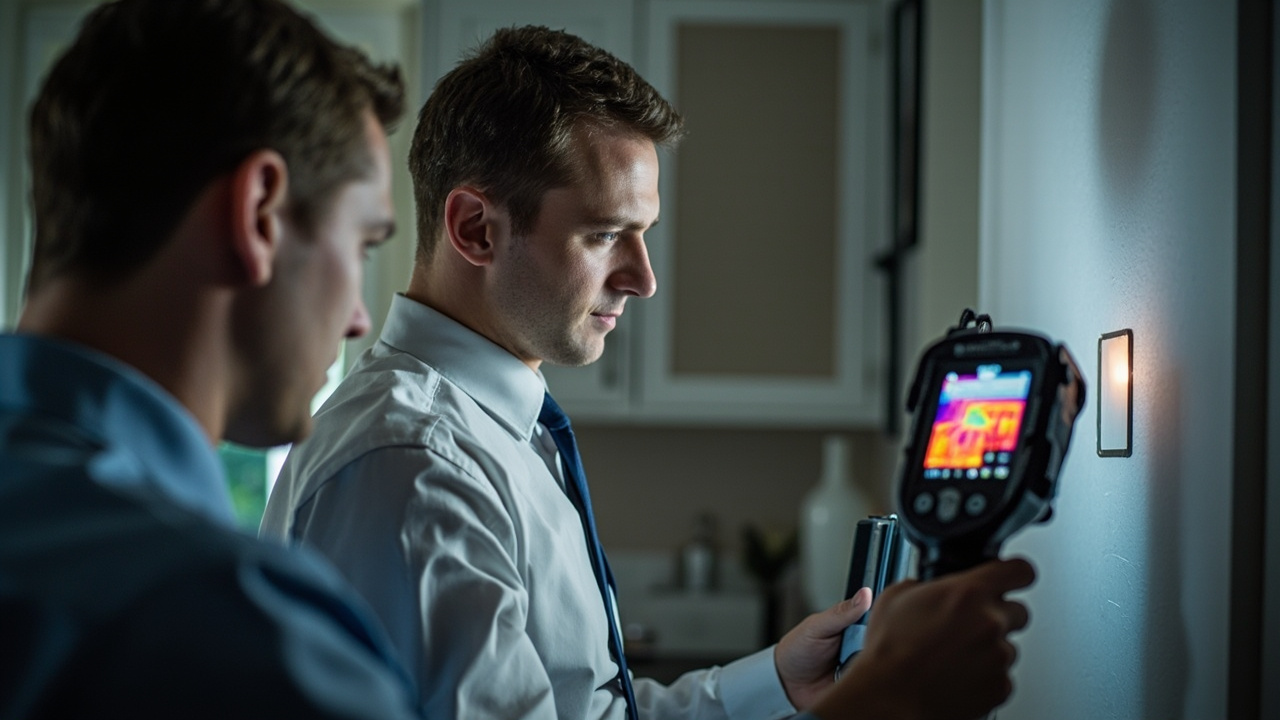
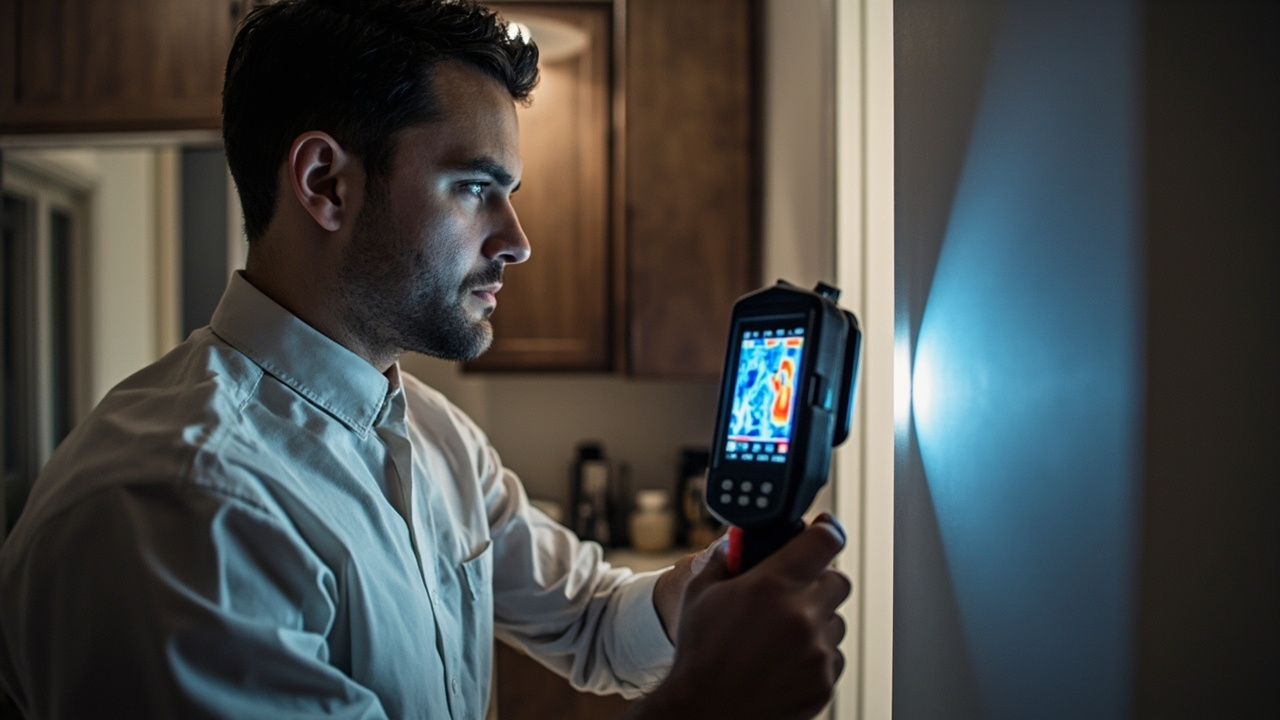
Our infrared thermal imaging cameras detect temperature variations as small as 0.1 degrees Fahrenheit. Wet materials conduct heat differently than dry materials. This creates thermal signatures that show us exactly where moisture hides behind drywall, under tile, or within insulation. We scan entire rooms in minutes, identifying problem areas that would take hours to find through destructive investigation.

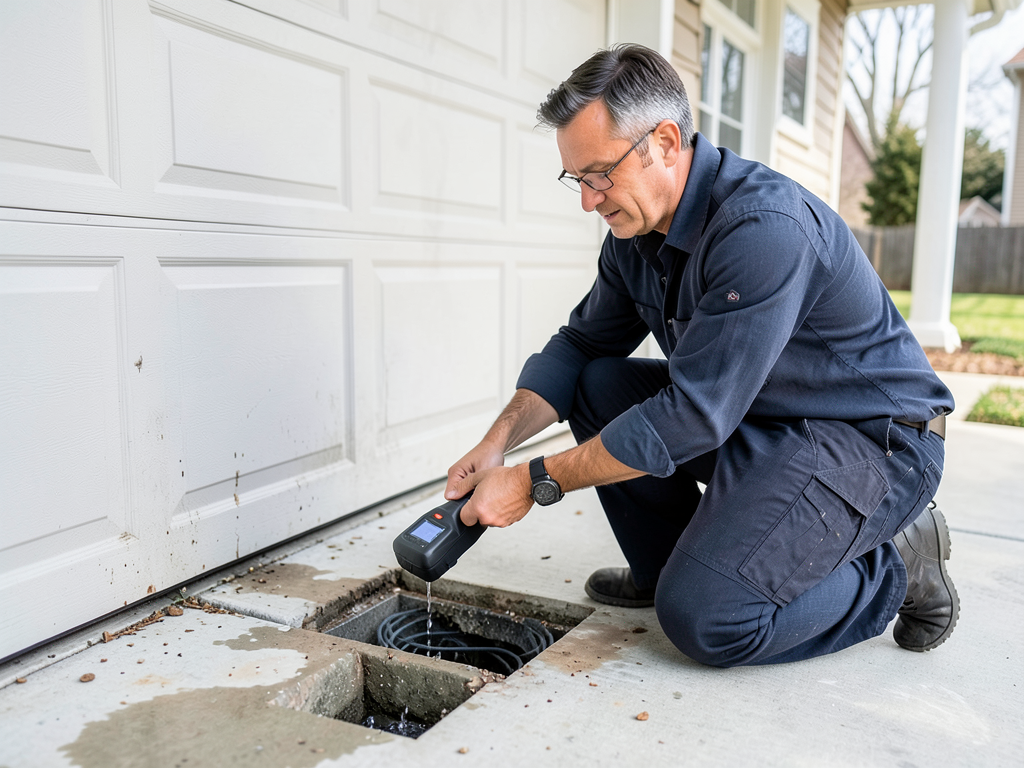
Pin-type moisture meters use electrical resistance to measure water content in wood, drywall, and concrete. We insert probes directly into materials to get precise saturation readings. Non-invasive meters use electromagnetic waves to scan surfaces without creating holes. This combination lets us verify thermal findings with quantifiable moisture data.

Locating concealed dampness often means investigating areas you cannot access visually. We use borescope inspection cameras with articulating heads to see inside wall cavities, above ceilings, and under floors without major demolition. A small access hole gives us a complete view of what is happening inside your home's hidden spaces.

We document everything with moisture mapping software. You get a digital floor plan showing exact moisture readings at specific locations. This is not a verbal report or handwritten notes. You see color-coded maps that show dry areas in green, elevated moisture in yellow, and wet materials in red. This documentation is critical for insurance claims and restoration planning.

Our detection process identifies not just where water is, but where it came from. Spotting hidden water damage means nothing if we cannot stop the source. We trace moisture patterns back to failed plumbing, roof leaks, foundation seepage, or HVAC condensation issues.

What Happens During Your Moisture Detection Inspection

Hidden Moisture Detection in Kansas City – Expert Tools That Find Water Before It Destroys Your Home
01

Initial Assessment and Interview

We start by walking your property with you and documenting your concerns. You show us the musty smell, the stain, the buckled floor. We ask about your home's age, recent weather events, plumbing history, and HVAC performance. This conversation gives us context that guides our scanning strategy. We identify high-risk areas based on Kansas City construction methods and your home's specific vulnerabilities before we deploy any equipment.
02

Comprehensive Multi-Tool Scanning

We conduct thermal imaging of all suspected areas plus adjacent spaces where water commonly migrates. Our technicians take baseline readings in dry control areas, then systematically scan walls, ceilings, and floors. We verify thermal anomalies with direct moisture meter readings. If we detect elevated moisture, we use borescope cameras to visually confirm water presence and assess damage severity. This phase typically takes one to three hours depending on your property size and complexity.
03

Documentation and Action Plan

You receive a detailed moisture report with thermal images, meter readings, and photographs showing affected areas. We explain our findings in plain language and outline the source of water intrusion. Your report includes prioritized recommendations for water extraction, structural drying, and source repair. We provide this documentation in formats your insurance company requires. You know exactly what needs to happen next, what it involves, and why each step matters for protecting your property.

Why Kansas City Property Owners Choose Our Detection Services

Kansas City homes face moisture challenges that require local expertise. We have mapped water intrusion patterns in hundreds of properties from Westport bungalows to Leawood estates. We understand how water behaves in pier and beam foundations common in older urban neighborhoods. We know the weak points in walkout basements typical of Johnson County subdivisions built into sloping terrain.

Your home inspector uses a handheld meter and makes educated guesses. We use commercial-grade FLIR thermal cameras calibrated specifically for building diagnostics. Our moisture meters are manufacturer-certified and regularly tested for accuracy. This is not a side service we offer. This is our primary expertise.

A Plus Water Damage Restoration Kansas City has worked with every major insurance carrier operating in the metro. We know what documentation State Farm requires versus Farmers versus USAA. Our reports meet adjuster standards for proof of loss. This matters when you are fighting for coverage or justifying claim amounts.

We respond to your moisture concerns within hours, not days. Hidden water damage accelerates exponentially. The difference between catching trapped moisture at 72 hours versus 7 days can mean the difference between drying your home and rebuilding sections of it. Our detection trucks carry full scanning equipment ready to deploy immediately.

Our technicians hold IICRC certifications in water damage restoration and applied structural drying. This means we do not just find moisture. We understand building science, psychrometrics, and material behavior. We know how water migrates through the specific construction methods used in Kansas City homes built in the 1920s versus the 1990s.

You also get honest assessments. If your moisture readings fall within normal ranges for Kansas City's climate, we tell you. We do not manufacture problems to generate restoration work. Our detection service exists to give you facts, not fear.

What You Can Expect from Our Detection Process

Rapid Response Availability

We dispatch technicians to Kansas City properties seven days per week. Most customers receive same-day or next-day appointments for moisture detection services. Emergency inspections for active water intrusion happen within two to four hours of your call. Our scanning equipment stays loaded in service vehicles so we arrive ready to work. You do not wait days wondering how bad your hidden moisture problem has become. We prioritize detection speed because water damage costs compound with every passing hour. Standard inspections take one to three hours depending on property size and complexity.

Thorough Diagnostic Assessment

Your moisture inspection covers all areas of concern plus adjacent spaces where water commonly spreads. We scan visible problem areas, then expand our investigation to trace moisture to its source. Our technicians check behind baseboards, above ceiling tiles, inside closets, and under sinks. We test materials at multiple depths to determine saturation levels throughout wall assemblies and flooring systems. You receive moisture content readings, thermal images showing temperature differentials, and photographs documenting visible damage. Our assessment identifies not just moisture location but probable cause, whether that is plumbing failure, roof leaks, condensation issues, or foundation seepage.

Actionable Results and Clarity

You get a written report with clear findings and specific recommendations. Your documentation includes color-coded moisture maps showing exactly which areas exceed safe thresholds. We explain what the readings mean for your property and what happens if moisture remains untreated. Our reports categorize moisture as Class 1 through Class 4 based on saturation levels and affected materials. This classification determines the scope of drying required. You receive cost factors for remediation without pressure or sales tactics. Our detection service provides information you need to make informed decisions about your property's health and your family's safety.

Follow-Up Verification Scanning

If you proceed with water extraction and structural drying, we perform daily moisture monitoring until materials return to dry standards. This is not optional. Professional drying requires documented proof that moisture levels have dropped to acceptable ranges. We track drying progress with the same thermal imaging and meter readings used in initial detection. You receive updated reports showing moisture reduction over time. Final clearance happens when three consecutive readings confirm materials have reached equilibrium moisture content for Kansas City's climate. This verification protects you from mold growth and ensures restoration work can proceed safely on truly dry materials.

Frequently Asked Questions

You Have Questions,
We Have Answers

Why does my phone say moisture detected when there is no moisture? +

Your phone detects moisture through sensors in the charging port. False positives happen when lint, dirt, or corrosion builds up inside the port. High humidity in Kansas City, especially during summer months, can trigger the sensor even without direct water contact. Clean the port gently with a dry toothbrush or compressed air. Let the phone sit in a dry room for 30 minutes. If the warning persists after cleaning, the sensor may be damaged or you have hidden moisture in the device that needs professional attention before it causes permanent damage.

Do moisture detectors really work? +

Yes, professional moisture detectors work when used correctly. Pin-type meters measure electrical resistance between two probes inserted into materials. Pinless meters use electromagnetic signals to scan below surfaces without damage. Both types accurately detect elevated moisture levels in walls, floors, and ceilings. However, cheap consumer models often give false readings. Professional restoration technicians in Kansas City use calibrated, commercial-grade equipment with multiple sensor types to verify readings. The key is knowing how to interpret results based on material type, temperature, and baseline moisture content for accurate diagnosis.

How to find out where moisture is coming from? +

Start by checking obvious sources like plumbing leaks, roof damage, or foundation cracks. Look for visual clues such as water stains, peeling paint, or warped flooring. In Kansas City homes, check basement walls after heavy rain and inspect attic spaces for roof leaks. Use a moisture meter to scan walls and floors near suspect areas. Track humidity levels with a hygrometer. If you cannot locate the source, call a professional with thermal imaging cameras and advanced moisture detection equipment to scan hidden areas behind walls and under floors.

What do home inspectors use to detect moisture? +

Home inspectors use moisture meters as their primary tool. Most carry both pin-type meters for direct material testing and pinless scanners for non-invasive surface scanning. Many also use infrared thermal cameras to identify temperature differences that indicate hidden moisture. In Kansas City, inspectors check basements carefully for groundwater intrusion and foundation moisture. They test around windows, under sinks, near HVAC systems, and in attics. Professional inspectors document readings and compare them against acceptable moisture ranges for different building materials to identify problem areas requiring further investigation.

How do I bypass the moisture detection? +

Do not bypass moisture detection warnings on phones or devices. The warning protects your electronics from short circuits and permanent damage. Charging a wet device can destroy internal components. If you need immediate charging, dry the port thoroughly with compressed air, place the device in front of a fan for 30 minutes, and only use wireless charging if available. For building moisture detection systems, bypassing sensors masks serious problems like water damage, mold growth, or structural issues. Address the moisture source instead of ignoring the warning signal.

Will the moisture detection go away on its own? +

Moisture detection warnings rarely resolve on their own. If your phone shows the warning, the port needs complete drying, which takes several hours in low-humidity conditions. Kansas City summer humidity slows evaporation significantly. For building materials, moisture does not disappear without addressing the source. Water trapped in walls, insulation, or subflooring can take weeks to dry naturally and often causes mold growth within 24 to 48 hours. Active drying with dehumidifiers and air movers is necessary. Waiting for moisture to dry on its own usually makes damage worse and more expensive to fix.

How does moisture detection work? +

Moisture detection uses different technologies based on the device. Pin-type meters send an electrical current between two probes. Water conducts electricity, so wet materials show lower resistance. Pinless meters emit electromagnetic signals that penetrate surfaces and measure moisture density without causing damage. Thermal imaging cameras detect temperature variations caused by evaporating moisture or wet insulation. Hygrometers measure relative humidity in the air. Professional restoration teams in Kansas City combine multiple detection methods to map moisture patterns, identify hidden water damage, and verify that affected areas are completely dry after restoration.

How accurate are moisture sensors? +

Professional-grade moisture sensors are highly accurate when calibrated properly and used on appropriate materials. Pin meters typically show accuracy within 1 to 2 percent for wood moisture content. Pinless scanners work well on flat surfaces but may miss moisture in irregular spaces. Accuracy depends on operator training, material density, and environmental factors. Cheap consumer models often give unreliable readings. In Kansas City restoration work, technicians verify readings with multiple tools and account for seasonal humidity variations. The sensor is only as accurate as the person interpreting the data and understanding material-specific moisture characteristics.

How reliable are moisture detectors? +

Professional moisture detectors are reliable tools when used correctly. Commercial-grade equipment undergoes regular calibration to maintain accuracy. Reliability depends on the technology type, maintenance schedule, and user expertise. Pin meters provide direct material readings but only test small areas. Pinless scanners cover larger areas but can be affected by metal or thick materials. Thermal cameras show moisture patterns but require interpretation. Kansas City restoration professionals use multiple detector types to cross-reference findings and eliminate false positives. Reliable moisture detection requires quality equipment, proper training, and understanding of building materials and local environmental conditions.

How to test if a room is damp? +

Check for condensation on windows, musty odors, or visible mold spots. Feel walls and carpets for dampness. Place a hygrometer in the room to measure relative humidity. Levels above 60 percent indicate excess moisture. Tape a plastic sheet to the wall overnight. If water droplets form underneath, moisture is coming through the surface. Look for water stains on ceilings or discoloration on baseboards. In Kansas City basements, check for efflorescence (white powder) on concrete walls, which signals moisture intrusion. Professional moisture meters provide exact readings to confirm your suspicions and locate hidden dampness.

How Kansas City's Clay Soil and Humidity Make Hidden Moisture Detection Critical

Kansas City sits on expansive clay soil that shrinks during dry periods and swells when saturated. This constant movement creates foundation cracks and shifts that allow water to enter basements and crawl spaces through routes that change seasonally. Summer humidity averages 70 to 80 percent, which means moisture vapor constantly pushes through foundation walls and condenses inside cooler interior spaces. Our temperature extremes, ranging from below zero in January to above 100 in July, create condensation on pipes, ducts, and window frames that drip into wall cavities where it accumulates unnoticed. These local conditions make identifying unseen water intrusion essential for protecting your investment. What starts as minor seepage becomes major structural damage within one Kansas City summer.

Our team has worked throughout Jackson County, Johnson County, Clay County, and Platte County. We understand the construction differences between historic homes in the Crossroads Arts District and newer builds in Liberty and Blue Springs. We know which neighborhoods experience chronic basement seepage and which areas have HVAC condensation problems from undersized systems fighting our humidity. Local building inspectors recognize our reports because we follow the same moisture assessment protocols they use for code compliance. This local expertise means faster, more accurate detection and better insurance claim support. When you hire Kansas City specialists for spotting hidden water damage, you get technicians who have seen your exact problem in dozens of similar properties.
Water Damage Restoration Services in The Kansas City Area

While we provide rapid mobile service throughout the entire Kansas City area, you can also view our general service area on the map. We are dedicated to being a local, accessible resource for all your water damage restoration needs, whether you're in the heart of the city or a surrounding community. Our team is always just a phone call away, ready to assist you with expertise and care, no matter where you are located within our service area.

Address:
A Plus Water Damage Restoration Kansas City, 1020 E Armour Blvd, Kansas City, MO, 64109

Additional Services We Offer

Our news updates

Latest Articles & News from The Blogs

How the hard water in Edwardsville is secretly shortening the life of your plumbing and appliances Hard water is more…

How the hard water in Edwardsville is secretly shortening the life of your plumbing and appliances

How the hard water in Edwardsville is secretly shortening the life of your plumbing and appliances Hard water is more…

How to protect your Weatherby Lake home from major water damage while you are away for the winter

How to protect your Weatherby Lake home from major water damage while you are away for the winter Winterizing your…

What every first-time buyer in Raymore needs to check for water damage before closing the deal

What every first-time buyer in Raymore needs to check for water damage before closing the deal Buying your first home…

Contact Us

Call A Plus Water Damage Restoration Kansas City now at (816) 473-3833 for professional moisture detection. We respond fast with the technology to find water you cannot see. Do not wait for visible damage to force your hand. Get answers today.