


Menu

Business Interruption Mitigation in Kansas City – Industrial-Grade Water Damage Response That Keeps Your Business Running

Our rapid-deployment commercial restoration teams minimize operational downtime with 24/7 emergency response, immediate water extraction, and phased restoration plans designed specifically for Kansas City businesses facing water damage events.

Slider Image 1
Slider Image 2
Slider Image 3
Slider Image 4
Slider Image 5
Slider Image 7
Slider Image 8
Slider Image 9
Slider Image 10
Slider Image 11

Water Damage Can Shut Down Your Kansas City Business in Hours

Every hour your business stays closed after a water damage event costs you revenue, client trust, and competitive position. In Kansas City, where freeze-thaw cycles routinely rupture commercial water lines and summer thunderstorms dump inches of rain in minutes, water damage does not wait for convenient timing.

The reality is stark. A flooded warehouse means halted inventory movement. A soaked office space means displaced staff and lost productivity. A waterlogged retail floor means closed registers and turned-away customers. For businesses operating in older structures throughout the Crossroads Arts District or renovated spaces in River Market, aging plumbing infrastructure and outdated drainage systems compound the risk.

Kansas City's clay soil creates another layer of vulnerability. Heavy rains cause soil expansion that shifts building foundations, cracking basement walls and creating new water entry points. Commercial properties in low-lying areas near the Missouri River face additional flood risk during spring runoff periods.

Business continuity restoration begins the moment water enters your facility. Delaying extraction by even 12 hours allows water to penetrate subfloors, saturate drywall cavities, and compromise electrical systems. Secondary damage escalates exponentially. Mold colonization begins within 24 to 48 hours in Kansas City's humid climate, triggering health code violations and extending your closure timeline.

The question is not whether water damage will disrupt your operations. The question is how fast you can mobilize a response that limits business disruption and returns your facility to full operational status. Minimizing business downtime requires immediate action, industrial-grade equipment, and a restoration partner who understands commercial liability.

Water Damage Can Shut Down Your Kansas City Business in Hours
Our Commercial Water Damage Protocol Prioritizes Revenue Protection

Our Commercial Water Damage Protocol Prioritizes Revenue Protection

Business interruption mitigation is not residential water cleanup scaled up. Commercial properties demand different protocols, different equipment capacities, and different liability considerations. Our approach focuses on phased restoration that allows partial business continuity while we work.

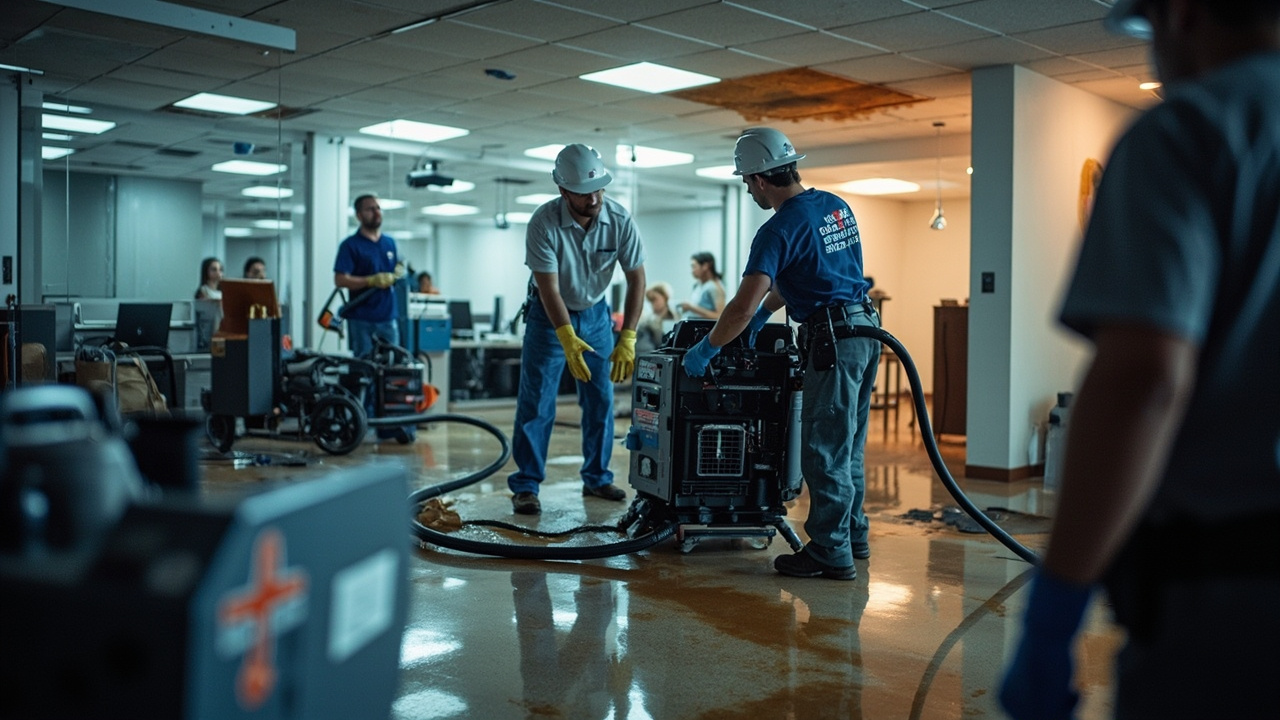
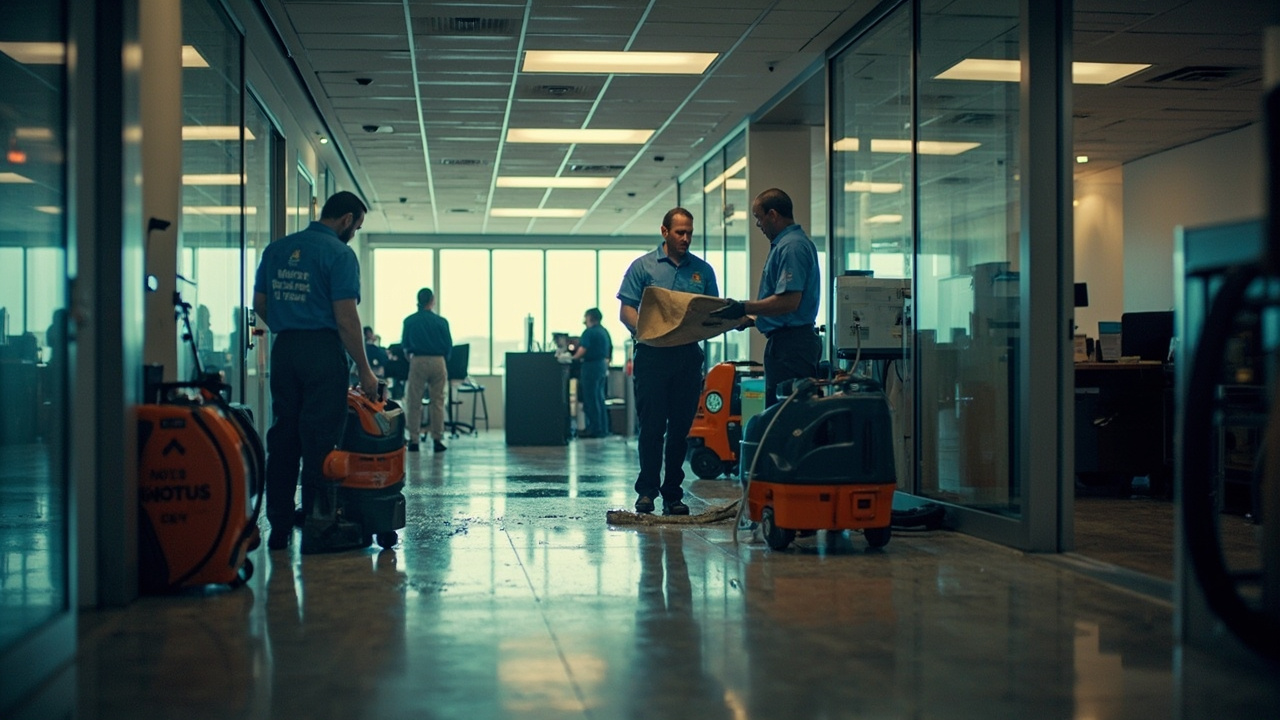
We deploy truck-mounted extractors capable of removing thousands of gallons per hour, not portable shop vacs. Our industrial desiccant dehumidifiers process air volumes measured in cubic feet per minute, drying entire warehouse bays simultaneously. For multi-story office buildings, we stage equipment vertically to address water migration through floor assemblies and ceiling plenums.

The critical difference is operational zoning. We assess which areas of your facility can remain functional during restoration. Server rooms get priority containment and climate control. Customer-facing spaces receive expedited drying and sanitization. Back-office areas follow a scheduled rotation that maintains minimum staffing capacity.

We coordinate directly with your property manager, IT department, and insurance adjuster to align restoration timelines with business needs. This means night shifts when your facility is closed. Weekend crews that complete noisy demolition work outside business hours. Temporary power routing that keeps essential systems online while we address electrical damage.

For Kansas City businesses subject to health department oversight, we document every step with photographic evidence and moisture readings that satisfy regulatory requirements. Restaurants need proof of sanitization before reopening. Medical offices require air quality testing. Retail spaces must meet ADA accessibility standards throughout the restoration process.

Reducing operational downtime means understanding that your business cannot afford to wait three weeks for traditional sequential restoration. We run parallel processes, compress timelines, and maintain communication protocols that keep you informed without requiring constant oversight. You focus on managing your displaced operations. We focus on returning your facility to code-compliant, fully functional status.

How We Execute Commercial Water Damage Response

Business Interruption Mitigation in Kansas City – Industrial-Grade Water Damage Response That Keeps Your Business Running
01

Emergency Assessment and Containment

Our project manager arrives within two hours of your call to map affected zones, identify the water source, and establish containment barriers. We isolate damaged areas with poly sheeting and negative air pressure to prevent cross-contamination. You receive a preliminary loss assessment with photographic documentation before any equipment deployment. This initial evaluation determines which business functions can continue operating during restoration and which require temporary relocation.
02

Extraction and Structural Drying

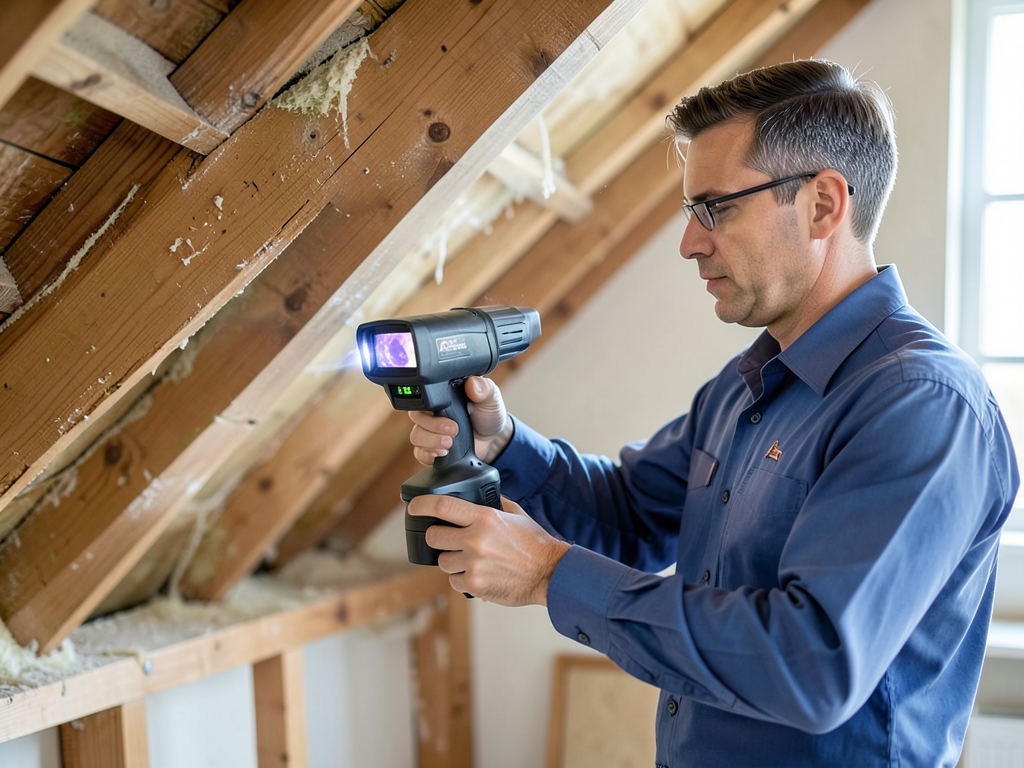
We position truck-mounted extractors and high-capacity air movers based on building layout and water migration patterns. Thermal imaging cameras identify hidden moisture in wall cavities and under flooring systems. Our technicians monitor moisture content using pin-type and non-invasive meters, adjusting equipment placement every 12 hours. Commercial-grade desiccant dehumidifiers run continuously until materials reach equilibrium moisture content, typically seven to ten days depending on saturation levels and building materials.
03

Rebuild and Operational Handoff

Once structural drying confirms moisture levels within acceptable ranges, we begin controlled demolition of unsalvageable materials and coordinate rebuild timelines with your operational calendar. Antimicrobial treatment precedes all reconstruction work. We replace damaged drywall, flooring, and ceiling tiles to match existing finishes. Final walkthrough includes air quality testing, moisture verification, and documentation package for your insurance carrier. You receive written clearance confirming your facility meets occupancy standards before we demobilize equipment.

Why Kansas City Businesses Trust Our Commercial Restoration Experience

Commercial water damage in Kansas City carries unique complications that residential-focused contractors cannot handle. We work regularly with property management firms overseeing multi-tenant buildings in the Power and Light District, industrial facilities along the Berkley Riverfront, and historic commercial structures throughout Westport. This experience matters when you face building code requirements specific to Kansas City's 2018 International Building Code adoption with local amendments.

Your business operates under regulatory oversight that residential properties do not face. Health departments, fire marshals, and occupancy inspectors require documentation that proves your facility meets safety standards before reopening. We maintain relationships with Kansas City code enforcement officials and understand which restoration approaches satisfy inspection requirements without unnecessary delays.

Our commercial equipment inventory exceeds most restoration companies operating in the Kansas City metro. We own our truck-mounted extractors, trailer-mounted generators, and industrial dehumidification units. This means no equipment rental delays when you need immediate deployment. For large-loss events affecting 10,000 square feet or more, we can mobilize multiple crews and equipment packages within hours.

Insurance claims for commercial water damage involve different coverage structures than residential policies. Business interruption coverage, extra expense provisions, and liability considerations require precise documentation. We provide moisture mapping, photographic progression records, and detailed equipment logs that support your claim submission. Our project managers communicate directly with commercial adjusters who expect professional reporting standards.

Local expertise extends beyond technical capability. We understand that a restaurant in the Crossroads cannot afford a two-week closure during wedding season. A law firm in the Financial District cannot relocate case files to off-site storage without security protocols. A medical clinic in Waldo needs HIPAA-compliant data protection during restoration work. These operational realities shape our project planning and determine our success in mitigating commercial downtime for Kansas City businesses.

What Your Business Can Expect During Commercial Water Damage Restoration

Response Time and Crew Deployment

We dispatch assessment teams 24 hours per day, seven days per week, including holidays. Our project manager arrives within two hours for Kansas City locations. Emergency water extraction begins immediately upon authorization, often within three to four hours of your initial call. For after-hours events, we coordinate building access with your security protocols and provide arrival time estimates via text message. Large commercial losses receive multiple crew assignments to compress the initial extraction timeline. You will not wait until the next business day for response.

Initial Loss Assessment Process

Our assessment documents affected square footage, water category classification, and structural material types. We identify immediate safety hazards including electrical risks, structural instability, and slip hazards. Thermal imaging reveals hidden moisture in wall assemblies and ceiling plenums. You receive a preliminary scope of work with projected timelines before equipment deployment. This assessment includes recommendations for which business functions can continue operating in unaffected areas and which require temporary shutdown. We photograph all damaged areas and create floor plans marking moisture zones for insurance documentation.

Restoration Quality and Code Compliance

All reconstruction work meets Kansas City building code requirements and matches existing finishes. We source commercial-grade materials designed for high-traffic business environments, not residential products. Flooring replacements use moisture-resistant underlayment systems. Drywall installation includes mold-resistant backing in areas prone to humidity. Electrical work is performed by licensed electricians who pull permits when code requires. Final testing includes moisture verification using ANSI/IICRC S500 standards, air quality sampling for mold spore counts, and photographic documentation showing completed work. You receive written certification that your facility meets occupancy standards.

Post-Restoration Monitoring and Support

We schedule follow-up moisture checks at 30 and 60 days post-restoration to verify building materials remain within normal ranges. This monitoring catches potential issues before they become visible problems. You receive our project manager's direct contact information for any questions arising after project completion. Our documentation package includes all moisture readings, equipment logs, and photographic evidence needed for insurance closeout. If your facility experiences related issues within 90 days, we return for evaluation at no additional assessment charge. This post-restoration support ensures your business remains operational without recurring water damage concerns.

Frequently Asked Questions

You Have Questions,
We Have Answers

What does business interruption coverage cover? +

Business interruption coverage pays for lost income and ongoing expenses when a covered peril forces you to close or reduce operations. This includes net profit you would have earned, fixed costs like rent and utilities, payroll for key employees, and temporary relocation expenses. Coverage activates after a direct physical loss, such as fire or water damage, and continues during restoration. In Kansas City, many policies also cover income loss from civil authority shutdowns following nearby disasters. This coverage does not include losses from pandemics, cyber incidents, or pre-existing maintenance issues unless specifically endorsed.

What is mitigation in business? +

Mitigation in business means taking proactive steps to reduce the severity or likelihood of operational disruptions. This includes identifying vulnerabilities in your supply chain, infrastructure, and processes, then implementing controls to minimize impact. For Kansas City businesses, mitigation addresses risks like severe weather, equipment failure, and supplier dependencies. Effective mitigation reduces downtime, protects revenue, and demonstrates due diligence to insurers and stakeholders. It involves both prevention, such as installing backup power systems, and response planning, such as establishing vendor redundancies. Mitigation is risk management translated into action before a crisis occurs.

What actions can be taken to reduce or mitigate business risks? +

Reduce business risks through systematic planning and infrastructure hardening. Conduct risk assessments to identify your most critical vulnerabilities. Implement redundant systems for power, data, and supply chains. Establish vendor diversification to prevent single points of failure. Train staff on emergency protocols and cross-train key roles. Maintain updated business continuity plans and test them annually. In Kansas City, account for regional hazards like tornadoes, ice storms, and Missouri River flooding. Secure adequate insurance coverage and document assets thoroughly. Regular maintenance of HVAC, plumbing, and roofing prevents failures that cascade into business interruptions. Action precedes protection.

What does business interuption insurance cover? +

Business interruption insurance covers lost income and necessary expenses when a covered peril forces operational shutdown. Covered items include net profits, ongoing fixed costs like lease payments and loan obligations, payroll for essential personnel, and costs to operate from a temporary location. Coverage begins after property damage from fire, wind, water, or other named perils. In Kansas City, policies often include extended business income coverage for income loss during the ramp-up period after reopening. The policy does not cover losses from pandemics, cyberattacks, or utility failures unless specifically endorsed. Coverage duration matches your restoration period.

What is not covered under business interruption? +

Business interruption policies exclude losses without direct physical damage. Pandemics, communicable diseases, and government-mandated closures without property damage are not covered. Utility failures off your property, cyberattacks causing system downtime, and voluntary shutdowns for renovations are excluded. Pre-existing maintenance issues, deferred repairs, and losses from lack of customers are not covered. In Kansas City, flood damage requires separate flood insurance, as standard policies exclude rising water. Losses during your waiting period, typically 48 to 72 hours, and fines or penalties are not covered. Read your policy's exclusions section for complete details.

What is the 80% rule in insurance? +

The 80% rule requires you to insure your property for at least 80% of its replacement value to avoid coinsurance penalties. If you underinsure, the carrier reduces your claim payout proportionally. For example, if you insure a $1 million building for only $600,000 when 80% coverage requires $800,000, you become a co-insurer for the shortfall. Your payout gets reduced by 25%, even on partial losses. Kansas City commercial property owners must reassess values annually due to construction cost inflation and building improvements. Accurate valuation protects your claim and prevents financial exposure during recovery.

What are 5 examples of mitigation? +

Five mitigation examples for Kansas City businesses include installing backup generators to maintain operations during power outages, establishing off-site data backup systems to protect critical records, securing multiple suppliers to prevent supply chain disruptions, upgrading building envelopes to meet wind and hail resistance standards, and implementing early warning systems for severe weather. Each action reduces a specific operational vulnerability. Backup generators keep refrigeration and security systems running. Off-site backups protect against ransomware and fire loss. Supplier redundancy prevents production halts. Structural upgrades reduce property damage. Weather alerts enable staff safety and asset protection before storms arrive.

What are the 4 types of mitigation? +

The four types of mitigation are avoidance, reduction, transfer, and acceptance. Avoidance eliminates the risk by discontinuing the vulnerable activity. Reduction lowers the probability or impact through controls like fire suppression systems or flood barriers. Transfer shifts the risk to another party through insurance or outsourcing. Acceptance acknowledges the risk and prepares a response plan when mitigation costs exceed potential losses. Kansas City businesses apply all four types depending on risk severity and cost. A warehouse might avoid tornado risk by relocating, reduce fire risk with sprinklers, transfer flood risk through insurance, and accept minor equipment failures with maintenance budgets.

What is included in mitigation? +

Mitigation includes hazard identification, vulnerability assessment, risk analysis, and implementation of physical and procedural controls. Physical mitigation involves structural upgrades, equipment redundancy, and infrastructure hardening. Procedural mitigation includes emergency response plans, staff training, communication protocols, and vendor agreements. Documentation of assets, processes, and recovery priorities is essential. For Kansas City operations, mitigation must address regional hazards like freeze-thaw cycles affecting plumbing, summer humidity promoting mold growth, and severe storm wind loads. Mitigation also includes financial planning for business interruption, securing credit lines, and maintaining adequate insurance. Comprehensive mitigation protects both operations and balance sheets.

What are the 4 mitigation strategies? +

The four mitigation strategies are structural, non-structural, emergency services, and financial. Structural strategies involve physical modifications like reinforcing buildings, installing flood barriers, or upgrading fire-rated walls. Non-structural strategies include policies, training, and land-use planning. Emergency services strategies establish rapid response capabilities through staff training, equipment staging, and coordination with local first responders. Financial strategies transfer risk through insurance, establish contingency funds, and secure credit facilities. Kansas City businesses must balance all four strategies. A manufacturing facility might harden structures against tornadoes, train staff on evacuation, coordinate with Kansas City Fire Department, and secure business interruption coverage.

How Kansas City's Infrastructure Age Affects Business Interruption Risk

Kansas City's commercial building stock includes significant numbers of structures built between 1920 and 1960, particularly in the River Market, Crossroads, and West Bottoms districts. These older buildings feature cast iron drain lines, galvanized supply piping, and outdated waterproofing systems that fail without warning. When a 70-year-old drain line ruptures inside a wall cavity at 2 AM, the resulting water migration affects multiple tenant spaces before discovery. The combination of aged infrastructure and Kansas City's temperature swings creates elevated risk for commercial property owners. Preventive monitoring cannot eliminate these risks, but rapid response limits the financial impact when failures occur.

Commercial water damage restoration in Kansas City requires familiarity with local building officials who enforce code compliance during rebuild work. The city's 2018 IBC adoption includes local amendments affecting fire-rated assemblies, accessible route maintenance, and egress requirements during construction. Restoration contractors unfamiliar with Kansas City's inspection protocols create permit delays that extend your business closure. We maintain working relationships with inspectors in all Kansas City jurisdictions and structure our project timelines around realistic inspection availability. This local knowledge prevents the permit complications that turn a 10-day restoration into a month-long shutdown.
Water Damage Restoration Services in The Kansas City Area

While we provide rapid mobile service throughout the entire Kansas City area, you can also view our general service area on the map. We are dedicated to being a local, accessible resource for all your water damage restoration needs, whether you're in the heart of the city or a surrounding community. Our team is always just a phone call away, ready to assist you with expertise and care, no matter where you are located within our service area.

Address:
A Plus Water Damage Restoration Kansas City, 1020 E Armour Blvd, Kansas City, MO, 64109

Additional Services We Offer

Our news updates

Latest Articles & News from The Blogs

How the hard water in Edwardsville is secretly shortening the life of your plumbing and appliances Hard water is more…

How the hard water in Edwardsville is secretly shortening the life of your plumbing and appliances

How the hard water in Edwardsville is secretly shortening the life of your plumbing and appliances Hard water is more…

How to protect your Weatherby Lake home from major water damage while you are away for the winter

How to protect your Weatherby Lake home from major water damage while you are away for the winter Winterizing your…

What every first-time buyer in Raymore needs to check for water damage before closing the deal

What every first-time buyer in Raymore needs to check for water damage before closing the deal Buying your first home…

Contact Us

Every hour of delay extends your closure and increases restoration costs. Our commercial response teams deploy immediately to Kansas City businesses facing water damage events. Call (816) 473-3833 now for emergency assessment and same-day extraction. We answer 24/7 because your business cannot afford to wait.