



Menu

Warehouse Flood Restoration in Kansas City | Industrial-Scale Water Removal with Zero Production Downtime

A Plus Water Damage Restoration Kansas City delivers 24/7 industrial flood recovery for warehouses, distribution centers, and fulfillment facilities across the metro. We mobilize extraction teams, commercial-grade desiccant systems, and moisture mapping technology to restore operations before your SLA penalties compound.

Slider Image 1
Slider Image 2
Slider Image 3
Slider Image 4
Slider Image 5
Slider Image 7
Slider Image 8
Slider Image 9
Slider Image 10
Slider Image 11

Kansas City Warehouses Face High Flood Risk from Missouri River Proximity and Outdated Stormwater Systems

Your warehouse sits in a flood-prone corridor. The Missouri River bottlenecks through Kansas City's industrial zones, and when storms hit, aging municipal stormwater systems cannot keep pace. The result is standing water in loading docks, saturated inventory, and contaminated concrete slabs that threaten structural integrity.

A single flood event can halt inbound shipments, delay fulfillment schedules, and trigger insurance claim disputes. Contaminated water introduces mold spores that spread through HVAC ductwork. Concrete subfloors lose load-bearing capacity when moisture wicks into rebar. These are not residential water damage problems. They are industrial-scale liabilities that require commercial flood remediation expertise and equipment.

Kansas City's logistics sector depends on speed. Every hour your warehouse sits idle costs revenue. Standard restoration contractors lack the capacity to handle industrial water damage cleanup at this scale. You need crews who understand forklift traffic patterns, pallet racking weight loads, and the difference between surface drying and structural moisture mitigation. You need warehouse water mitigation that does not shut down operations for weeks.

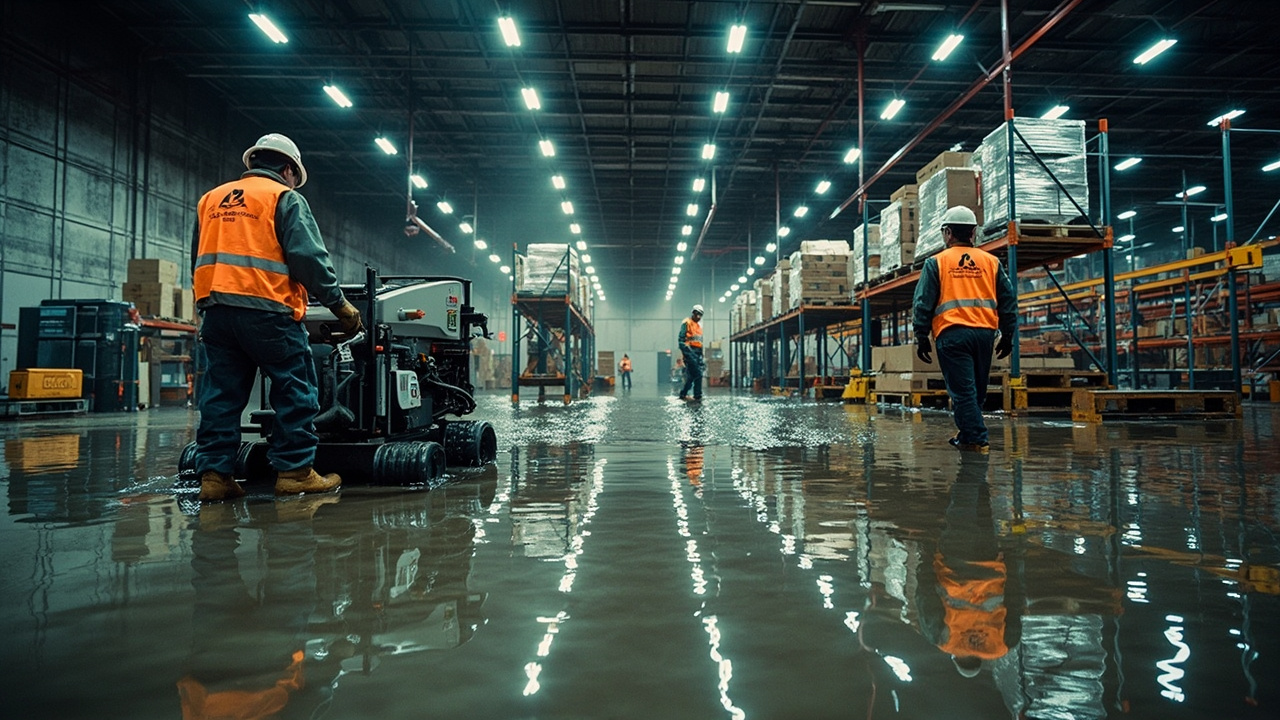
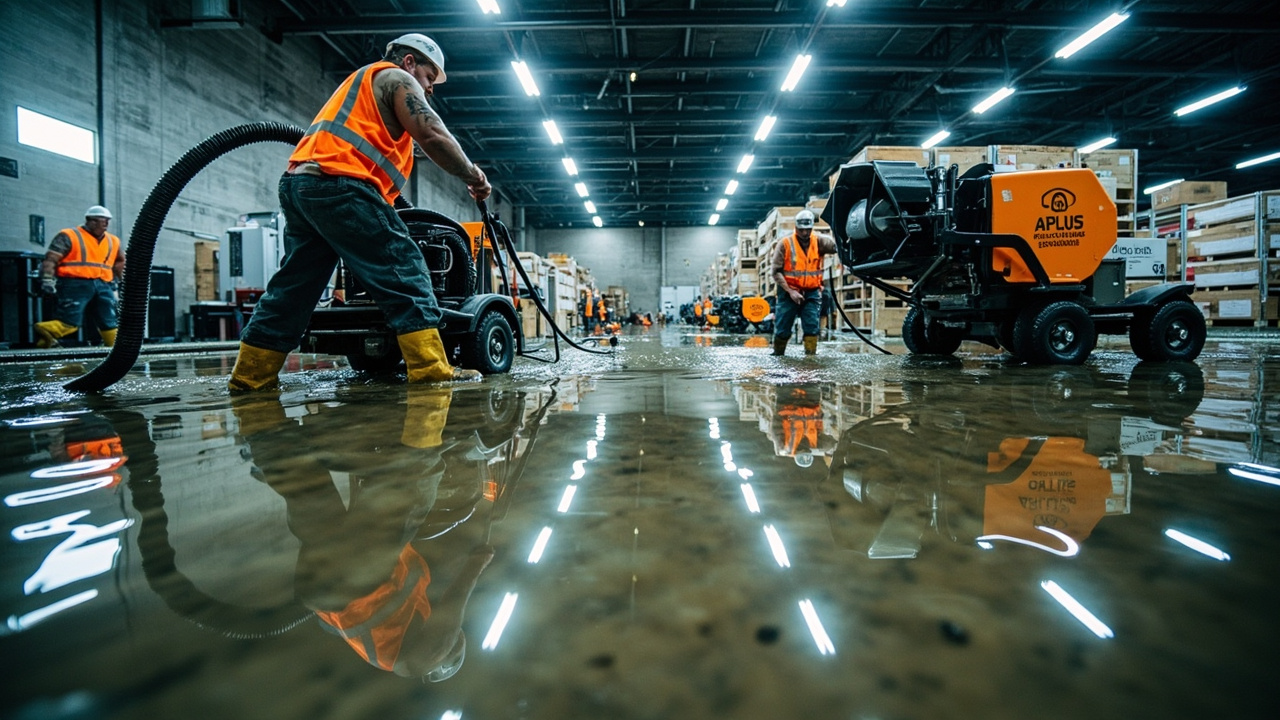
Distribution center water removal is not about mopping floors. It involves thermal imaging to map subsurface moisture, industrial dehumidifiers rated for 50,000-square-foot spaces, and antimicrobial treatments that meet OSHA and EPA standards. A Plus Water Damage Restoration Kansas City operates with this capacity. We work around your shift schedules. We section off affected zones so your team can continue picking and packing. We document every phase for your insurer and your landlord.

Kansas City Warehouses Face High Flood Risk from Missouri River Proximity and Outdated Stormwater Systems
Industrial Flood Recovery Requires Structural Drying and Contamination Control Beyond Residential Methods

Industrial Flood Recovery Requires Structural Drying and Contamination Control Beyond Residential Methods

Warehouse flood restoration starts with source isolation. We identify whether the water originated from a roof breach, a sprinkler line failure, or external flooding. Each scenario demands a different extraction protocol. Roof leaks introduce clean water but compromise insulation and suspended ceilings. Sprinkler failures flood interiors fast but remain confined. External flooding brings contaminated runoff that requires biohazard-level sanitation.

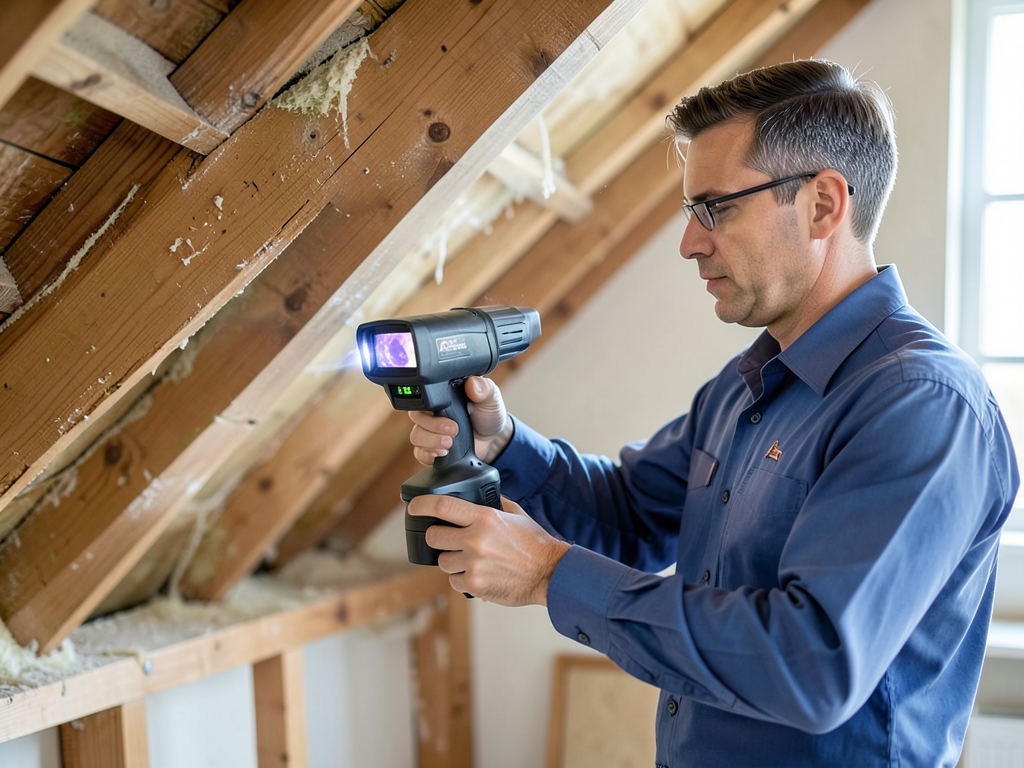
We deploy truck-mounted extractors that remove thousands of gallons per hour. Portable sump pumps handle standing water in low spots and floor drains. Once bulk water is removed, we use moisture meters and infrared cameras to map hidden saturation in walls, columns, and subfloors. This data drives our drying strategy.

Commercial-grade desiccant dehumidifiers pull moisture from the air faster than refrigerant models. We stage these units based on airflow patterns and cubic footage. Air movers create controlled evaporation without disturbing racked inventory. We monitor humidity levels every six hours and adjust equipment placement to prevent secondary mold growth.

Concrete slabs require specialized attention. We drill test cores to measure subsurface moisture content. If levels exceed 75 percent relative humidity, we apply negative air pressure systems that draw moisture from the slab before installing new coatings or flooring. Skipping this step leads to delamination, efflorescence, and mold blooms under sealed surfaces.

We document drying progress with timestamped logs and photographic evidence. Your insurance adjuster needs proof that mitigation was prompt and complete. Your risk management team needs documentation that OSHA exposure limits were maintained during cleanup. We provide both.

What Happens During a Warehouse Flood Restoration Project

Warehouse Flood Restoration in Kansas City | Industrial-Scale Water Removal with Zero Production Downtime
01

Emergency Water Extraction

We arrive on-site within two hours of your call. Our team conducts a rapid damage assessment to classify water contamination levels and identify safety hazards. We isolate electrical panels, mark compromised floor sections, and deploy truck-mounted extractors to remove standing water. Immediate extraction prevents subfloor saturation and reduces the risk of structural failure. We work in coordination with your facility manager to ensure minimal disruption to active operations.
02

Structural Drying and Monitoring

After extraction, we install industrial dehumidifiers and air movers calibrated for your warehouse square footage. We use thermal imaging and moisture meters to track drying progress in walls, columns, and concrete slabs. Our technicians adjust equipment placement every six hours based on real-time humidity readings. This phase typically requires five to ten days depending on the extent of saturation. We maintain detailed logs that document temperature, humidity, and moisture content at each checkpoint.
03

Sanitization and Clearance Testing

Once structural drying is complete, we apply EPA-registered antimicrobial treatments to all affected surfaces. We clean HVAC systems to remove airborne contaminants. Before returning the space to full operation, we conduct final moisture testing and air quality sampling. You receive a clearance report that confirms the warehouse meets industry standards for moisture content and microbial safety. This documentation is required for insurance claims and lease compliance. We provide copies to all relevant stakeholders.

Why Kansas City Warehouses Trust A Plus for Commercial Flood Remediation

Kansas City's industrial corridor stretches from the West Bottoms to the KCI logistics hub. We have restored flood-damaged warehouses in every zone. We understand the building codes that govern commercial properties in Jackson County and Wyandotte County. We know which floor coatings are compatible with moisture-sensitive adhesives. We know how to coordinate with property managers, insurance adjusters, and environmental health inspectors.

Our equipment inventory includes trailer-mounted dehumidifiers, low-grain refrigerant units, and desiccant systems rated for spaces up to 100,000 square feet. We own our gear. We do not rent from third parties. This means we can mobilize a full crew and complete equipment package within hours of your call. No waiting on vendor availability. No delays while we source specialized tools.

We have worked with third-party logistics providers, cold storage operators, and e-commerce fulfillment centers. We understand the financial impact of downtime. We structure our work schedules around your peak hours. If your warehouse runs a night shift, we will dry the space during the day. If you operate 24/7, we will section off affected areas so your team can continue operations in unaffected zones.

A Plus Water Damage Restoration Kansas City employs IICRC-certified technicians trained in commercial water damage restoration and structural drying. We follow the ANSI/IICRC S500 Standard for water damage restoration. We carry general liability coverage and workers' compensation insurance. We provide certificates of insurance to property owners and lease holders before starting work.

You will receive a detailed scope of work, a moisture map, and a drying plan within 24 hours of our initial assessment. You will receive daily progress reports via email. You will receive final clearance documentation that includes moisture readings, humidity logs, and photographic evidence of completed work. No surprises. No gaps in documentation.

What to Expect During Industrial Water Damage Cleanup

Rapid Response and Mobilization

We answer your call 24 hours a day, seven days a week. Our dispatch team assigns a project manager who will arrive on-site within two hours. The initial assessment takes 30 to 60 minutes depending on warehouse size. You will receive a verbal summary immediately and a written scope of work within four hours. Our extraction crews mobilize while you review the scope. We do not wait for approvals to start removing water. Time matters. We begin bulk extraction immediately to prevent secondary damage and reduce total drying time.

Detailed Damage Assessment and Moisture Mapping

Our technicians use FLIR thermal cameras and Tramex moisture meters to document saturation levels in floors, walls, and structural columns. We classify water contamination as clean, gray, or black based on source and exposure time. We photograph affected areas and create a floor plan that identifies extraction zones, drying zones, and areas cleared for continued use. This documentation is required by most commercial insurance policies. We share it with your adjuster within 24 hours of starting work. You receive digital copies for your records.

Structural Drying and Air Quality Restoration

We restore your warehouse to pre-loss condition using controlled drying protocols. Our equipment runs continuously until moisture levels fall below 15 percent relative humidity in all structural materials. We test air quality to confirm mold spore counts remain below 500 CFU per cubic meter. We clean and disinfect all affected surfaces using hospital-grade antimicrobials. The final phase includes odor removal using hydroxyl generators that neutralize organic compounds without introducing harmful ozone. You receive a clearance certificate that confirms your space is safe for occupancy and operations.

Post-Restoration Support and Documentation

A Plus Water Damage Restoration Kansas City provides a complete record package that includes moisture logs, equipment placement maps, daily progress photos, and final clearance test results. We coordinate with your insurance carrier to ensure all documentation meets claim requirements. We provide written recommendations for preventing future flood events, including sump pump upgrades, floor drain maintenance, and stormwater management improvements. If additional structural repairs are needed, we can coordinate with licensed contractors who specialize in commercial properties. We remain available for follow-up inspections and consultation at no additional cost.

Frequently Asked Questions

You Have Questions,
We Have Answers

How much does a water restoration company charge? +

Commercial warehouse flood restoration pricing varies based on water source classification, affected square footage, and equipment requirements. Clean water extraction runs lower than contaminated water scenarios requiring antimicrobial treatment. Most Kansas City providers charge per square foot for extraction and drying, plus hourly rates for specialized equipment like industrial dehumidifiers and air movers. Expect additional costs for content manipulation, emergency board-up, and thermal imaging diagnostics. Projects under 5,000 square feet differ significantly from large warehouse operations requiring multi-day drying protocols. Request itemized estimates comparing scope of work, response times, and equipment deployment strategies before committing to any contractor.

What's the difference between remediation and restoration? +

Remediation addresses the immediate contamination threat and structural drying. Technicians extract standing water, remove damaged porous materials, and deploy industrial drying equipment to prevent microbial growth. Restoration rebuilds what was damaged. This includes replacing drywall, flooring, electrical systems, and HVAC components to pre-loss condition. In Kansas City warehouse operations, remediation stops the damage progression within 48 hours. Restoration follows once moisture readings meet IICRC standards. Many commercial facilities split these phases across different vendors, though single-source providers streamline project management and reduce business interruption. Your facility may need remediation immediately but delay restoration until operational schedules permit construction.

How do restoration companies get paid? +

Most commercial restoration companies work directly with your property insurance carrier through assignment of benefits or direct billing arrangements. You authorize the contractor to communicate with adjusters, submit estimates, and receive payment upon project completion. For uninsured losses, contractors require upfront deposits, typically 25 to 50 percent, with milestone payments throughout the project. Some Kansas City providers offer net-30 payment terms for established commercial clients. Emergency mitigation services often get billed separately from reconstruction phases. Many warehouses maintain preferred vendor agreements with negotiated rates and streamlined payment workflows. Review your insurance policy's claims process before water damage occurs to understand deductibles and coverage limits.

Is water damage restoration worth it? +

For commercial warehouse operations, professional restoration prevents catastrophic secondary damage that compounds initial losses. Unmitigated water intrusion causes structural deterioration, inventory contamination, mold proliferation, and potential code violations that halt operations. Kansas City's humidity levels accelerate microbial growth within 24 to 48 hours. Professional extraction, structural drying, and antimicrobial treatment protect your building envelope and prevent complete inventory writeoffs. The cost of proper restoration represents a fraction of total facility replacement or extended business interruption. Factor in liability exposure from unsafe working conditions, potential lease violations, and decreased property values. Proper documentation also protects against insurance claim disputes and supports depreciation schedules for tax purposes.

Does insurance pay for water restoration? +

Commercial property insurance typically covers sudden and accidental water damage, including burst pipes, roof failures, and equipment malfunctions. Flood damage from external water sources requires separate flood insurance through NFIP or private carriers. Kansas City warehouses in designated flood zones face mandatory coverage requirements from lenders. Your policy dictates coverage limits, deductibles, and exclusions. Neglected maintenance, gradual leaks, and groundwater seepage often get denied. Most carriers require immediate mitigation to prevent secondary damage claims. Review your policy's business interruption provisions, which may cover lost revenue during restoration. Document all damage with photos and maintain communication logs with adjusters. Delayed notification can jeopardize coverage, so report incidents within your policy's specified timeframe.

Do you need a license for water restoration? +

Missouri does not require specific licensure for water restoration contractors, though professional certifications demonstrate competency. The Institute of Inspection Cleaning and Restoration Certification provides industry-standard training in water damage protocols. Commercial contractors should carry general liability insurance and workers compensation coverage. Kansas City building permits are required for structural repairs exceeding basic extraction and drying work. Mold remediation may trigger additional state oversight depending on project scope. Verify your contractor maintains proper insurance, not just licensure. Request certificates of insurance naming your facility as additional insured. For large warehouse projects, contractors with IICRC-certified technicians and documented training protocols reduce liability exposure and ensure code-compliant work.

What are the 4 types of remediation? +

Water damage follows four contamination categories requiring distinct remediation protocols. Category 1 involves clean water from supply lines or rainwater with no sanitary threat. Category 2 contains contaminants causing discomfort or illness, like washing machine overflows or toilet tank water. Category 3 includes grossly contaminated water with pathogenic agents from sewage backups or flood water. Category 4 addresses specialty drying situations in low-evaporation materials requiring advanced techniques. Kansas City warehouse floods often start as Category 1 but escalate to Category 3 within hours as water contacts operational contaminants, chemicals, or sanitary systems. Each category demands specific PPE, disposal protocols, and antimicrobial treatments affecting project timelines and costs.

What are the 3 R's of recovery? +

The three Rs of disaster recovery are Response, Remediation, and Restoration. Response involves immediate action to stop water intrusion, secure the facility, and document damage. This phase happens within the first 24 hours. Remediation removes water, dries structural components, and prevents secondary damage like mold growth. Industrial dehumidifiers and air movers run continuously until moisture readings meet acceptable thresholds. Restoration rebuilds damaged components to pre-loss condition, including electrical systems, flooring, and drywall. Kansas City commercial facilities must coordinate these phases with ongoing operations to minimize downtime. Effective recovery planning identifies critical infrastructure, establishes communication protocols, and maintains relationships with pre-qualified restoration contractors before disasters occur.

What is the difference between flood remediation and repair? +

Flood remediation focuses on containment, extraction, and preventing further damage progression. Technicians remove standing water, treat contaminated materials, and deploy drying equipment to stabilize the environment. This emergency response phase addresses immediate health hazards and structural threats. Flood repair rebuilds damaged building components, replaces destroyed systems, and returns the facility to operational status. Repair includes replacing insulation, drywall, flooring, and damaged mechanical systems. In Kansas City warehouses, remediation must happen within 48 hours to prevent mold colonization, while repairs follow moisture testing confirmation. Many commercial operations separate these contracts based on insurance coverage phases. Effective remediation reduces overall repair costs by limiting contamination spread and structural deterioration.

What is the 2 year rule for contractors? +

The two-year rule in construction law establishes a statute of repose limiting claims against contractors to two years after substantial completion. Missouri applies a five-year statute of repose for construction defect claims, longer than the common two-year timeframe. This protects contractors from indefinite liability exposure. Commercial warehouse clients must document all restoration work with completion certificates and final inspections. Claims for defective workmanship, code violations, or improper moisture mitigation must be filed within this window. Kansas City facility managers should conduct thorough final inspections and obtain moisture reports before signing completion documents. This legal protection emphasizes the importance of hiring qualified contractors who perform code-compliant work the first time.

Why Kansas City's Clay Soil and Missouri River Floodplain Make Warehouse Flood Restoration More Complex

Kansas City sits on expansive clay soil that shifts with moisture cycles. When heavy rains saturate the ground, hydrostatic pressure forces water through concrete slab joints and foundation walls. Warehouses built in the West Bottoms and near the Missouri River face additional risk from seasonal flooding. The U.S. Army Corps of Engineers classifies much of this area as a 100-year floodplain. Standard waterproofing fails under these conditions. Industrial flood recovery requires subsurface drainage systems, vapor barriers rated for hydrostatic pressure, and foundation coatings that withstand prolonged saturation. A Plus Water Damage Restoration Kansas City understands these local conditions and applies remediation techniques that address both surface water and subsurface moisture intrusion.

Commercial properties in Kansas City must comply with International Building Code standards adopted by Jackson County and Kansas City, Missouri. These codes mandate specific moisture barriers, drainage systems, and flood mitigation measures for warehouses in designated flood zones. A Plus Water Damage Restoration Kansas City works with local building inspectors and engineers to ensure all restoration work meets code requirements. We provide documentation that satisfies both insurance claims and municipal inspections. Our familiarity with local permitting processes and compliance standards reduces project delays and ensures your warehouse can return to full operation without legal or regulatory complications.
Water Damage Restoration Services in The Kansas City Area

While we provide rapid mobile service throughout the entire Kansas City area, you can also view our general service area on the map. We are dedicated to being a local, accessible resource for all your water damage restoration needs, whether you're in the heart of the city or a surrounding community. Our team is always just a phone call away, ready to assist you with expertise and care, no matter where you are located within our service area.

Address:
A Plus Water Damage Restoration Kansas City, 1020 E Armour Blvd, Kansas City, MO, 64109

Additional Services We Offer

Our news updates

Latest Articles & News from The Blogs

How the hard water in Edwardsville is secretly shortening the life of your plumbing and appliances Hard water is more…

How the hard water in Edwardsville is secretly shortening the life of your plumbing and appliances

How the hard water in Edwardsville is secretly shortening the life of your plumbing and appliances Hard water is more…

How to protect your Weatherby Lake home from major water damage while you are away for the winter

How to protect your Weatherby Lake home from major water damage while you are away for the winter Winterizing your…

What every first-time buyer in Raymore needs to check for water damage before closing the deal

What every first-time buyer in Raymore needs to check for water damage before closing the deal Buying your first home…

Contact Us

Your warehouse cannot afford extended downtime. Contact A Plus Water Damage Restoration Kansas City at (816) 473-3833 for immediate dispatch. Our industrial water damage cleanup teams are standing by around the clock to restore your facility and protect your operations.