




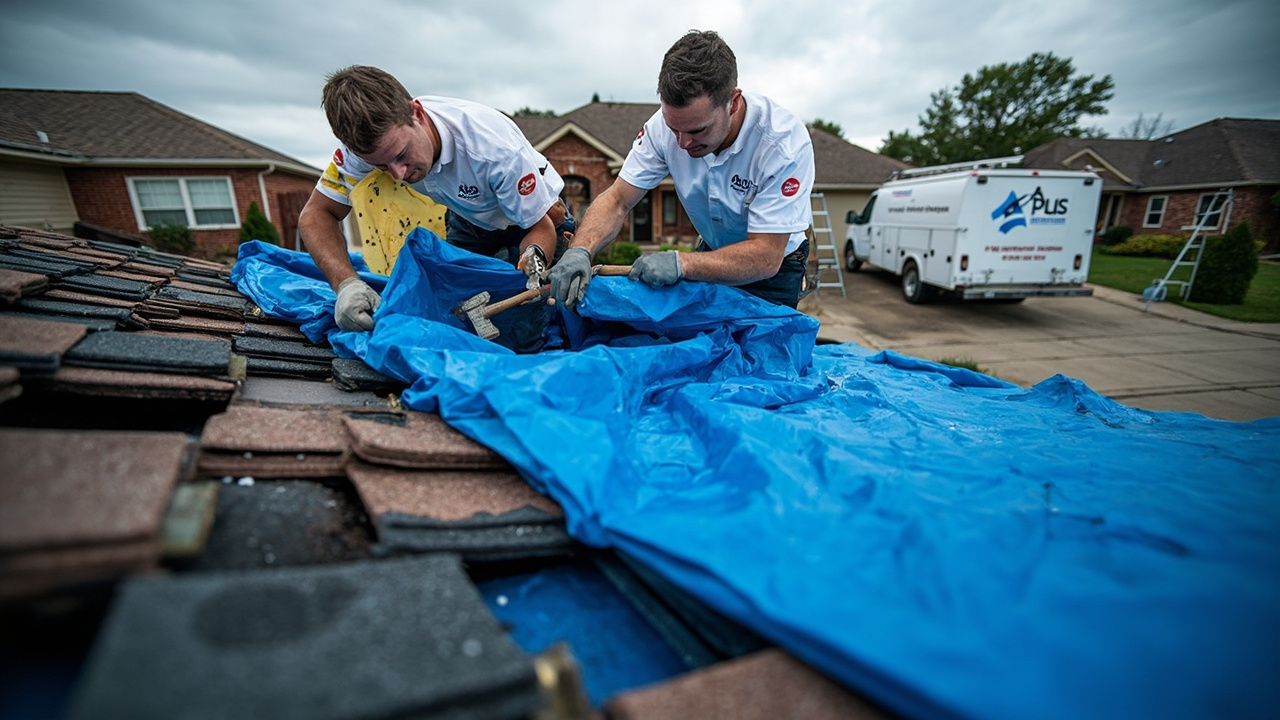
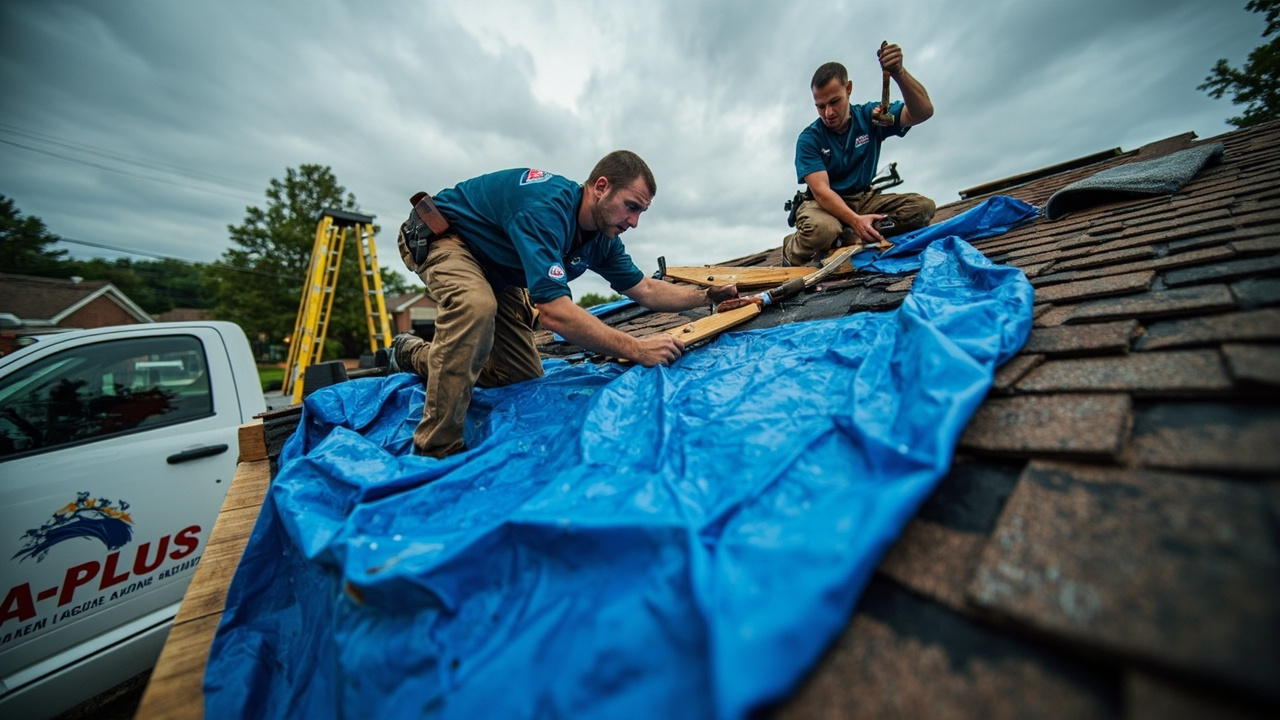
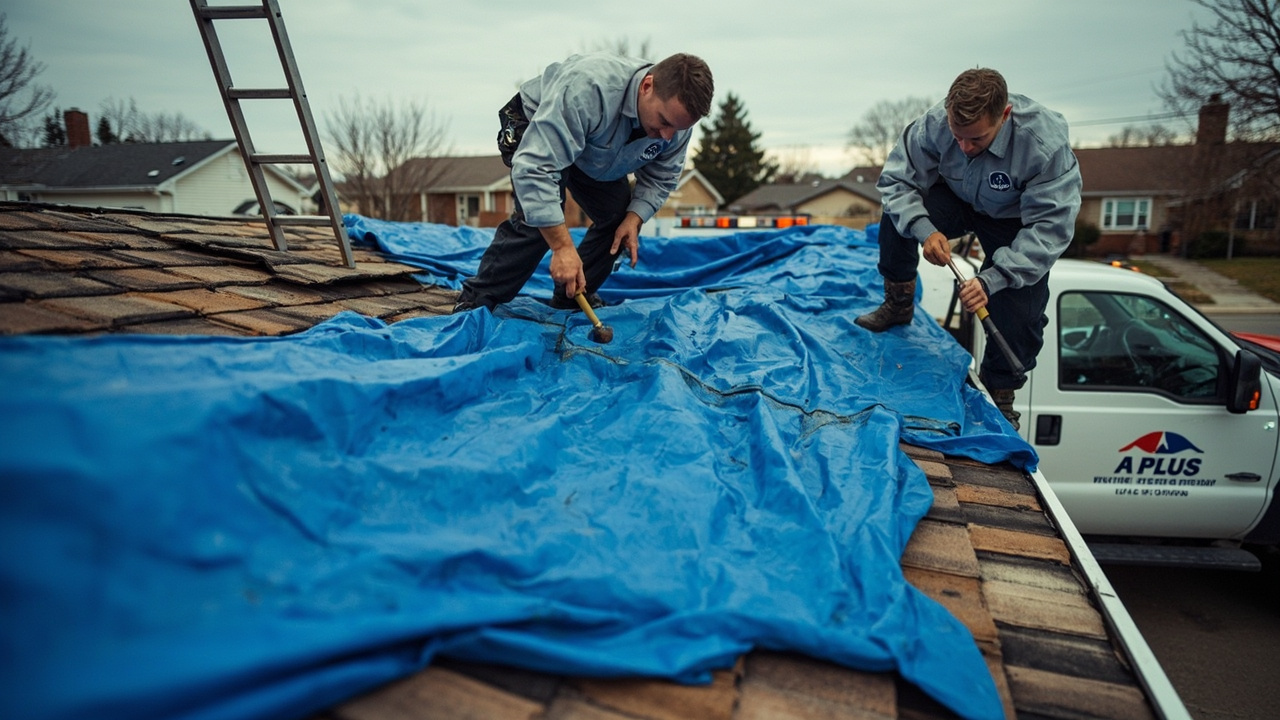
Kansas City experiences more than 50 thunderstorm days per year, with peak storm activity concentrated in April through June when supercell systems track northeast along the I-70 corridor. These storms bring straight-line winds exceeding 60 mph, hail ranging from quarter-sized to softball-sized, and intense rainfall rates that dump two inches of water in under 30 minutes. The city's position at the confluence of the Kansas and Missouri Rivers creates localized wind shear that can intensify storm cells without warning. When hail punches through aging composite shingles or wind lifts flashing on older homes in neighborhoods like Westport or the Plaza, emergency temporary roof covering becomes the difference between a minor insurance claim and total interior water damage that requires gutting drywall, replacing insulation, and remediating mold growth across multiple rooms.
Kansas City's housing stock includes thousands of homes built between 1920 and 1960 with original roofing systems that have been patched and overlaid multiple times. These roofs often have hidden vulnerabilities like rotted decking or compromised flashing that fail catastrophically during severe weather. Local building codes require that all temporary roof coverings meet wind load standards and maintain structural integrity without creating additional stress on aging roof framing. A Plus Water Damage Restoration operates with full knowledge of Kansas City's building regulations and maintains relationships with local building inspectors and insurance adjusters who recognize our tarping methods as industry-standard emergency mitigation. When you call us for urgent roof tarping services, you are hiring a team that understands both the immediate crisis and the long-term implications for your property and insurance coverage.