


Menu

Business Interruption Mitigation in Kansas City – Industrial-Scale Response That Keeps Your Operations Running

When water damage threatens your facility, you need rapid deployment, containment protocols, and coordinated restoration that prioritizes business continuity restoration and minimizes revenue loss across the Kansas City metro.

Slider Image 1
Slider Image 2
Slider Image 3
Slider Image 4
Slider Image 5
Slider Image 7
Slider Image 8
Slider Image 9
Slider Image 10
Slider Image 11

Why Kansas City Commercial Properties Face Severe Operational Downtime After Water Events

Water intrusion in commercial facilities does not wait for convenient timing. Kansas City's position at the confluence of the Missouri and Kansas Rivers creates persistent flood risk for properties in the West Bottoms, North Kansas City industrial corridor, and the River Market district. Facilities near these waterways face elevated exposure during spring storms and rapid snowmelt events.

The real cost is not just the water. Every hour a warehouse sits idle, every shift a production line stays offline, and every day a retail location remains closed translates to lost revenue, strained vendor relationships, and potential contractual penalties. For properties with climate-sensitive inventory or time-dependent operations, even a 24-hour delay can trigger cascading failures.

Kansas City's commercial building stock includes older masonry structures in the Crossroads Arts District and pre-1980 warehouses in the West Side that lack modern moisture barriers. When these facilities experience water intrusion from roof membrane failures, underground pipe breaks, or HVAC condensate overflow, the moisture migrates laterally through porous brick and inadequate vapor retarders. This creates hidden saturation zones that compromise structural integrity and require extended drying protocols.

Minimizing business downtime requires immediate moisture mapping, strategic equipment placement, and phased restoration that allows partial occupancy during remediation. Facilities with multi-tenant configurations, cold storage requirements, or 24-hour operations need mitigation strategies that address contamination zones while maintaining critical functions. The difference between a three-day closure and a three-week shutdown often comes down to response speed and resource deployment capacity in the first four hours.

Why Kansas City Commercial Properties Face Severe Operational Downtime After Water Events
How A Plus Water Damage Restoration Kansas City Executes Commercial Water Mitigation

How A Plus Water Damage Restoration Kansas City Executes Commercial Water Mitigation

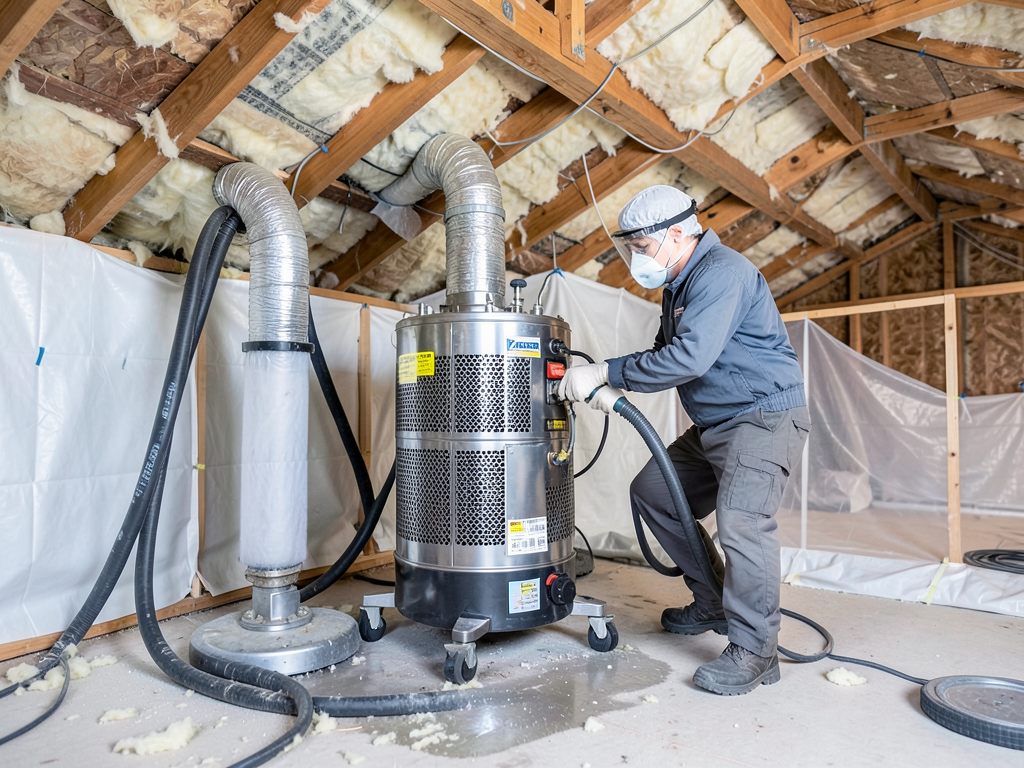
Business continuity restoration begins with containment. Our crews establish negative air pressure zones using HEPA-filtered air scrubbers and polyethylene vapor barriers to isolate affected areas from operational spaces. This allows unaffected departments to continue working while we address the damage zone. For facilities with shared HVAC systems, we temporarily shut down air handlers serving compromised areas to prevent cross-contamination of airborne particulates and moisture vapor.

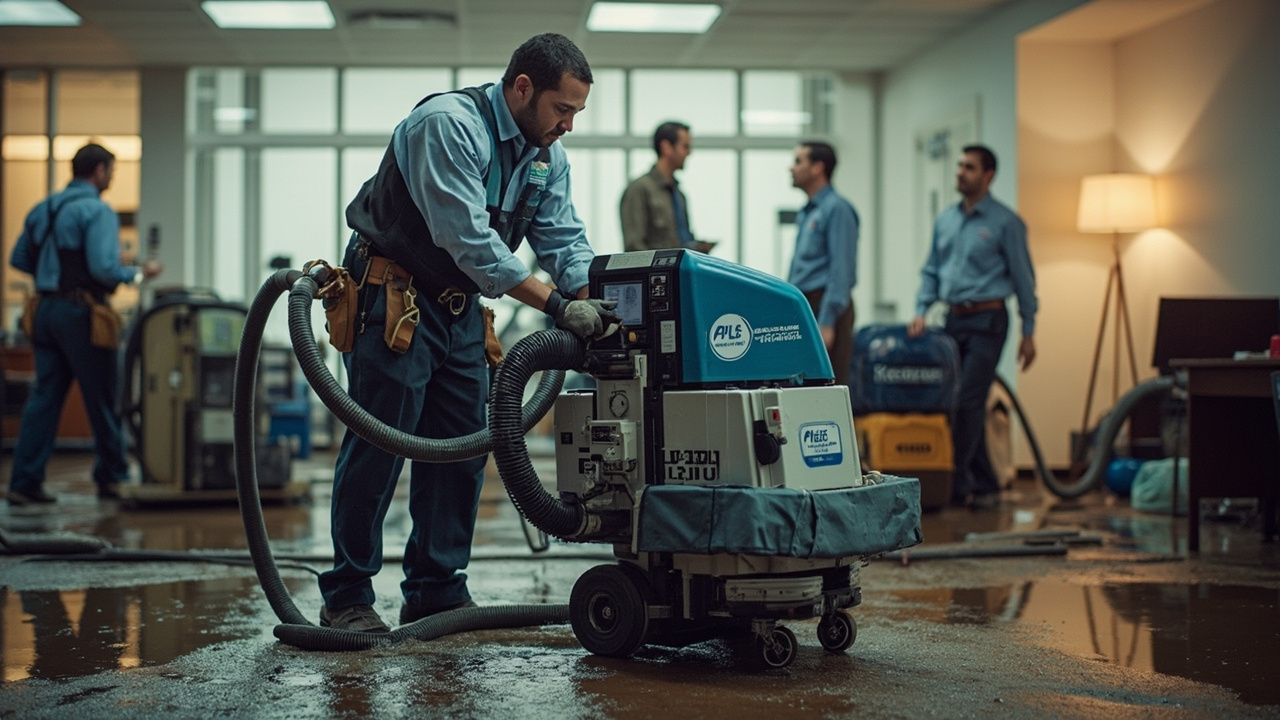
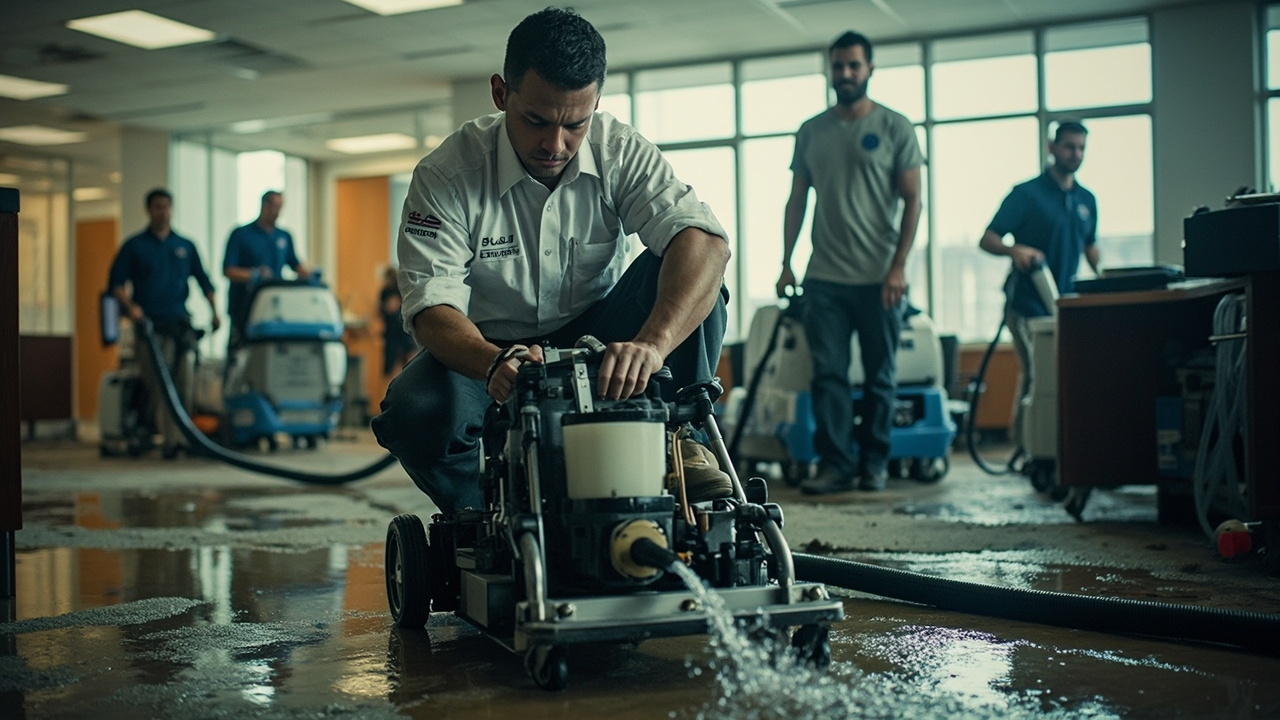
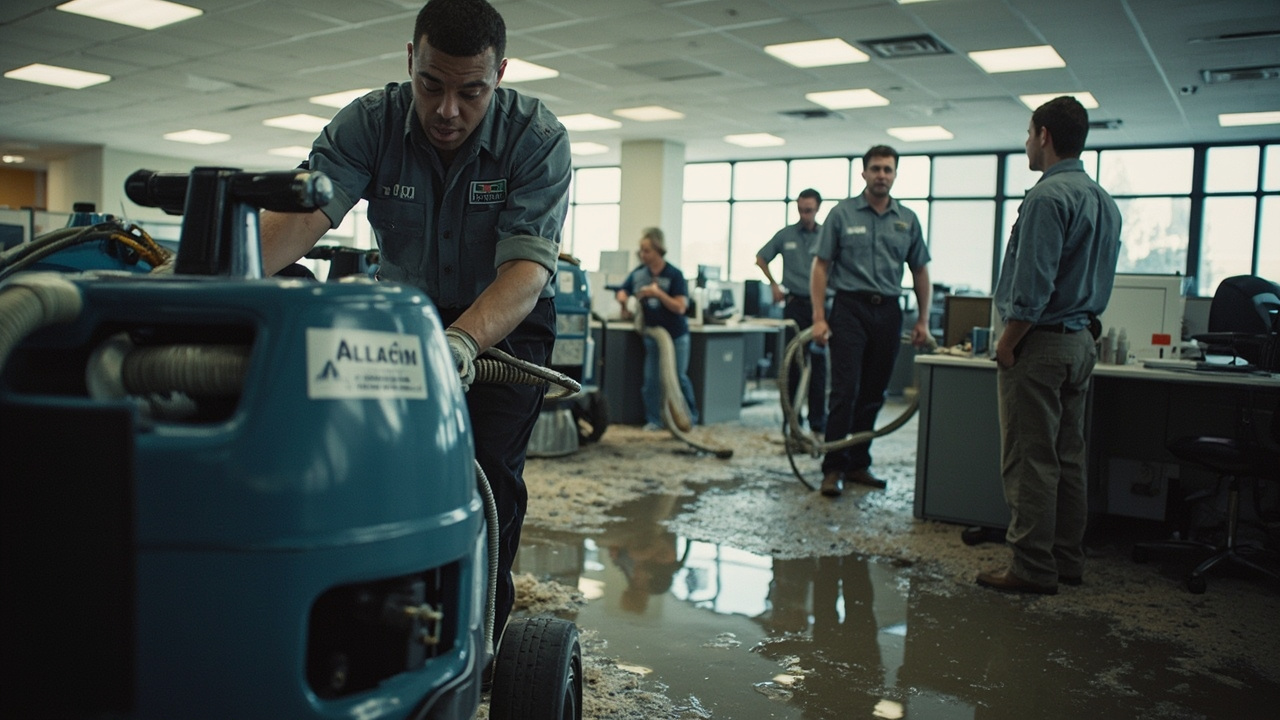
We deploy truck-mounted extraction units capable of removing standing water at rates exceeding 200 gallons per minute. This is not residential-grade equipment. For large-format spaces like distribution centers or manufacturing floors, we use ride-on extraction machines that cover 10,000 square feet per hour. Speed matters because every hour water sits on concrete slabs increases the risk of moisture wicking into floor coatings, adhesives, and embedded utility trenches.

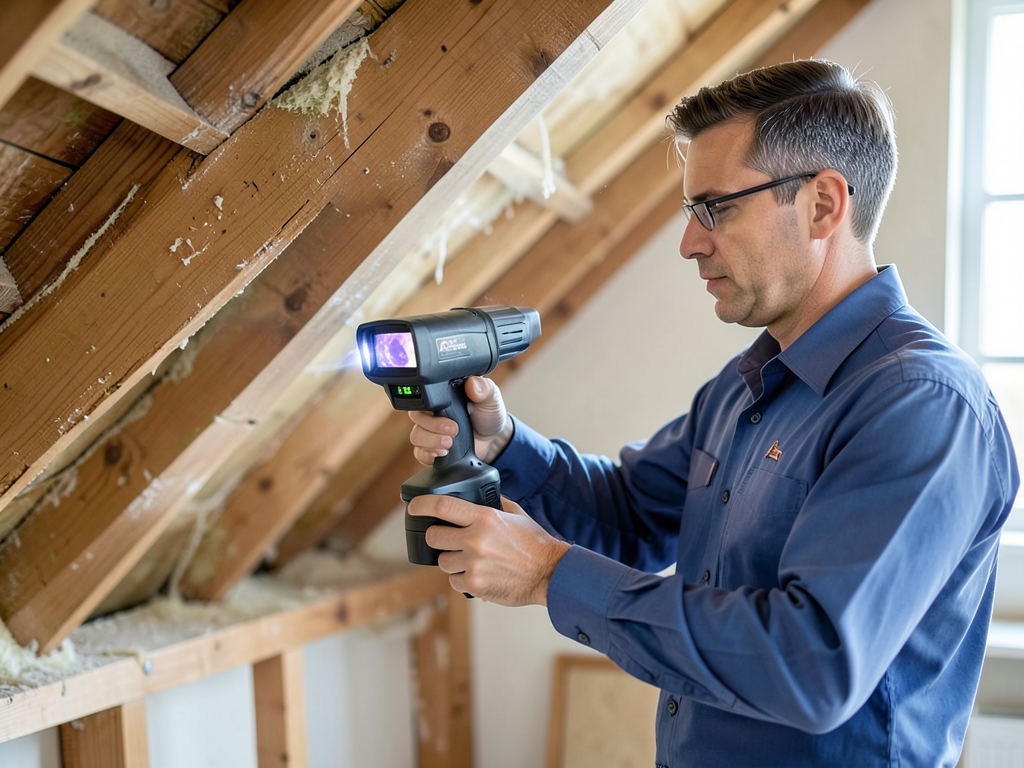
Thermal imaging and moisture meters map the full saturation footprint, including hidden pockets behind wall assemblies, under modular flooring systems, and within insulated panels. We document moisture levels in structural members, which is required for insurance claims and helps establish drying benchmarks. For properties subject to OSHA regulations or food safety protocols, we coordinate with industrial hygienists to verify microbial safety before reopening spaces.

Desiccant dehumidifiers and low-grain refrigerant units create controlled drying environments that reduce humidity levels to below 30 percent relative humidity. This accelerates evaporation from dense materials like concrete, gypsum board, and composite wood products. We monitor drying progress every 12 hours using psychrometric calculations to verify moisture removal rates align with your reopening timeline. Reducing operational downtime means adapting our drying schedule to your business cycle, not the reverse.

Our Phased Commercial Water Mitigation Protocol

Business Interruption Mitigation in Kansas City – Industrial-Scale Response That Keeps Your Operations Running
01

Emergency Containment and Triage

Within 90 minutes of dispatch, our crew establishes containment barriers, shuts off the water source, and begins extraction. We prioritize protecting inventory, isolating electrical systems, and securing sensitive equipment. You receive an initial damage assessment with photos, moisture readings, and a preliminary timeline before we begin full-scale mitigation work.
02

Controlled Drying and Monitoring

We position commercial dehumidifiers, air movers, and axial fans based on airflow modeling and moisture distribution. Our technicians log temperature, humidity, and material moisture content every 12 hours. This data drives drying decisions and provides documentation for your insurer. For properties requiring partial occupancy, we coordinate drying schedules around your operational needs and shift patterns.
03

Verification and Handoff

Drying is complete when all materials reach equilibrium moisture content levels, verified by moisture meters and thermal imaging. We provide a final report with before-and-after readings, equipment logs, and microbial clearance documentation if required. Your facility is returned to you with all affected systems operational and ready for business continuity restoration to your normal production schedule.

Why Kansas City Commercial Properties Trust A Plus Water Damage Restoration Kansas City

Commercial water damage demands more than fast response. You need a contractor with the equipment capacity to handle 50,000-square-foot warehouses, the regulatory knowledge to navigate local building codes, and the operational flexibility to work around your business hours.

Kansas City's commercial zoning regulations and building codes require specific procedures for occupied commercial restoration work. Properties in the Downtown Loop, Crown Center, and Country Club Plaza districts often require coordination with property management companies, merchant associations, and municipal inspectors. We manage these relationships so you can focus on mitigating commercial downtime and maintaining customer commitments.

Our equipment inventory includes 12 truck-mounted extraction units, 40 commercial-grade dehumidifiers, and over 200 air movers. This is not borrowed equipment or residential-scale fans repurposed for commercial work. When a 30,000-square-foot facility floods, you need a contractor who can deploy sufficient resources to complete drying in days, not weeks. Our capacity allows us to run multiple job sites simultaneously without compromising response time or equipment availability.

We understand the financial pressure of business interruption. For every day your facility remains offline, you face payroll obligations, lease payments, and contractual deadlines that do not pause for water damage. Our mitigation approach prioritizes partial reopening strategies that allow revenue-generating operations to resume while restoration continues in isolated zones. This phased approach reduces liability exposure and accelerates your return to full operational capacity.

Kansas City properties with loading docks, freight elevators, and truck access require contractors who understand commercial logistics. We coordinate equipment delivery around your receiving schedules and position drying equipment to maintain clear egress paths and ADA compliance throughout the restoration period.

What to Expect During Commercial Water Damage Mitigation

Rapid Commercial Response Protocol

Our dispatch center operates 24 hours. When you call, you reach a live person who immediately assigns a crew supervisor and confirms arrival time. Most Kansas City commercial properties receive on-site response within 90 minutes. For properties with active flooding or electrical hazards, we dispatch emergency containment teams while the full mitigation crew mobilizes. You receive real-time updates via text and email, including crew ETA, lead technician contact information, and preliminary action plan. This eliminates the communication gaps that create uncertainty during facility emergencies.

Commercial Damage Assessment Process

The initial assessment includes moisture mapping using infrared cameras, documentation of affected materials and systems, and identification of contamination risks. Our crew supervisor walks the site with your facilities manager to identify business-critical areas that require priority attention. You receive a written scope of work that outlines extraction procedures, drying timeline, equipment placement strategy, and coordination requirements. This assessment typically takes 45 to 90 minutes depending on facility size. We photograph all damaged areas and document moisture readings for insurance documentation and liability protection.

Documented Drying Results

Commercial restoration requires verifiable results. We provide daily moisture logs, psychrometric readings, and progress photos. When drying is complete, you receive a final report with before-and-after moisture content measurements, equipment runtime logs, and thermal imaging that confirms structural drying. This documentation satisfies insurance requirements and provides liability protection if secondary issues arise. For properties requiring microbial testing or air quality verification, we coordinate third-party environmental consultants and include their reports in your final documentation package. This creates a complete chain of custody for your records.

Post-Mitigation Support and Monitoring

After equipment removal, we offer follow-up moisture checks at 72 hours and seven days to verify no secondary moisture intrusion has occurred. This is particularly important for commercial properties with concrete slabs or below-grade spaces where residual moisture can reappear after initial drying. We provide recommendations for preventing future water intrusion, including roof maintenance protocols, plumbing system upgrades, and drainage improvements. For properties that experience recurring issues, we offer quarterly facility assessments that identify vulnerable areas before they fail. This proactive approach reduces the likelihood of repeat business interruptions.

Frequently Asked Questions

You Have Questions,
We Have Answers

What does business interruption coverage cover? +

Business interruption coverage compensates you for lost income when property damage forces you to suspend operations. It covers net profit you would have earned, continuing fixed costs like rent and payroll, and relocation expenses to temporary premises. The policy activates after a covered peril, such as fire or water damage, renders your Kansas City facility unusable. Coverage duration depends on your policy limits and the time needed to restore operations. This financial cushion keeps your business solvent during recovery, protecting cash flow when revenue stops but obligations continue.

What is mitigation in business? +

Mitigation in business means taking proactive steps to reduce the severity or duration of disruptions. When a fire, flood, or equipment failure hits your Kansas City operation, mitigation includes immediate emergency response, damage containment, and strategic recovery planning. You act fast to minimize downtime, protect remaining assets, and restore critical functions. Effective mitigation reduces total loss exposure, accelerates insurance claim processing, and maintains business continuity. The goal is to shrink the gap between incident occurrence and full operational recovery, protecting revenue streams and client relationships during crisis periods.

What actions can be taken to reduce or mitigate business risks? +

Risk mitigation requires systematic planning. Install redundant systems for critical equipment, maintain off-site data backups, and develop vendor diversification strategies. Conduct regular building inspections to identify vulnerabilities like roof leaks or outdated electrical systems common in older Kansas City commercial properties. Implement employee cross-training to prevent single-point-of-failure dependencies. Establish emergency response protocols and maintain relationships with restoration contractors before disaster strikes. Purchase adequate insurance coverage, including business interruption policies. Create a documented continuity plan with clear escalation procedures. These actions reduce exposure and speed recovery when disruptions occur.

What does business interuption insurance cover? +

Business interruption insurance covers income loss when physical damage forces operational shutdown. The policy reimburses lost net profit, continuing expenses like utilities and payroll, and costs for temporary relocation if your Kansas City facility becomes uninhabitable. Coverage begins after a waiting period and extends through your restoration period. It applies only when a covered peril, such as storm damage or fire, directly causes the closure. The policy calculates payouts based on historical financial records and projected earnings. It does not cover losses from pandemics, cyberattacks, or utility failures unless specifically endorsed.

What is not covered under business interruption? +

Business interruption excludes losses without physical property damage. Pandemics, government-mandated closures, cyberattacks, and utility failures typically fall outside coverage unless you purchase specific endorsements. The policy will not pay for lost revenue during planned renovations, voluntary shutdowns, or equipment breakdown without proper riders. Losses from supplier or customer disruptions, even if they impact your operations, generally are not covered. Fines, penalties, and contractual obligations remain your responsibility. Kansas City businesses must review exclusions closely, as standard policies do not cover intangible losses or indirect supply chain disruptions.

What is the 80% rule in insurance? +

The 80% rule requires you to insure property for at minimum 80% of its replacement value to avoid coinsurance penalties. If you underinsure and file a claim, the carrier reduces your payout proportionally. For example, insuring a $1 million Kansas City warehouse for only $600,000 means you carry 75% of the required coverage. The insurer pays 75% of any claim, leaving you responsible for the gap. This rule protects carriers from underinsurance while incentivizing accurate valuations. Always review policy limits during renewals to maintain compliance and full coverage.

What are 5 examples of mitigation? +

Five mitigation examples include installing fire suppression systems, elevating critical equipment above flood zones, maintaining emergency power generators, creating off-site data redundancies, and establishing vendor backup agreements. In Kansas City, where severe storms and temperature swings stress building systems, you might weatherproof roofing, upgrade HVAC controls, or install sump pumps in below-grade spaces. Employee training programs, routine equipment maintenance schedules, and pre-negotiated restoration contracts also qualify as mitigation. Each action reduces potential damage severity, shortens recovery time, and demonstrates due diligence to insurers, potentially lowering premiums.

What are the three types of mitigation? +

The three mitigation types are structural, non-structural, and procedural. Structural mitigation involves physical building improvements like reinforced walls, storm-rated windows, or upgraded electrical systems common in aging Kansas City commercial districts. Non-structural mitigation includes securing equipment, anchoring shelving, and installing backup systems that prevent operational failure without altering building framework. Procedural mitigation covers policies, training, and response plans that guide employee actions during emergencies. Each type addresses different vulnerabilities. Combining all three creates layered protection, reducing both physical damage and operational disruption when incidents occur.

What are the 4 mitigation strategies? +

The four mitigation strategies are avoidance, reduction, transfer, and acceptance. Avoidance eliminates risk by relocating operations from flood-prone Kansas City areas or discontinuing high-risk activities. Reduction minimizes impact through preventive measures like fire suppression systems or routine maintenance. Transfer shifts financial burden via insurance policies or outsourcing critical functions. Acceptance acknowledges residual risks too costly to address, budgeting reserves for potential losses. Commercial operations typically combine strategies, using insurance to transfer catastrophic risk while implementing physical safeguards to reduce frequency and severity. Your strategy mix depends on risk tolerance and budget constraints.

What are the 5 types of risk mitigation? +

The five risk mitigation types are assumption, avoidance, limitation, transference, and diversification. Assumption means accepting certain risks as cost of operations. Avoidance eliminates exposure by changing processes or locations vulnerable to Kansas City weather patterns. Limitation reduces potential loss through preventive measures like sprinkler systems or equipment redundancy. Transference moves financial risk to insurers or contractors. Diversification spreads risk across multiple suppliers, facilities, or revenue streams to prevent single-point failures. Commercial clients typically deploy multiple types simultaneously, creating comprehensive protection that addresses both operational vulnerabilities and financial exposure across their entire business model.

How Kansas City's River Proximity and Clay Soil Impact Commercial Water Damage Response

Kansas City's location at the confluence of the Missouri and Kansas Rivers creates unique flood risk for commercial properties in low-lying districts. The West Bottoms, which sits 50 feet below the surrounding bluffs, has flooded repeatedly since the 1844 flood event. Modern levee systems provide protection, but heavy spring rains still overwhelm stormwater systems and create hydrostatic pressure against foundation walls. The region's expansive clay soil exacerbates foundation movement during wet-dry cycles, creating cracks that allow groundwater intrusion into basements and crawl spaces. Commercial properties in the River Market, North Kansas City, and industrial areas along the Missouri riverfront require contractors who understand these geological challenges and can implement mitigation strategies that address both surface water intrusion and subsurface moisture migration.

Kansas City's commercial building codes require specific moisture mitigation procedures for occupied buildings. Properties undergoing active restoration must maintain fire egress routes, ADA accessibility, and ventilation standards throughout the drying process. Local contractors who understand these requirements can coordinate with city inspectors and expedite the permitting process for structural repairs. A Plus Water Damage Restoration Kansas City maintains relationships with commercial property insurers, building inspectors, and industrial hygiene consultants throughout the metro. This network accelerates approvals and ensures compliance with local regulations. For properties in historic districts like the Crossroads or Quality Hill, we coordinate with preservation offices to ensure restoration methods meet historic preservation standards while achieving modern moisture mitigation objectives.
Water Damage Restoration Services in The Kansas City Area

While we provide rapid mobile service throughout the entire Kansas City area, you can also view our general service area on the map. We are dedicated to being a local, accessible resource for all your water damage restoration needs, whether you're in the heart of the city or a surrounding community. Our team is always just a phone call away, ready to assist you with expertise and care, no matter where you are located within our service area.

Address:
A Plus Water Damage Restoration Kansas City, 1020 E Armour Blvd, Kansas City, MO, 64109

Additional Services We Offer

Our news updates

Latest Articles & News from The Blogs

How the hard water in Edwardsville is secretly shortening the life of your plumbing and appliances Hard water is more…

How the hard water in Edwardsville is secretly shortening the life of your plumbing and appliances

How the hard water in Edwardsville is secretly shortening the life of your plumbing and appliances Hard water is more…

How to protect your Weatherby Lake home from major water damage while you are away for the winter

How to protect your Weatherby Lake home from major water damage while you are away for the winter Winterizing your…

What every first-time buyer in Raymore needs to check for water damage before closing the deal

What every first-time buyer in Raymore needs to check for water damage before closing the deal Buying your first home…

Contact Us

Every hour counts when water threatens your operations. Call (816) 473-3833 now for immediate dispatch. Our commercial mitigation crews are standing by with the equipment and expertise to protect your facility and accelerate your return to normal operations.