
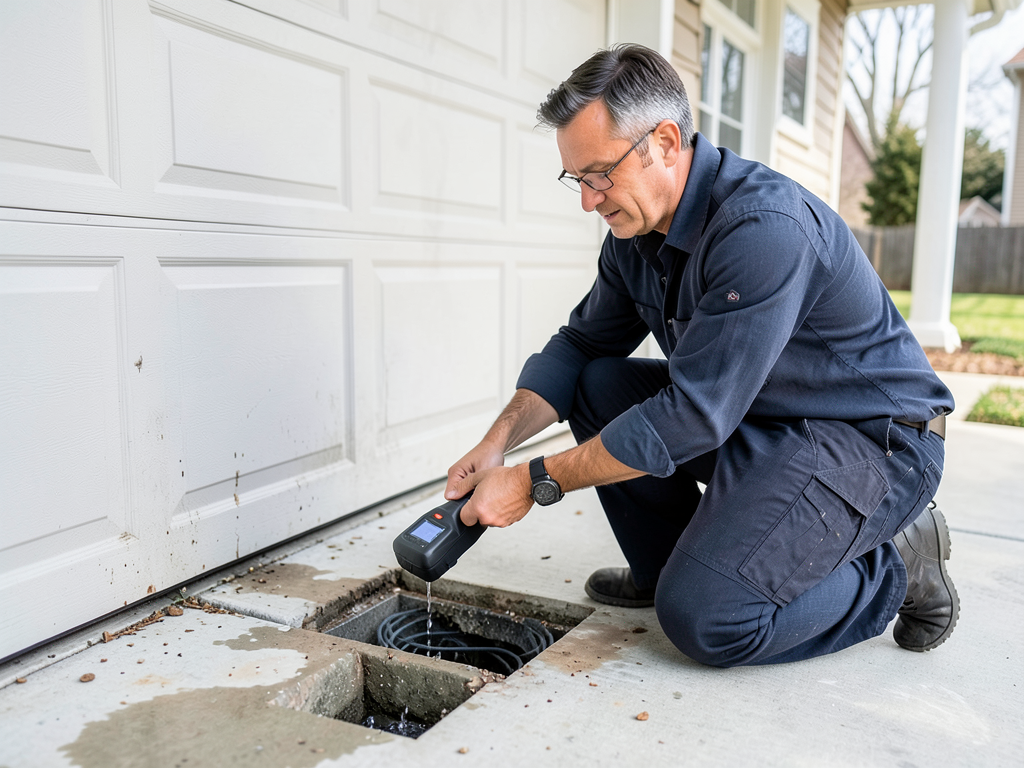
What to do when your Olathe garage floor drain starts backing up
Garage floor drain backups in Olathe create immediate flooding risks and potential contamination. When water pools in your garage, it signals a blockage in the drainage system that requires prompt attention to prevent structural damage and health hazards. Water Stains on Drywall.
Common causes include tree root intrusion in older Olathe neighborhoods, collapsed clay pipes from freeze-thaw cycles, and debris buildup in the P-trap. The situation becomes urgent when you notice gurgling sounds, slow drainage, or standing water that refuses to recede.
Safety first: If you see sewage or discolored water, avoid contact and keep children and pets away. Turn off power to garage outlets if water approaches electrical sources. Document the damage with photos before attempting cleanup, as this helps with insurance claims.
Common causes of garage floor drain backups in Olathe
Olathe’s combination of mature trees and expansive clay soil creates unique drainage challenges. Tree roots from silver maples and oak trees commonly invade older clay pipes, especially in established neighborhoods near downtown Olathe and along Santa Fe Street.
Clay soil expands when wet and contracts when dry, creating pressure that can collapse or shift underground pipes. This is particularly problematic in Olathe’s older sections where original clay drainage systems remain in place.
Heavy spring rains overwhelm municipal storm systems, causing backups through floor drains. Olathe’s proximity to Indian Creek and its tributaries means flash flooding can quickly saturate the ground and push water back through drainage pipes.
Sediment and debris accumulation in the P-trap beneath the garage floor creates blockages over time. Sand, dirt, and organic matter wash down the drain during cleaning or weather events, gradually restricting water flow.
Road salt and chemical runoff from winter weather corrodes metal drain components and creates deposits that restrict flow. Olathe’s harsh winters with frequent freeze-thaw cycles accelerate this deterioration.
Diagnostic test: Shine a flashlight down the drain while running water. If water pools and drains slowly, the blockage is likely in the trap or immediate line. If water backs up immediately, the problem extends to the main sewer connection.
Health and safety risks of garage floor drain backups
Category 3 water (black water) contains harmful pathogens and requires professional remediation. Sewage backups introduce bacteria like E. coli, salmonella, and hepatitis A into your garage environment. EPA mold guidelines.
Standing water creates slip hazards and can damage stored items, tools, and vehicles. Water conducts electricity, creating shock risks if it reaches outlets or appliances. Retail Store Water Cleanup.
Mold growth begins within 24-48 hours in damp environments. Garage drywall, cardboard boxes, and wooden structures provide ideal breeding grounds for mold spores.
Structural damage occurs when water seeps into concrete cracks or wood framing. Repeated flooding weakens the foundation and creates long-term stability issues.
Biohazard contamination affects air quality and creates respiratory risks. Professional testing may be needed to verify complete decontamination.
EPA guidelines require proper disposal of contaminated materials and thorough sanitization of affected surfaces. DIY cleanup often misses hidden contamination in cracks and porous materials.
Professional restoration process for garage floor drain backups
Emergency extraction begins with removing standing water using submersible pumps and industrial wet vacuums. High-volume pumps remove thousands of gallons per hour, preventing further spread.
Decontamination follows extraction using EPA-registered antimicrobial solutions. Technicians apply treatments to all affected surfaces, including walls, floors, and stored items that can be salvaged.
Drying and dehumidification use commercial-grade equipment to remove moisture from concrete, drywall, and air. Air movers create circulation while dehumidifiers extract water vapor from the environment. Specialized commercial water damage restoration for Kansas City business owners.
Structural assessment identifies damage to concrete, wood framing, and electrical systems. Moisture meters detect hidden water in walls and subfloors that visual inspection misses.
Sanitization includes HEPA vacuuming to remove mold spores and particulates. Thermal fogging may be used to penetrate porous materials and eliminate odors.
Preventative measures installation includes backflow preventers, sump pump systems, and improved drainage solutions. These protect against future backups and provide early warning of developing problems.
Industry standard: IICRC S500 guidelines require complete drying to normal moisture content levels before reconstruction begins, typically achieving readings below 16% moisture content in wood materials.
Insurance coverage and local resources for Olathe residents
Standard homeowners insurance policies exclude sewer and drain backups without specific endorsements. Olathe residents should verify coverage with their insurance providers, as many policies require separate riders for this protection. Why you should not ignore that musty smell in your Olathe basement.
Missouri state regulations require licensed contractors for water damage restoration work exceeding $3,000 in value. Verify contractor credentials through the Missouri Division of Professional Registration.
City of Olathe Public Works Department maintains sewer mains and can investigate if the backup originates from the municipal system. Contact them at (913) 971-9311 for main line issues.
Johnson County Environmental Department provides resources for hazardous waste disposal and contamination concerns. They can advise on proper handling of contaminated materials from sewage backups.
Local restoration companies familiar with Olathe’s infrastructure can expedite the claims process by providing detailed documentation and direct communication with insurance adjusters.
Emergency response times vary by provider, but most reputable companies guarantee arrival within 60 minutes for water damage emergencies in the Olathe area.
Preventing future garage floor drain backups
Regular maintenance includes annual drain cleaning and inspection. Professional hydro-jetting removes buildup that snaking cannot reach, clearing pipes to their original diameter.
Install backwater prevention valves to stop sewage from flowing back into your garage during municipal system overloads. These one-way valves activate automatically when water pressure reverses.
Monitor tree growth near drainage lines. Roots can extend 2-3 times the height of the tree and infiltrate pipes through microscopic joints.
Grade landscaping to direct water away from garage entrances. Proper slope prevents surface water from overwhelming floor drains during heavy rains.
Consider sump pump installation if your garage sits below grade or experiences frequent flooding. Modern battery backup systems operate during power outages.
Seasonal inspections before spring rains and fall leaf drop identify potential problems before they cause backups. Check for visible cracks, slow drainage, and unusual odors.
Document all maintenance and repairs for insurance purposes. Detailed records support claims and demonstrate proper property care.
Frequently Asked Questions
Why is my garage floor drain gurgling?
Gurgling indicates air trapped in the drainage system, often caused by partial blockages or vent pipe issues. The sound occurs when water forces air through restricted passages, creating bubbles and noise.
Is a garage floor drain backup covered by insurance?
Coverage depends on your policy. Standard homeowners insurance excludes sewer backups without specific endorsements. Check your policy or contact your agent to verify coverage for drain backups and water damage.
How do I clean sewage off concrete?
Cleaning requires EPA-registered disinfectants, protective equipment, and proper disposal methods. Concrete is porous and absorbs contaminants, making complete decontamination difficult without professional equipment and cleaning agents.
How long does garage water damage restoration take?
Extraction and initial cleanup typically complete within 24 hours. Complete drying takes 3-5 days depending on material types and saturation levels. Reconstruction may extend the timeline to several weeks.
Can I use a regular plumber for garage drain backups?
Plumbers clear blockages but may not address water damage, contamination, or structural drying. Restoration specialists handle the complete process from extraction through reconstruction, ensuring all damage is properly remediated.
Comparison of drain backup solutions
| Solution | Cost Range | Effectiveness | Best For |
|---|---|---|---|
| Snaking/Rodding | $150-300 | Moderate | Minor clogs, routine maintenance |
| Hydro-jetting | $300-600 | High | Severe buildup, root intrusion |
| Backwater valve | $800-1,500 | Very High | Preventative, flood-prone areas |
| Complete pipe replacement | $2,000-5,000+ | Maximum | Collapsed pipes, severe damage |
Emergency response checklist for garage drain backups
- Safety assessment
Check for electrical hazards, gas leaks, and structural damage before entering the affected area.
- Containment
Block doorways with towels or sandbags to prevent water spread to living areas.
- Documentation
Photograph all damage from multiple angles before any cleanup begins.
- Water removal
Use wet vacuums or pumps for standing water, working from deepest areas outward.
- Ventilation
Open garage doors and use fans to begin air circulation and moisture removal.
- Professional contact
Call restoration specialists immediately for contaminated water or extensive damage.
Understanding Olathe’s drainage infrastructure
Olathe’s older neighborhoods feature combined sewer systems where stormwater and sewage share the same pipes. This design increases backup risks during heavy rainfall events that overwhelm system capacity.
The city’s expansion has created varying infrastructure ages across different areas. Newer developments have separate storm and sanitary systems, while established neighborhoods near downtown retain original combined systems.
Indian Creek and its tributaries create natural drainage patterns that affect underground water flow. Properties near these waterways face higher water table levels and increased backup potential during wet seasons.
City infrastructure improvements have upgraded some areas but left others with aging systems. The disparity creates different risk levels depending on your specific location within Olathe.
Local building codes require proper drainage connections and backflow prevention in new construction, but older homes may lack these protections. Retrofitting older properties improves their resilience to backups.
Understanding your property’s specific drainage configuration helps identify vulnerability points. Professional inspection can map your system and recommend targeted improvements.
Professional vs. DIY restoration considerations
DIY cleanup works for minor clean water spills under 10 square feet. Beyond that threshold, professional equipment and expertise become necessary for complete restoration.
Contaminated water requires specialized training and equipment. Category 3 water contains pathogens that pose serious health risks without proper protective equipment and disposal methods.
Insurance companies often require professional documentation for claims exceeding certain amounts. DIY cleanup may complicate or invalidate coverage for extensive damage.
Professional restoration includes moisture detection technology that finds hidden water in walls, under floors, and in insulation. Missing these areas leads to mold growth and structural problems.
Time sensitivity affects restoration success. Professional teams work 24/7 to begin mitigation within hours, while DIY efforts may face delays that increase damage severity.
Equipment availability differs significantly. Professional restoration companies use commercial-grade dehumidifiers, air movers, and extraction equipment that outperform consumer alternatives.
Environmental factors affecting garage drainage
Climate change has increased rainfall intensity in the Kansas City region, including Olathe. More frequent heavy downpours overwhelm drainage systems designed for historic precipitation patterns. Restoring historic homes in Brookside and Waldo after water damage.
Urban development alters natural drainage patterns. New construction changes water flow across the landscape, potentially directing more water toward your property than in previous years.
Soil saturation levels affect drainage capacity. Prolonged wet periods leave soil unable to absorb additional water, increasing surface runoff and backup potential.
Temperature fluctuations impact pipe integrity. Freeze-thaw cycles create expansion and contraction that stresses pipe joints and connections over time.
Seasonal changes bring different challenges. Spring rains, summer storms, fall leaves, and winter freezes each create unique drainage stress points throughout the year.
Long-term climate trends suggest increasing frequency of extreme weather events. Properties that rarely experienced backups may now face annual or seasonal challenges.
Call for immediate assistance
Garage floor drain backups require immediate professional attention to prevent escalating damage. Standing water creates electrical hazards, structural risks, and contamination concerns that worsen by the hour.
Don’t wait for the problem to resolve itself. Professional restoration teams arrive equipped to handle contaminated water, structural drying, and complete sanitization.
Call (816) 473-3833 today to schedule your inspection. Our certified technicians provide 24/7 emergency response throughout the Olathe area, with arrival times typically under 60 minutes.
Pick up the phone and call (816) 473-3833 before the next storm hits. Early intervention prevents minor backups from becoming major restoration projects.
Professional assessment identifies underlying causes and recommends permanent solutions. Stop dealing with repeated backups and protect your property investment with expert restoration services. For more information, visit IICRC S500 standards.
{
“@context”: “https://schema.org”,
“@type”: “BlogPosting”,
“headline”: “What to do when your Olathe garage floor drain starts backing up”,
“description”: “Learn the causes of garage floor drain backups in Olathe and how to respond safely. Get expert tips on water damage restoration and prevention from local professionals.”,
“wordCount”: 1952,
“datePublished”: “2026-06-08T13:03:00.000Z”,
“dateModified”: “2026-06-08T13:03:00.000Z”,
“inLanguage”: “en-US”,
“mainEntityOfPage”: {
“@type”: “WebPage”,
“@id”: “https://apluswaterdamagerestorationkansascity.com”
},
“publisher”: {
“@type”: “LocalBusiness”,
“name”: “A Plus Water Damage Restoration Kansas City”,
“url”: “https://apluswaterdamagerestorationkansascity.com”
},
“author”: {
“@type”: “Organization”,
“name”: “A Plus Water Damage Restoration Kansas City”,
“url”: “https://apluswaterdamagerestorationkansascity.com”
},
“image”: {
“@type”: “ImageObject”,
“url”: “https://apluswaterdamagerestorationkansascity.com/wp-content/uploads/2026/03/what-to-do-when-your-olathe-garage-floor-drain-sta-1.png”
}
}
{
“@context”: “https://schema.org”,
“@type”: “LocalBusiness”,
“name”: “A Plus Water Damage Restoration Kansas City”,
“url”: “https://apluswaterdamagerestorationkansascity.com”,
“address”: {
“@type”: “PostalAddress”,
“addressLocality”: “Kansas City”
},
“areaServed”: {
“@type”: “City”,
“name”: “Kansas City”
}
}
{
“@context”: “https://schema.org”,
“@type”: “FAQPage”,
“mainEntity”: [
{
“@type”: “Question”,
“name”: “Why is my garage floor drain gurgling?”,
“acceptedAnswer”: {
“@type”: “Answer”,
“text”: “Gurgling indicates air trapped in the drainage system, often caused by partial blockages or vent pipe issues. The sound occurs when water forces air through restricted passages, creating bubbles and noise.”
}
},
{
“@type”: “Question”,
“name”: “Is a garage floor drain backup covered by insurance?”,
“acceptedAnswer”: {
“@type”: “Answer”,
“text”: “Coverage depends on your policy. Standard homeowners insurance excludes sewer backups without specific endorsements. Check your policy or contact your agent to verify coverage for drain backups and water damage.”
}
},
{
“@type”: “Question”,
“name”: “How do I clean sewage off concrete?”,
“acceptedAnswer”: {
“@type”: “Answer”,
“text”: “Cleaning requires EPA-registered disinfectants, protective equipment, and proper disposal methods. Concrete is porous and absorbs contaminants, making complete decontamination difficult without professional equipment and cleaning agents.”
}
},
{
“@type”: “Question”,
“name”: “How long does garage water damage restoration take?”,
“acceptedAnswer”: {
“@type”: “Answer”,
“text”: “Extraction and initial cleanup typically complete within 24 hours. Complete drying takes 3-5 days depending on material types and saturation levels. Reconstruction may extend the timeline to several weeks.”
}
},
{
“@type”: “Question”,
“name”: “Can I use a regular plumber for garage drain backups?”,
“acceptedAnswer”: {
“@type”: “Answer”,
“text”: “Plumbers clear blockages but may not address water damage, contamination, or structural drying. Restoration specialists handle the complete process from extraction through reconstruction, ensuring all damage is properly remediated.”
}
}
]
}
{
“@context”: “https://schema.org”,
“@type”: “HowTo”,
“name”: “Emergency Response for Garage Drain Backups”,
“step”: [
{
“@type”: “HowToStep”,
“position”: 1,
“name”: “Safety assessment”,
“text”: “Check for electrical hazards, gas leaks, and structural damage before entering the affected area.”
},
{
“@type”: “HowToStep”,
“position”: 2,
“name”: “Containment”,
“text”: “Block doorways with towels or sandbags to prevent water spread to living areas.”
},
{
“@type”: “HowToStep”,
“position”: 3,
“name”: “Documentation”,
“text”: “Photograph all damage from multiple angles before any cleanup begins.”
},
{
“@type”: “HowToStep”,
“position”: 4,
“name”: “Water removal”,
“text”: “Use wet vacuums or pumps for standing water, working from deepest areas outward.”
},
{
“@type”: “HowToStep”,
“position”: 5,
“name”: “Ventilation”,
“text”: “Open garage doors and use fans to begin air circulation and moisture removal.”
},
{
“@type”: “HowToStep”,
“position”: 6,
“name”: “Professional contact”,
“text”: “Call restoration specialists immediately for contaminated water or extensive damage.”
}
],
“image”: “https://apluswaterdamagerestorationkansascity.com/wp-content/uploads/2026/03/what-to-do-when-your-olathe-garage-floor-drain-sta-1.png”
}
{
“@context”: “https://schema.org”,
“@type”: “BreadcrumbList”,
“itemListElement”: [
{
“@type”: “ListItem”,
“position”: 1,
“name”: “Home”,
“item”: “https://apluswaterdamagerestorationkansascity.com”
},
{
“@type”: “ListItem”,
“position”: 2,
“name”: “Blog”,
“item”: “https://apluswaterdamagerestorationkansascity.com/blog”
},
{
“@type”: “ListItem”,
“position”: 3,
“name”: “What to do when your Olathe garage floor drain starts backing up”
}
]
}
{
“@context”: “https://schema.org”,
“@type”: “Service”,
“serviceType”: “Water Damage Restoration”,
“provider”: {
“@type”: “LocalBusiness”,
“name”: “A Plus Water Damage Restoration Kansas City”,
“url”: “https://apluswaterdamagerestorationkansascity.com”
},
“areaServed”: {
“@type”: “City”,
“name”: “Kansas City”
},
“description”: “Learn the causes of garage floor drain backups in Olathe and how to respond safely. Get expert tips on water damage restoration and prevention from local professionals.”
}