
Why you should never just paint over those peeling baseboards in your Mission Hills home
Those peeling baseboards in your Mission Hills home are not just a cosmetic issue. They are often the first visible sign of hidden water damage that could be destroying your walls, floors, and even your home’s foundation. When you see paint bubbling, wood swelling, or MDF material flaking away, moisture has already penetrated beyond the surface. Simply painting over it traps the problem and allows mold to spread behind your walls. Water Stains on Drywall.
In Mission Hills, where many homes feature beautiful hardwood floors and custom millwork, ignoring these warning signs can lead to extensive structural damage. The combination of older plumbing systems, seasonal humidity swings, and occasional foundation settling in this established neighborhood creates perfect conditions for slow leaks that manifest first as peeling baseboards.
How Mission Hills’ unique environment affects your baseboards
Mission Hills sits on soil with high clay content, typical of the Kansas City area. This expansive clay soil shifts with moisture changes, creating foundation stress that can crack pipes and allow groundwater intrusion. When water finds its way into your walls, it travels through capillary action, moving upward through porous materials like drywall and wood.
The result is often visible first at the baseboard level. Paint peels because moisture pushes against it from behind. Wood swells as it absorbs water. MDF, commonly used in modern baseboards, bubbles and flakes because it cannot withstand prolonged moisture exposure.
According to the IICRC S500 Standard for Professional Water Damage Restoration, materials must be dried to within 4% of normal moisture content to prevent secondary damage. When you paint over wet baseboards, you violate this principle and create an environment where mold can establish within 24-48 hours. IICRC S500 Standard.
Identifying the type of baseboard material and its water vulnerability
Understanding what your baseboards are made of helps determine the extent of potential damage. Mission Hills homes, built from the 1920s through today, contain various baseboard materials each with different water tolerances.
Wood baseboards in historic Mission Hills homes can often be salvaged if caught early. Solid wood may warp or discolor but can sometimes be dried and refinished. However, if the paint is peeling, the moisture has likely penetrated deep enough to require replacement of affected sections.
MDF baseboards, common in homes built after the 1980s, react catastrophically to water exposure. The compressed wood fibers absorb moisture rapidly, causing the material to swell, bubble, and eventually disintegrate. Once MDF shows peeling paint or surface damage, the structural integrity is compromised beyond repair.
Composite materials offer slightly better water resistance but still fail when moisture persists. The key diagnostic indicator is whether the material feels soft or spongy when pressed. If it does, water damage has occurred internally.
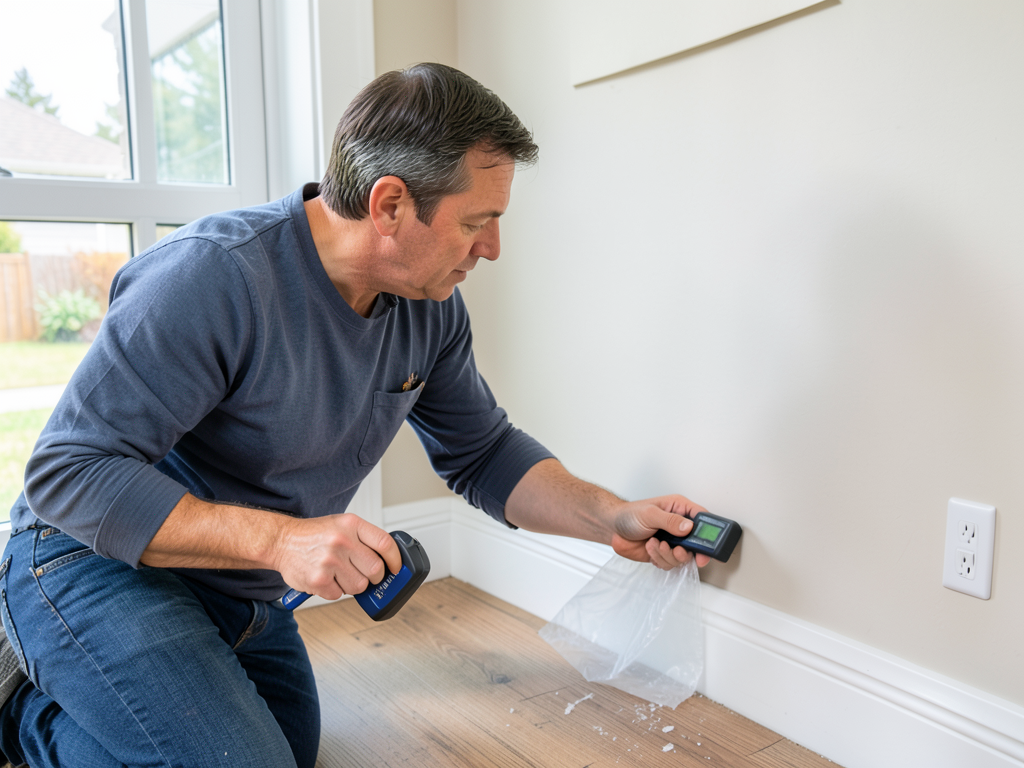
Using a moisture meter at the baseboard level provides objective data about moisture content. Readings above 16% indicate active water presence requiring professional intervention.
The hidden danger behind peeling baseboards
When you see peeling paint on baseboards, the real problem exists behind the wall. Baseboards sit at the junction where walls meet floors, making them the first point where moisture from various sources becomes visible.
Common water sources in Mission Hills homes include:
- Leaking supply pipes within wall cavities
- Failed window or door seals allowing rain penetration
- Foundation cracks from soil expansion and contraction
- Appliance failures from nearby water heaters or washing machines
- High indoor humidity from poor ventilation
The space behind baseboards often contains insulation, electrical wiring, and the bottom plates of wall studs. When moisture enters this space, it creates an ideal environment for mold growth. The Environmental Protection Agency (EPA) states that mold can begin growing on wet materials within 24-48 hours. EPA mold information.
Black mold, in particular, thrives in the dark, undisturbed spaces behind walls. It releases spores that can cause respiratory issues, allergic reactions, and in severe cases, neurological symptoms. The musty odor often associated with water damage indicates active mold colonization.
Thermal imaging cameras reveal temperature differences that indicate moisture presence. A professional can scan your walls to identify exactly where water is accumulating, often finding problems before they become visible as peeling paint.
Why painting over damage makes everything worse
Painting over peeling baseboards creates a moisture trap. The paint forms a vapor barrier that prevents the baseboard and wall materials from drying naturally. This accelerates deterioration and creates conditions for accelerated mold growth.
Additionally, the underlying water source continues to feed the problem. Whether it is a slow leak from a pipe joint or groundwater seeping through foundation cracks, the moisture persists. New paint will bubble and peel again within weeks or months, wasting money and time.
Professional restoration follows a specific protocol:
- Identify and stop the water source
- Remove damaged materials
- Dry the affected cavity using industrial equipment
- Treat for mold if present
- Replace with new materials
- Monitor moisture levels until normal
This process ensures the problem is resolved rather than concealed. The IICRC S500 Standard requires documentation of moisture readings throughout the process to verify complete drying.
Professional moisture detection techniques we use
Professional water damage restoration involves more than just visual inspection. We use specialized equipment to find and measure moisture that cannot be seen or felt. Specialized commercial water damage restoration for Kansas City business owners.
Moisture meters come in two types: pin and pinless. Pin meters insert small probes into materials to measure electrical resistance, which correlates to moisture content. Pinless meters use electromagnetic signals to scan without surface damage.
Thermal imaging cameras detect temperature variations caused by moisture. Wet materials often appear cooler than dry materials because evaporation creates a cooling effect. These cameras can scan large wall areas quickly to identify moisture patterns.
Hygrometers measure relative humidity in the air and within wall cavities. High humidity levels indicate ongoing moisture problems even when visible signs are minimal.
Borescopes allow visual inspection inside wall cavities through small drilled holes. This minimally invasive technique can reveal mold growth, standing water, or deteriorated materials without major demolition.
These diagnostic tools provide the data needed to create an effective restoration plan. Without proper diagnosis, you risk treating symptoms rather than causes.
When to call for professional help
Certain signs indicate you need immediate professional intervention rather than attempting DIY repairs.
Visible mold growth anywhere in your home requires professional remediation. Disturbing mold colonies releases spores throughout your home, potentially creating a much larger contamination problem.
Soft or spongy materials indicate advanced deterioration. These materials cannot support weight and may collapse, creating safety hazards.
Musty odors that persist after cleaning suggest active mold growth in hidden spaces. The human nose can detect mold at very low concentrations, making odor a reliable early warning sign.
Water stains on ceilings, walls, or floors indicate active leaks. Water travels along the path of least resistance, so visible stains often appear far from the actual leak source.
Increased utility bills without corresponding usage changes can indicate hidden leaks. A small pipe leak can waste hundreds of gallons monthly while causing structural damage.
If you notice any of these signs, call (816) 473-3833 immediately. Early intervention prevents minor problems from becoming major structural issues.
The professional restoration process
Professional water damage restoration follows a systematic approach based on industry standards and best practices.
Emergency response begins with stopping active water sources. This may involve shutting off main water valves, tarping roof leaks, or extracting standing water using truck-mounted pumps.
Damage assessment uses moisture meters, thermal imaging, and visual inspection to map the extent of water migration. This creates a restoration plan tailored to your specific situation.
Water extraction removes standing water using submersible pumps, wet vacuums, and specialized extraction tools. The goal is to remove as much water as possible in the liquid state before attempting to dry materials.
Demolition and removal of irreparably damaged materials follows. This includes baseboards, drywall, insulation, and flooring that cannot be restored to safe moisture levels.
Drying and dehumidification uses industrial air movers and dehumidifiers to remove moisture from materials and air. This process can take several days depending on the extent of damage and materials involved.
Cleaning and sanitizing eliminates contaminants and prevents mold growth. This includes antimicrobial treatments and HEPA filtration to capture airborne particles.
Reconstruction replaces removed materials with new components that match your home’s original character. This may involve custom millwork to match historic baseboard profiles common in Mission Hills.
Throughout this process, we document moisture readings to verify complete drying before reconstruction begins.
Preventing future baseboard damage
After restoration, preventing recurrence requires addressing the underlying causes of water intrusion.
Plumbing maintenance includes regular inspection of supply lines, drain pipes, and fixtures. Look for corrosion, mineral deposits, or moisture around connections. Replace supply lines every 5-7 years as preventative maintenance.
Foundation care involves maintaining proper grading around your home. Soil should slope away from foundation walls at a rate of 6 inches per 10 feet. This prevents water from pooling against foundation walls.
Roof and gutter maintenance ensures water is directed away from your home. Clean gutters twice yearly and inspect for damage after storms. Ensure downspouts extend at least 5 feet from foundation walls.
Humidity control uses dehumidifiers during humid months to maintain indoor relative humidity between 30-50%. This prevents condensation on cool surfaces like windows and exterior walls.
Appliance inspection includes checking supply hoses on washing machines, dishwashers, and refrigerators with ice makers. Replace rubber hoses with steel-braided versions for increased durability.
These preventative measures cost far less than emergency restoration services and protect your home’s value.
Insurance considerations for water damage
Understanding your insurance coverage helps you make informed decisions about restoration timing and scope.
Most homeowner policies cover sudden and accidental water damage but exclude gradual damage or maintenance-related issues. A burst pipe is typically covered, while a slow leak that causes damage over months is often denied. Dealing with a burst pipe in the Northland (Emergency repair and drying).
Documenting damage with photos and moisture readings provides evidence for insurance claims. Professional restoration companies can provide detailed reports that satisfy insurance adjusters’ requirements.
Many policies require you to mitigate damage to prevent further loss. This means you cannot simply ignore a leak and continue accumulating damage. Professional intervention demonstrates good faith effort to minimize losses. Why you should not ignore that musty smell in your Olathe basement.
Review your policy annually to understand coverage limits, deductibles, and exclusions. Some policies offer additional riders for sewer backup or flood damage not included in standard coverage.
Call (816) 473-3833 for assistance with insurance documentation. We work with all major insurance providers and can help navigate the claims process.
Why Mission Hills homes need specialized attention
Mission Hills features a unique mix of historic and modern homes, each presenting different water damage challenges. The neighborhood’s established trees create root systems that can invade sewer lines and foundation cracks. Restoring historic homes in Brookside and Waldo after water damage.
Many Mission Hills homes were built before modern building codes, using construction methods that create hidden vulnerabilities. Balloon framing, common in early 20th century construction, allows fire and water to travel easily between floors.. Read more about The hidden danger of wallpaper in historic Pendleton Heights homes after a minor water leak.
The neighborhood’s mature landscaping, while beautiful, can direct water toward foundations if not properly maintained. French drains, common in older homes, can fail over time, allowing water to saturate soil around foundations.
Understanding these local factors allows for more effective restoration strategies. We know Mission Hills’ specific challenges and how to address them efficiently.
Don’t let peeling baseboards become a major structural problem. Call (816) 473-3833 today to schedule your inspection. We provide 24/7 emergency service throughout Mission Hills and the greater Kansas City area.
Frequently Asked Questions
How can I tell if my baseboards have water damage?
Look for peeling paint, bubbling surfaces, soft spots when pressed, discoloration, or musty odors near baseboards. Use a moisture meter to check readings above 16%, which indicate active water presence requiring professional attention.
Can I just sand and repaint peeling baseboards?
No. Painting over water-damaged baseboards traps moisture and accelerates deterioration. The underlying water source will continue causing damage, and new paint will peel again within weeks or months. Professional assessment and restoration is necessary.
How long does professional baseboard restoration take?
The process typically takes 3-7 days depending on damage extent. Emergency water extraction and demolition can be completed in one day, but drying and dehumidification requires several days to ensure complete moisture removal before reconstruction.
Will my insurance cover baseboard water damage?
Coverage depends on the water source. Sudden pipe bursts are typically covered, while gradual leaks or maintenance issues are often excluded. Document damage thoroughly and contact your insurance provider immediately after discovery.
You may also find this helpful. Why wet kitchen cabinets in your Fairway home require specialized drying to prevent warping.
You may also find this helpful. Beyond the puddles—how secondary damage slowly ruins homes in the Santa Fe neighborhood.
You may also find this helpful. Why cracked grout in your Shoal Creek Valley bathroom is more than just a cosmetic problem.
You may also find this helpful. Why the wood studs inside your Red Bridge walls stay wet long after the drywall feels dry.
{
“@context”: “https://schema.org”,
“@type”: “BlogPosting”,
“headline”: “Why you should never just paint over those peeling baseboards in your Mission Hills home”,
“description”: “Peeling baseboards in Mission Hills homes signal hidden water damage. Learn why DIY painting fails and how professional moisture detection prevents costly structural issues.”,
“wordCount”: 2117,
“datePublished”: “2026-04-28T10:05:00.000Z”,
“dateModified”: “2026-04-28T10:05:00.000Z”,
“inLanguage”: “en-US”,
“mainEntityOfPage”: {
“@type”: “WebPage”,
“@id”: “https://apluswaterdamagerestorationkansascity.com”
},
“publisher”: {
“@type”: “LocalBusiness”,
“name”: “A Plus Water Damage Restoration Kansas City”,
“url”: “https://apluswaterdamagerestorationkansascity.com”
},
“author”: {
“@type”: “Organization”,
“name”: “A Plus Water Damage Restoration Kansas City”,
“url”: “https://apluswaterdamagerestorationkansascity.com”
},
“image”: {
“@type”: “ImageObject”,
“url”: “https://apluswaterdamagerestorationkansascity.com/wp-content/uploads/2026/03/why-you-should-never-just-paint-over-those-peeling-1.png”
}
}
{
“@context”: “https://schema.org”,
“@type”: “LocalBusiness”,
“name”: “A Plus Water Damage Restoration Kansas City”,
“url”: “https://apluswaterdamagerestorationkansascity.com”,
“address”: {
“@type”: “PostalAddress”,
“addressLocality”: “Kansas City”
},
“areaServed”: {
“@type”: “City”,
“name”: “Kansas City”
}
}
{
“@context”: “https://schema.org”,
“@type”: “FAQPage”,
“mainEntity”: [
{
“@type”: “Question”,
“name”: “How can I tell if my baseboards have water damage?”,
“acceptedAnswer”: {
“@type”: “Answer”,
“text”: “Look for peeling paint, bubbling surfaces, soft spots when pressed, discoloration, or musty odors near baseboards. Use a moisture meter to check readings above 16%, which indicate active water presence requiring professional attention.”
}
},
{
“@type”: “Question”,
“name”: “Can I just sand and repaint peeling baseboards?”,
“acceptedAnswer”: {
“@type”: “Answer”,
“text”: “No. Painting over water-damaged baseboards traps moisture and accelerates deterioration. The underlying water source will continue causing damage, and new paint will peel again within weeks or months. Professional assessment and restoration is necessary.”
}
},
{
“@type”: “Question”,
“name”: “How long does professional baseboard restoration take?”,
“acceptedAnswer”: {
“@type”: “Answer”,
“text”: “The process typically takes 3-7 days depending on damage extent. Emergency water extraction and demolition can be completed in one day, but drying and dehumidification requires several days to ensure complete moisture removal before reconstruction.”
}
},
{
“@type”: “Question”,
“name”: “Will my insurance cover baseboard water damage?”,
“acceptedAnswer”: {
“@type”: “Answer”,
“text”: “Coverage depends on the water source. Sudden pipe bursts are typically covered, while gradual leaks or maintenance issues are often excluded. Document damage thoroughly and contact your insurance provider immediately after discovery.”
}
}
]
}
{
“@context”: “https://schema.org”,
“@type”: “BreadcrumbList”,
“itemListElement”: [
{
“@type”: “ListItem”,
“position”: 1,
“name”: “Home”,
“item”: “https://apluswaterdamagerestorationkansascity.com”
},
{
“@type”: “ListItem”,
“position”: 2,
“name”: “Blog”,
“item”: “https://apluswaterdamagerestorationkansascity.com/blog”
},
{
“@type”: “ListItem”,
“position”: 3,
“name”: “Why you should never just paint over those peeling baseboards in your Mission Hills home”
}
]
}
{
“@context”: “https://schema.org”,
“@type”: “Service”,
“serviceType”: “Water Damage Restoration”,
“provider”: {
“@type”: “LocalBusiness”,
“name”: “A Plus Water Damage Restoration Kansas City”,
“url”: “https://apluswaterdamagerestorationkansascity.com”
},
“areaServed”: {
“@type”: “City”,
“name”: “Kansas City”
},
“description”: “Peeling baseboards in Mission Hills homes signal hidden water damage. Learn why DIY painting fails and how professional moisture detection prevents costly structural issues.”
}