
The hidden danger of wallpaper in historic Pendleton Heights homes after a minor water leak
When a small water leak occurs in a Pendleton Heights home, most homeowners check for visible damage and assume the problem is solved once the surface appears dry. However, beneath that vintage wallpaper could be a breeding ground for mold that threatens both your health and your historic property’s integrity. This guide explains why wallpaper in Northeast Kansas City’s older homes creates unique moisture traps and what you need to know to protect your investment. Restoring historic homes in Brookside and Waldo after water damage.
Why Pendleton Heights wallpaper creates hidden moisture problems
Historic Pendleton Heights homes built before 1940 typically feature plaster and lathe walls with multiple layers of wallpaper applied over decades. Unlike modern drywall, these older wall systems have different moisture absorption rates and lack vapor barriers that newer construction includes. When water penetrates through a leak or high humidity, it becomes trapped behind non-breathable vinyl wallpaper, creating the perfect environment for mold growth. Water Stains on Drywall.
The science is straightforward: vinyl wallpaper acts as a moisture barrier, preventing walls from breathing and releasing trapped humidity. In Kansas City’s climate, where summer relative humidity often exceeds 70%, this creates a persistent moisture problem. The trapped moisture feeds mold spores that are naturally present in all homes, allowing them to multiply rapidly behind the wallpaper surface.
According to the Environmental Protection Agency, mold can begin growing within 24-48 hours of water exposure. In Pendleton Heights’ historic homes, the combination of aged plaster, multiple wallpaper layers, and Kansas City’s humid climate creates conditions where mold can establish itself before homeowners even notice a problem.
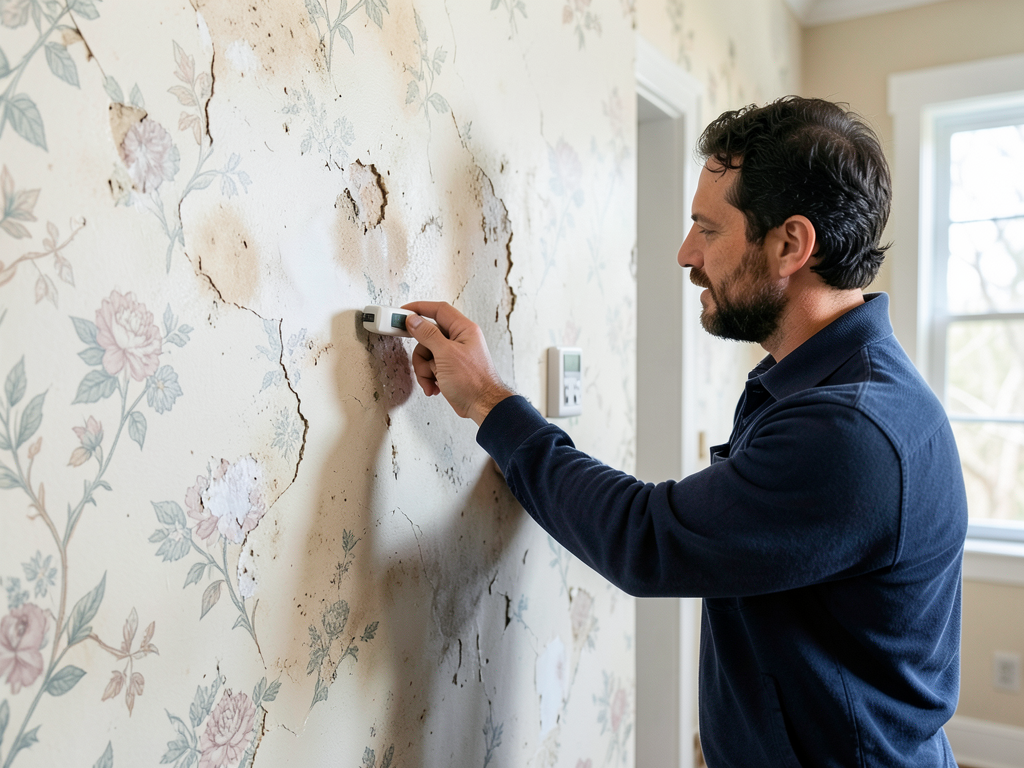
Image description: Technician using moisture meter on historic plaster wall to detect hidden water damage behind wallpaper in a Pendleton Heights home.
Signs of hidden mold behind wallpaper in your Pendleton Heights home
Detecting mold behind wallpaper requires attention to subtle warning signs. The most common indicator is bubbling or peeling wallpaper, which occurs when moisture causes the adhesive to fail. You might also notice discoloration or staining that appears as irregular patches or streaks beneath the wallpaper surface.
A musty odor is often the first sign homeowners notice. This distinctive smell results from microbial volatile organic compounds (MVOCs) released by active mold colonies. If you detect this odor in specific rooms or near exterior walls, it could indicate hidden mold growth behind wallpaper.
Visual inspection might reveal warping or buckling of wallpaper seams, particularly in areas near windows, doors, or where plumbing runs through walls. These areas are more susceptible to moisture intrusion due to temperature fluctuations and potential condensation.
According to the IICRC S520 Standard for Mold Remediation, professional assessment is recommended when mold growth covers more than 10 square feet or when the source of moisture is unknown. In historic Pendleton Heights homes, the age and construction methods make professional evaluation particularly important.
The unique risks of historic Pendleton Heights construction
Pendleton Heights features some of Kansas City’s oldest residential architecture, with homes dating back to the late 1800s. These properties often contain plaster and lathe construction, which differs significantly from modern drywall in moisture management. Plaster walls can absorb and retain moisture for extended periods, creating hidden pockets where mold thrives.
The neighborhood’s proximity to the Missouri River and its position in the Missouri River Valley contributes to higher ambient humidity levels compared to other Kansas City areas. This geographic factor, combined with the age of the housing stock, creates conditions where moisture problems develop more readily and persist longer.
Many Pendleton Heights homes have undergone multiple renovations over the decades, resulting in various wall treatments and moisture barriers that may conflict with each other. This patchwork approach to wall construction can create unexpected moisture traps behind wallpaper.
The American Society of Home Inspectors recommends annual moisture inspections for homes over 50 years old, particularly in areas with high humidity. For Pendleton Heights residents, this translates to proactive monitoring of wall conditions, especially after seasonal weather changes or plumbing incidents.
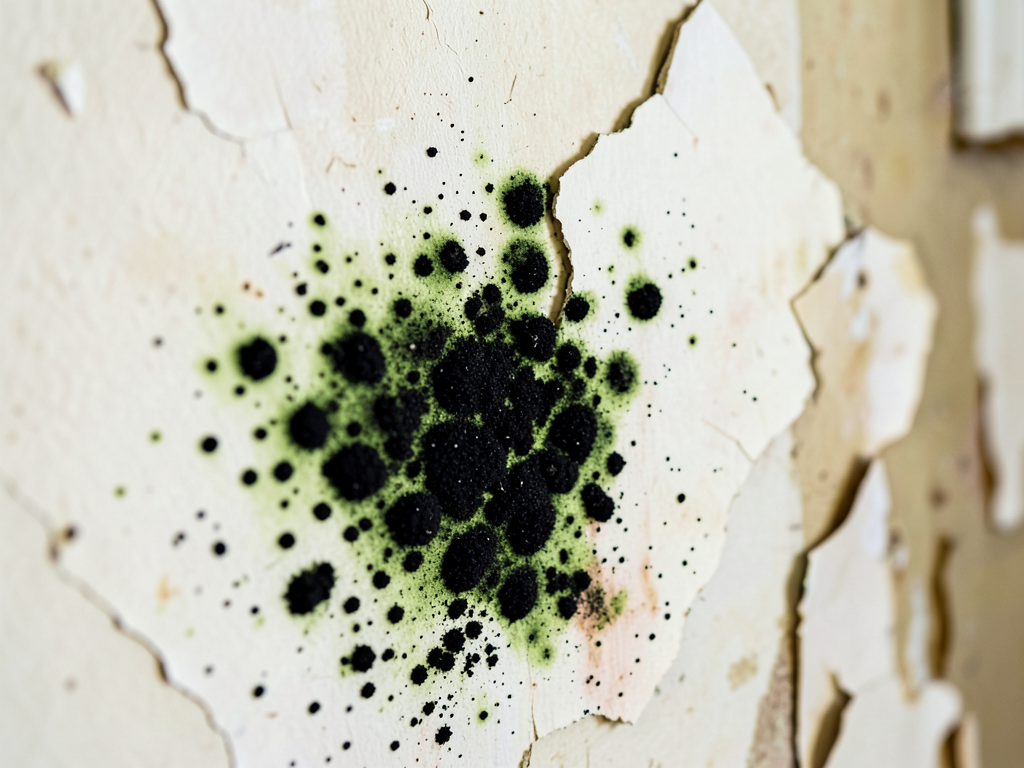
Image description: Close-up view of mold growth discovered behind peeling wallpaper in a historic Kansas City home, showing characteristic black and green discoloration.
Health risks associated with wallpaper mold in historic homes
Black mold, particularly Stachybotrys chartarum, can grow behind wallpaper when moisture conditions persist. This mold produces mycotoxins that can cause respiratory issues, allergic reactions, and other health problems. The Centers for Disease Control and Prevention notes that individuals with asthma, allergies, or compromised immune systems are particularly vulnerable to mold-related health effects.
Children and elderly residents face increased risk from prolonged mold exposure. Symptoms can include chronic coughing, sneezing, eye irritation, skin rashes, and in severe cases, neurological symptoms. The hidden nature of wallpaper mold means exposure can continue for months before detection.
Beyond health concerns, untreated mold can cause significant structural damage to historic plaster walls. As mold colonies expand, they break down the organic materials in plaster and wallpaper, leading to deterioration that requires extensive restoration work. In Pendleton Heights’ historic district, preserving original architectural features while addressing mold problems requires specialized expertise. Specialized commercial water damage restoration for Kansas City business owners.
The Missouri Department of Health and Senior Services recommends professional mold assessment for any visible mold growth or persistent musty odors, particularly in homes built before 1978 when lead paint may also be present. EPA Mold Resources.
Professional mold remediation process for historic Pendleton Heights homes
Professional mold remediation in historic homes requires a methodical approach that protects both the structure and the occupants. The process begins with containment to prevent mold spore spread throughout the home. This involves sealing off the affected area with plastic sheeting and establishing negative air pressure using HEPA-filtered air scrubbers.
Moisture assessment follows containment. Technicians use moisture meters to map the extent of water damage and thermal imaging cameras to identify hidden moisture pockets. This diagnostic phase is crucial in historic homes where water can travel along old wall cavities and between plaster layers.
Safe wallpaper removal is performed using specialized techniques that minimize dust and spore release. In Pendleton Heights homes, this often involves working with multiple wallpaper layers accumulated over decades. Each layer must be removed carefully to avoid damaging the historic plaster underneath.
Antimicrobial treatment follows wallpaper removal. EPA-registered fungicides are applied to affected areas to kill active mold colonies. In historic homes, the selection of treatment products must consider the preservation of original materials while ensuring effective mold elimination.
Structural drying completes the remediation process. Industrial-grade dehumidifiers and air movers are used to reduce moisture content in walls to safe levels. For Pendleton Heights homes, this may require several days of drying time due to the density of historic plaster construction.
According to the IICRC S500 Standard for Professional Water Damage Restoration, proper drying requires monitoring moisture levels until they return to within 4% of normal equilibrium moisture content for the specific building materials.
Image description: Professional mold remediation technician wearing PPE during containment setup in a historic home, showing HEPA air scrubber and plastic sheeting installation.
Why DIY wallpaper removal is dangerous in historic homes
Attempting to remove moldy wallpaper yourself can release millions of mold spores into your home’s air circulation system. This not only spreads contamination to other areas but also creates immediate health hazards for you and your family. The agitation of peeling or scraping wallpaper can aerosolize mold spores, making them airborne and easily inhaled.
Historic Pendleton Heights homes may contain additional hazards beyond mold. Lead-based paint was commonly used until 1978, and disturbing old wallpaper can release lead dust. Asbestos was also used in some wall treatments and adhesives prior to the 1980s. Professional remediation teams are trained to identify and safely handle these additional hazards.. Read more about Beyond the puddles—how secondary damage slowly ruins homes in the Santa Fe neighborhood.
Without proper containment and personal protective equipment, DIY removal can contaminate your HVAC system, requiring expensive duct cleaning and potentially spreading mold throughout your entire home. The cost savings of DIY removal rarely offset the risks and potential for creating a larger problem.
Professional remediation teams use specialized equipment including HEPA vacuums, negative air machines, and proper containment barriers that are not available to homeowners. They also follow established protocols for safe disposal of contaminated materials, ensuring that mold does not spread to landfills or other properties.
The Occupational Safety and Health Administration requires specific safety protocols for mold remediation work, including proper PPE, containment procedures, and air quality monitoring. These standards exist because the health risks of improper mold handling are well-documented.
Preventing future mold growth in your Pendleton Heights home
Prevention starts with controlling indoor humidity levels. The EPA recommends maintaining relative humidity between 30-50% to discourage mold growth. In Kansas City’s humid climate, this often requires dehumidification during summer months, particularly in basements and crawl spaces common in older Pendleton Heights homes. What to do when your Overland Park basement floods during a storm.
Regular inspection of areas prone to moisture intrusion is essential. Check around windows, doors, and plumbing fixtures for signs of water damage or condensation. Pay particular attention to exterior walls where temperature differentials can cause condensation on historic plaster surfaces.
Consider upgrading to mold-resistant materials when renovations are necessary. Modern wallpaper options include breathable materials that allow walls to release moisture while still providing aesthetic appeal. However, any changes to historic homes should be evaluated for their impact on the property’s character and potential historical designation requirements. Why you should not ignore that musty smell in your Olathe basement.
Proper ventilation is crucial for moisture control. Ensure bathroom exhaust fans vent to the exterior, not into attic spaces. Kitchen range hoods should also vent outdoors. In Pendleton Heights’ older homes, adding ventilation may require creative solutions that preserve historic features while improving air circulation.
Address water leaks immediately, no matter how small they appear. A minor leak that seems insignificant can create the moisture conditions necessary for mold growth within 48 hours. Regular maintenance of plumbing systems and prompt attention to roof leaks or foundation seepage prevents the conditions that lead to wallpaper mold problems.
Local expertise matters in historic Pendleton Heights mold remediation
Pendleton Heights presents unique challenges that require specialized knowledge of historic construction methods and local climate conditions. The neighborhood’s designation as a historic district means that any remediation work must consider preservation requirements while addressing modern health and safety standards.
Local professionals understand the specific building patterns in Pendleton Heights, including the prevalence of balloon framing, the age of plumbing systems, and the typical moisture intrusion points in these historic structures. This knowledge allows for more accurate assessment and targeted remediation strategies.
The Kansas City area’s climate creates seasonal moisture challenges that affect historic homes differently than newer construction. Professional teams familiar with local conditions can recommend appropriate moisture control strategies that account for our region’s freeze-thaw cycles, high summer humidity, and occasional severe weather events.
Working with professionals who understand both mold remediation and historic preservation ensures that your Pendleton Heights home receives treatment that addresses the immediate problem while protecting the long-term value and character of your historic property.
- Initial Assessment
Comprehensive inspection using moisture meters and thermal imaging to identify extent of water damage and mold growth.
- Containment Setup
Installation of negative air pressure barriers and HEPA air scrubbers to prevent spore spread during remediation.
- Safe Removal
Careful removal of affected materials using specialized techniques that minimize dust and spore release.
- Antimicrobial Treatment
Application of EPA-registered fungicides to eliminate active mold colonies and prevent regrowth.
- Structural Drying
Industrial-grade dehumidification and air movement to reduce moisture content to safe levels.
- Post-Remediation Verification
Final air quality testing and moisture readings to confirm successful remediation.
Frequently Asked Questions
How quickly does mold grow behind wallpaper after a water leak?
Mold can begin growing within 24-48 hours of water exposure. In the humid Kansas City climate and with the moisture-trapping properties of vinyl wallpaper, mold growth can establish itself before visible signs appear on the surface.
Can I just paint over moldy wallpaper instead of removing it?
No. Painting over moldy wallpaper only hides the problem temporarily. The mold will continue to grow and spread beneath the paint, potentially causing more extensive damage and health risks. Proper remediation requires removing the affected materials and treating the underlying surfaces.
How much does professional mold remediation cost in Pendleton Heights?
Costs vary based on the extent of damage, but professional mold remediation typically ranges from $500 to $6,000 depending on the affected area size and complexity. Historic homes may require additional precautions and specialized techniques that can affect pricing.
Will my homeowner’s insurance cover mold remediation?
Coverage depends on the cause of the moisture problem. Insurance typically covers sudden, accidental water damage but may exclude long-term moisture issues or flooding. Check your specific policy or contact your insurance provider for details about mold coverage.
How long does the mold remediation process take?
Most residential mold remediation projects take 2-5 days, depending on the extent of damage and the size of the affected area. Historic homes may require additional time due to the careful handling of original materials and potential lead paint considerations.
Protect your Pendleton Heights historic home today
Don’t let hidden mold behind wallpaper compromise your family’s health or your historic home’s value. The combination of Pendleton Heights’ aging housing stock, Kansas City’s humid climate, and the moisture-trapping properties of wallpaper creates a perfect storm for hidden mold growth.
Early detection and professional remediation can prevent extensive damage and protect your investment. If you’ve noticed musty odors, bubbling wallpaper, or suspect a recent water leak may have caused hidden damage, it’s time to call in the experts.
Call (816) 473-3833 today to schedule your professional inspection. Our team understands the unique challenges of historic Pendleton Heights homes and provides thorough, safe remediation that protects both your property and your family’s health. Don’t wait until minor moisture problems become major structural damage.
Pick up the phone and call (816) 473-3833 before the next storm hits. We offer 24/7 emergency response for urgent mold situations and can provide same-day inspections for most Pendleton Heights addresses. Your historic home deserves expert care from professionals who understand both mold remediation and historic preservation requirements. For more information, visit CDC Mold Information.
You may also find this helpful. Putting smart home leak detectors to the test in older Volker houses.
You may also find this helpful. Why the wood studs inside your Red Bridge walls stay wet long after the drywall feels dry.
{
“@context”: “https://schema.org”,
“@type”: “BlogPosting”,
“headline”: “The hidden danger of wallpaper in historic Pendleton Heights homes after a minor water leak”,
“description”: “Discover why vinyl wallpaper in Pendleton Heights’ historic homes traps moisture and creates hidden mold growth. Learn the signs, risks, and professional solutions from local experts.”,
“wordCount”: 2377,
“datePublished”: “2026-05-10T08:04:00.000Z”,
“dateModified”: “2026-05-10T08:04:00.000Z”,
“inLanguage”: “en-US”,
“mainEntityOfPage”: {
“@type”: “WebPage”,
“@id”: “https://apluswaterdamagerestorationkansascity.com”
},
“publisher”: {
“@type”: “LocalBusiness”,
“name”: “A Plus Water Damage Restoration Kansas City”,
“url”: “https://apluswaterdamagerestorationkansascity.com”
},
“author”: {
“@type”: “Organization”,
“name”: “A Plus Water Damage Restoration Kansas City”,
“url”: “https://apluswaterdamagerestorationkansascity.com”
},
“image”: {
“@type”: “ImageObject”,
“url”: “https://apluswaterdamagerestorationkansascity.com/wp-content/uploads/2026/03/the-hidden-danger-of-wallpaper-in-historic-pendlet-1.png”
}
}
{
“@context”: “https://schema.org”,
“@type”: “LocalBusiness”,
“name”: “A Plus Water Damage Restoration Kansas City”,
“url”: “https://apluswaterdamagerestorationkansascity.com”,
“address”: {
“@type”: “PostalAddress”,
“addressLocality”: “Kansas City”
},
“areaServed”: {
“@type”: “City”,
“name”: “Kansas City”
}
}
{
“@context”: “https://schema.org”,
“@type”: “FAQPage”,
“mainEntity”: [
{
“@type”: “Question”,
“name”: “How quickly does mold grow behind wallpaper after a water leak?”,
“acceptedAnswer”: {
“@type”: “Answer”,
“text”: “Mold can begin growing within 24-48 hours of water exposure. In the humid Kansas City climate and with the moisture-trapping properties of vinyl wallpaper, mold growth can establish itself before visible signs appear on the surface.”
}
},
{
“@type”: “Question”,
“name”: “Can I just paint over moldy wallpaper instead of removing it?”,
“acceptedAnswer”: {
“@type”: “Answer”,
“text”: “No. Painting over moldy wallpaper only hides the problem temporarily. The mold will continue to grow and spread beneath the paint, potentially causing more extensive damage and health risks. Proper remediation requires removing the affected materials and treating the underlying surfaces.”
}
},
{
“@type”: “Question”,
“name”: “How much does professional mold remediation cost in Pendleton Heights?”,
“acceptedAnswer”: {
“@type”: “Answer”,
“text”: “Costs vary based on the extent of damage, but professional mold remediation typically ranges from $500 to $6,000 depending on the affected area size and complexity. Historic homes may require additional precautions and specialized techniques that can affect pricing.”
}
},
{
“@type”: “Question”,
“name”: “Will my homeowner’s insurance cover mold remediation?”,
“acceptedAnswer”: {
“@type”: “Answer”,
“text”: “Coverage depends on the cause of the moisture problem. Insurance typically covers sudden, accidental water damage but may exclude long-term moisture issues or flooding. Check your specific policy or contact your insurance provider for details about mold coverage.”
}
},
{
“@type”: “Question”,
“name”: “How long does the mold remediation process take?”,
“acceptedAnswer”: {
“@type”: “Answer”,
“text”: “Most residential mold remediation projects take 2-5 days, depending on the extent of damage and the size of the affected area. Historic homes may require additional time due to the careful handling of original materials and potential lead paint considerations.”
}
}
]
}
{
“@context”: “https://schema.org”,
“@type”: “HowTo”,
“name”: “Steps for Professional Mold Remediation”,
“step”: [
{
“@type”: “HowToStep”,
“position”: 1,
“name”: “Initial Assessment”,
“text”: “Comprehensive inspection using moisture meters and thermal imaging to identify extent of water damage and mold growth.”
},
{
“@type”: “HowToStep”,
“position”: 2,
“name”: “Containment Setup”,
“text”: “Installation of negative air pressure barriers and HEPA air scrubbers to prevent spore spread during remediation.”
},
{
“@type”: “HowToStep”,
“position”: 3,
“name”: “Safe Removal”,
“text”: “Careful removal of affected materials using specialized techniques that minimize dust and spore release.”
},
{
“@type”: “HowToStep”,
“position”: 4,
“name”: “Antimicrobial Treatment”,
“text”: “Application of EPA-registered fungicides to eliminate active mold colonies and prevent regrowth.”
},
{
“@type”: “HowToStep”,
“position”: 5,
“name”: “Structural Drying”,
“text”: “Industrial-grade dehumidification and air movement to reduce moisture content to safe levels.”
},
{
“@type”: “HowToStep”,
“position”: 6,
“name”: “Post-Remediation Verification”,
“text”: “Final air quality testing and moisture readings to confirm successful remediation.”
}
],
“image”: “https://apluswaterdamagerestorationkansascity.com/wp-content/uploads/2026/03/the-hidden-danger-of-wallpaper-in-historic-pendlet-1.png”
}
{
“@context”: “https://schema.org”,
“@type”: “BreadcrumbList”,
“itemListElement”: [
{
“@type”: “ListItem”,
“position”: 1,
“name”: “Home”,
“item”: “https://apluswaterdamagerestorationkansascity.com”
},
{
“@type”: “ListItem”,
“position”: 2,
“name”: “Blog”,
“item”: “https://apluswaterdamagerestorationkansascity.com/blog”
},
{
“@type”: “ListItem”,
“position”: 3,
“name”: “The hidden danger of wallpaper in historic Pendleton Heights homes after a minor water leak”
}
]
}
{
“@context”: “https://schema.org”,
“@type”: “Service”,
“serviceType”: “Water Damage Restoration”,
“provider”: {
“@type”: “LocalBusiness”,
“name”: “A Plus Water Damage Restoration Kansas City”,
“url”: “https://apluswaterdamagerestorationkansascity.com”
},
“areaServed”: {
“@type”: “City”,
“name”: “Kansas City”
},
“description”: “Discover why vinyl wallpaper in Pendleton Heights’ historic homes traps moisture and creates hidden mold growth. Learn the signs, risks, and professional solutions from local experts.”
}