
Signs that your Loch Lloyd pool might be leaking water directly into your basement
Living in the Village of Loch Lloyd means enjoying luxury amenities like hillside pools and walk-out basements. But when your pool starts leaking, it can create a silent disaster beneath your home. The combination of sloped terrain, hydrostatic pressure, and chlorine-rich water creates a perfect storm for basement flooding that many homeowners don’t recognize until it’s too late. What to do when your Overland Park basement floods during a storm.
The first 48 hours after a pool leak begins are critical. Pool water contains chemicals that accelerate mold growth and corrode foundation materials. Unlike clean groundwater, chlorinated water creates a Category 2 contamination situation that requires specialized restoration protocols under IICRC S500 standards. If you’re seeing unexplained moisture in your finished basement near your pool area, you need to act immediately. IICRC S500 water damage restoration standards.
How pool leaks create basement flooding in Loch Lloyd
The unique topography of Loch Lloyd makes certain homes particularly vulnerable. Many properties feature infinity-edge pools built into hillsides or multi-level pool designs where water can travel through soil layers and foundation cracks. When a leak develops in the pool shell or plumbing, water follows the path of least resistance straight down toward your basement.
Hydrostatic pressure becomes the enemy. As pool water accumulates in the soil around your foundation, it creates lateral pressure against basement walls. This pressure can force water through even hairline cracks, especially in homes built on the clay-heavy soil common in Cass County. The result is a slow, steady intrusion that can go unnoticed for weeks.
Chlorinated water also changes the game. Unlike rainwater, pool water contains chemicals that break down concrete sealants and accelerate corrosion of metal components in your basement. This means the damage spreads faster and becomes more expensive to repair than standard water intrusion. EPA mold remediation guidelines.
Warning signs your pool is leaking into your basement
Recognizing the early warning signs can save you thousands in restoration costs. Here are the specific indicators that your pool water is finding its way into your basement:
- Unexplained humidity spikes in basement rooms even when HVAC systems are running normally
- Musty odors that persist despite dehumidification efforts
- White, chalky deposits on basement walls (efflorescence from chlorinated water)
- Sudden increases in your water bill without increased pool usage
- Wet spots on basement floors that reappear within hours of cleaning
- Discoloration or warping of luxury flooring materials like hardwood or engineered wood
- Corrosion on metal fixtures or electrical components in basement areas
The smell test is often the first giveaway. Pool water has a distinct chemical odor that differs from musty basement smells. If you detect a chlorine-like scent in your basement, especially near the pool area, you likely have a leak.
Another diagnostic clue: check your pool’s water level. If it drops more than 1/4 inch per day without explanation, or if you need to add water more frequently than usual, you may have a leak that’s saturating the soil around your foundation.
Testing for pool water vs. groundwater intrusion
Not all basement moisture comes from pool leaks. The key is determining whether you’re dealing with chlorinated pool water or natural groundwater. This distinction matters for insurance claims and restoration approaches. Dealing with a burst pipe in the Northland (Emergency repair and drying).
Professional testing involves collecting water samples from affected areas and testing for chlorine levels, pH balance, and specific pool chemicals like cyanuric acid. Pool water typically shows chlorine levels between 1-3 ppm, while groundwater has minimal to no chlorine content.
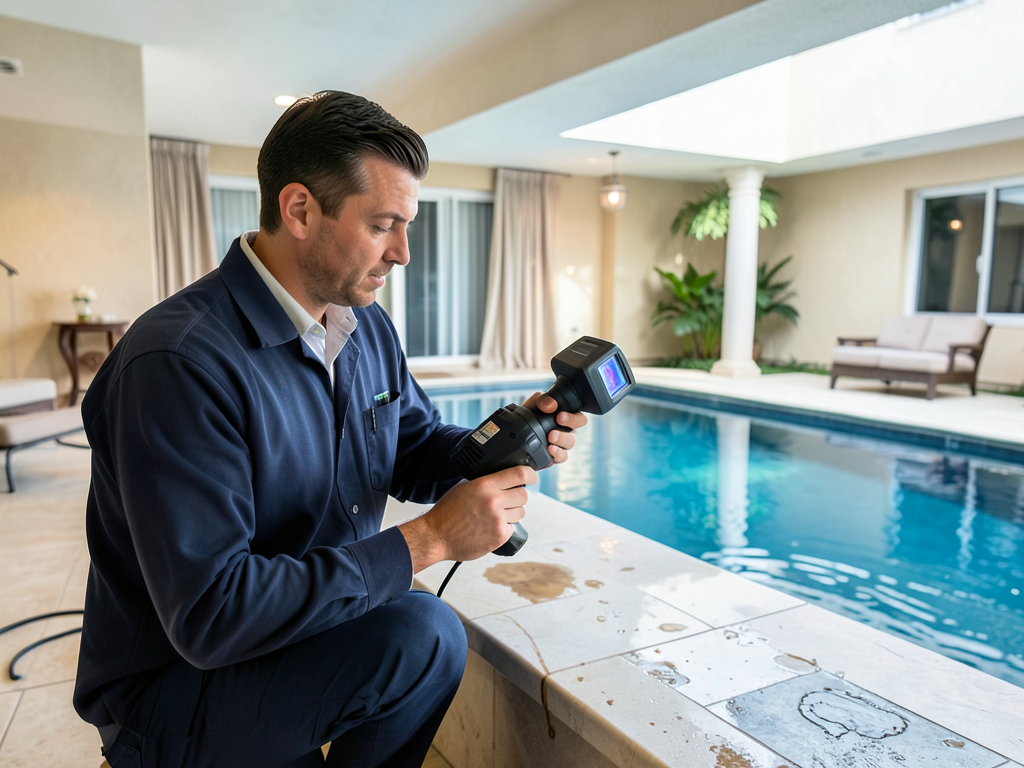
Moisture mapping with infrared thermal imaging can also reveal the extent and source of water intrusion. This technology shows temperature differences that indicate moisture patterns, helping technicians pinpoint whether water is entering from above (pool area) or below (groundwater).
Another diagnostic tool is pressure testing of pool plumbing lines. This involves isolating sections of your pool’s plumbing system and pressurizing them to identify leaks in pipes that might be running beneath your home or near foundation walls.
The unique challenges of Loch Lloyd basement restoration
Restoring a basement damaged by pool leaks in Loch Lloyd requires specialized knowledge of both luxury home construction and local building conditions. Many homes in this area feature high-end finishes that demand careful restoration protocols. Restoring historic homes in Brookside and Waldo after water damage.
The first challenge is water extraction from finished spaces. Unlike unfinished basements with concrete floors, many Loch Lloyd homes have luxury flooring materials that require specific drying techniques. Hardwood floors need specialized drying mats and monitoring to prevent warping, while custom tile work requires careful moisture testing beneath the surface. Specialized commercial water damage restoration for Kansas City business owners.
Another consideration is the presence of home automation and entertainment systems. Many luxury basements include theater rooms, wine cellars, or smart home equipment that’s vulnerable to water damage. These systems require careful handling and may need specialized cleaning to prevent corrosion from chlorinated water exposure.. Read more about Protecting high-end home theater equipment from basement floods in Loch Lloyd.
The structural implications are also significant. Pool water can compromise foundation wall integrity over time, especially in homes built on the expansive clay soils found throughout the Loch Lloyd area. This may require not just water removal but also foundation assessment and repair.
Emergency response protocols for pool-related basement flooding
When you discover pool water in your basement, every hour counts. The response protocol follows specific steps to minimize damage and ensure proper restoration:
- Safety Assessment
Check for electrical hazards, gas line risks, and structural stability before entering affected areas.
- Water Source Isolation
Shut off pool equipment and isolate the affected area to prevent further water migration.
- Water Extraction
Remove standing water using commercial-grade pumps and extractors designed for contaminated water.
- Contamination Control
Set up containment barriers to prevent cross-contamination to unaffected areas.
- Material Assessment
Evaluate which materials can be salvaged versus those requiring removal and replacement.
- Drying Protocol
Implement industrial dehumidification and air movement systems following IICRC S500 guidelines.
- Sanitization
Apply antimicrobial treatments to prevent mold growth from chlorinated water exposure.
The response time is critical. Most reputable restoration companies can arrive within 60-90 minutes for emergency calls in the Loch Lloyd area, thanks to their proximity to the gated community and knowledge of the best access routes.
Documentation is also essential. Professional technicians use moisture meters, thermal imaging cameras, and detailed reporting to create a comprehensive damage assessment. This documentation becomes crucial for insurance claims, especially when dealing with luxury property damage.
Insurance considerations for pool leak damage
Insurance coverage for pool-related basement flooding can be complex. Most standard homeowners policies cover sudden and accidental discharge of water, but the specifics matter.
Pool plumbing leaks are generally covered under sudden damage provisions, while slow leaks from deteriorating pool shells may be considered maintenance issues and denied. The presence of chlorinated water often helps establish that the source is indeed pool-related rather than groundwater, which can support your claim.
Documentation requirements are strict. Insurance companies typically require proof of the leak source, extent of damage, and professional restoration estimates. This is where working with a company experienced in luxury home claims becomes valuable.
Some policies also include coverage for temporary housing if the damage renders your home uninhabitable. This can be significant for Loch Lloyd homeowners whose entire basement living space may be affected by a major pool leak.
Preventing future pool leaks and basement flooding
Prevention is always better than restoration. For Loch Lloyd homeowners, several strategies can reduce the risk of pool-related basement flooding:
- Annual professional pool inspections focusing on structural integrity and plumbing systems
- Installation of leak detection systems that monitor water loss and alert you to problems
- Regular maintenance of pool equipment to prevent pressure-related failures
- Soil grading improvements around your home to direct water away from the foundation
- Installation of French drains or other subsurface drainage systems in vulnerable areas
The age of your pool matters. Pools over 10-15 years old are more susceptible to structural issues, especially in areas with significant freeze-thaw cycles like Kansas City. Regular maintenance and timely repairs become even more critical as pools age.
Consider also the impact of local weather patterns. The freeze-thaw cycles common in Cass County can cause expansion and contraction in pool structures, potentially creating new leak points over time.
Why professional restoration matters for luxury properties
Not all water damage restoration companies are equipped to handle the unique challenges of luxury home restoration in Loch Lloyd. The stakes are higher when you’re dealing with custom finishes, high-value contents, and complex home systems.
Professional restoration for luxury properties involves understanding the specific materials and systems involved. This might include knowing how to dry custom millwork without causing warping, how to protect home theater equipment during the restoration process, or how to work with interior designers to ensure finishes are properly matched after repairs.
The documentation process is also more rigorous. Luxury insurance claims often require detailed inventories, high-resolution damage documentation, and specific restoration protocols to satisfy insurance adjusters and ensure full compensation.
Experience with the local area is invaluable. Companies familiar with Loch Lloyd understand the unique access challenges of the gated community, the specific building practices common in the area, and the expectations of luxury homeowners when it comes to restoration quality and timeline.
Frequently Asked Questions
How can I tell if my pool is leaking before it damages my basement?
Monitor your pool’s water level daily using a marked bucket test. If the pool loses more than 1/4 inch per day, you likely have a leak. Also watch for unexplained increases in your water bill and soggy areas around the pool deck.
How long does it take to restore a basement after pool water damage?
The timeline varies based on damage extent, but most luxury basement restorations take 3-7 days for water removal and drying, with additional time for repairs and finishing work. Emergency water extraction can begin within hours of your call.
Will my homeowners insurance cover pool leak damage to my basement?
Most policies cover sudden and accidental pool leaks, but not gradual deterioration. Coverage depends on your specific policy terms and the source of the leak. Professional documentation of the damage and leak source is essential for successful claims.
What makes pool water more damaging than regular basement flooding?
Pool water contains chlorine and other chemicals that accelerate mold growth, corrode metal components, and break down building materials faster than clean water. This creates a Category 2 contamination situation requiring specialized restoration protocols.
How much does professional pool leak detection cost in Loch Lloyd?
Professional leak detection typically costs $300-$800 depending on the complexity of your pool system and the diagnostic methods required. This cost is often covered by insurance if it leads to a covered damage claim.
Don’t wait until it’s too late
Pool leaks don’t fix themselves, and every day of delay means more damage to your basement and foundation. The combination of chlorinated water, hydrostatic pressure, and luxury finishes in your Loch Lloyd home creates a situation that demands immediate professional attention.
If you’re seeing any of the warning signs mentioned above, or if you simply want peace of mind about your pool’s condition, call the experts who understand the unique challenges of Loch Lloyd properties. Our team is familiar with the gated community access protocols, the local building characteristics, and the specific restoration needs of luxury homes in the area.
Pick up the phone and call (816) 473-3833 today to schedule your inspection. Our emergency response team is ready to help you protect your investment and restore your home to its original condition. Don’t let a small leak turn into a major disaster. Retail Store Water Cleanup.
Remember, in the world of water damage, time is your enemy and expertise is your best defense. Call (816) 473-3833 now before the next storm hits or the next freeze-thaw cycle causes your pool to leak even more.
{
“@context”: “https://schema.org”,
“@type”: “BlogPosting”,
“headline”: “Signs that your Loch Lloyd pool might be leaking water directly into your basement”,
“description”: “Is your Loch Lloyd pool causing basement flooding? Learn the warning signs, how to detect leaks, and what to do before expensive damage occurs. Call (816) 473-3833 now.”,
“wordCount”: 1990,
“datePublished”: “2026-05-14T06:17:00.000Z”,
“dateModified”: “2026-05-14T06:17:00.000Z”,
“inLanguage”: “en-US”,
“mainEntityOfPage”: {
“@type”: “WebPage”,
“@id”: “https://apluswaterdamagerestorationkansascity.com”
},
“publisher”: {
“@type”: “LocalBusiness”,
“name”: “A Plus Water Damage Restoration Kansas City”,
“url”: “https://apluswaterdamagerestorationkansascity.com”
},
“author”: {
“@type”: “Organization”,
“name”: “A Plus Water Damage Restoration Kansas City”,
“url”: “https://apluswaterdamagerestorationkansascity.com”
},
“image”: {
“@type”: “ImageObject”,
“url”: “https://apluswaterdamagerestorationkansascity.com/wp-content/uploads/2026/03/signs-that-your-loch-lloyd-pool-might-be-leaking-w-1.png”
}
}
{
“@context”: “https://schema.org”,
“@type”: “LocalBusiness”,
“name”: “A Plus Water Damage Restoration Kansas City”,
“url”: “https://apluswaterdamagerestorationkansascity.com”,
“address”: {
“@type”: “PostalAddress”,
“addressLocality”: “Kansas City”
},
“areaServed”: {
“@type”: “City”,
“name”: “Kansas City”
}
}
{
“@context”: “https://schema.org”,
“@type”: “FAQPage”,
“mainEntity”: [
{
“@type”: “Question”,
“name”: “How can I tell if my pool is leaking before it damages my basement?”,
“acceptedAnswer”: {
“@type”: “Answer”,
“text”: “Monitor your pool’s water level daily using a marked bucket test. If the pool loses more than 1/4 inch per day, you likely have a leak. Also watch for unexplained increases in your water bill and soggy areas around the pool deck.”
}
},
{
“@type”: “Question”,
“name”: “How long does it take to restore a basement after pool water damage?”,
“acceptedAnswer”: {
“@type”: “Answer”,
“text”: “The timeline varies based on damage extent, but most luxury basement restorations take 3-7 days for water removal and drying, with additional time for repairs and finishing work. Emergency water extraction can begin within hours of your call.”
}
},
{
“@type”: “Question”,
“name”: “Will my homeowners insurance cover pool leak damage to my basement?”,
“acceptedAnswer”: {
“@type”: “Answer”,
“text”: “Most policies cover sudden and accidental pool leaks, but not gradual deterioration. Coverage depends on your specific policy terms and the source of the leak. Professional documentation of the damage and leak source is essential for successful claims.”
}
},
{
“@type”: “Question”,
“name”: “What makes pool water more damaging than regular basement flooding?”,
“acceptedAnswer”: {
“@type”: “Answer”,
“text”: “Pool water contains chlorine and other chemicals that accelerate mold growth, corrode metal components, and break down building materials faster than clean water. This creates a Category 2 contamination situation requiring specialized restoration protocols.”
}
},
{
“@type”: “Question”,
“name”: “How much does professional pool leak detection cost in Loch Lloyd?”,
“acceptedAnswer”: {
“@type”: “Answer”,
“text”: “Professional leak detection typically costs $300-$800 depending on the complexity of your pool system and the diagnostic methods required. This cost is often covered by insurance if it leads to a covered damage claim.”
}
}
]
}
{
“@context”: “https://schema.org”,
“@type”: “HowTo”,
“name”: “Emergency Pool Leak Response”,
“step”: [
{
“@type”: “HowToStep”,
“position”: 1,
“name”: “Safety Assessment”,
“text”: “Check for electrical hazards, gas line risks, and structural stability before entering affected areas.”
},
{
“@type”: “HowToStep”,
“position”: 2,
“name”: “Water Source Isolation”,
“text”: “Shut off pool equipment and isolate the affected area to prevent further water migration.”
},
{
“@type”: “HowToStep”,
“position”: 3,
“name”: “Water Extraction”,
“text”: “Remove standing water using commercial-grade pumps and extractors designed for contaminated water.”
},
{
“@type”: “HowToStep”,
“position”: 4,
“name”: “Contamination Control”,
“text”: “Set up containment barriers to prevent cross-contamination to unaffected areas.”
},
{
“@type”: “HowToStep”,
“position”: 5,
“name”: “Material Assessment”,
“text”: “Evaluate which materials can be salvaged versus those requiring removal and replacement.”
},
{
“@type”: “HowToStep”,
“position”: 6,
“name”: “Drying Protocol”,
“text”: “Implement industrial dehumidification and air movement systems following IICRC S500 guidelines.”
},
{
“@type”: “HowToStep”,
“position”: 7,
“name”: “Sanitization”,
“text”: “Apply antimicrobial treatments to prevent mold growth from chlorinated water exposure.”
}
],
“image”: “https://apluswaterdamagerestorationkansascity.com/wp-content/uploads/2026/03/signs-that-your-loch-lloyd-pool-might-be-leaking-w-1.png”
}
{
“@context”: “https://schema.org”,
“@type”: “BreadcrumbList”,
“itemListElement”: [
{
“@type”: “ListItem”,
“position”: 1,
“name”: “Home”,
“item”: “https://apluswaterdamagerestorationkansascity.com”
},
{
“@type”: “ListItem”,
“position”: 2,
“name”: “Blog”,
“item”: “https://apluswaterdamagerestorationkansascity.com/blog”
},
{
“@type”: “ListItem”,
“position”: 3,
“name”: “Signs that your Loch Lloyd pool might be leaking water directly into your basement”
}
]
}
{
“@context”: “https://schema.org”,
“@type”: “Service”,
“serviceType”: “Water Damage Restoration”,
“provider”: {
“@type”: “LocalBusiness”,
“name”: “A Plus Water Damage Restoration Kansas City”,
“url”: “https://apluswaterdamagerestorationkansascity.com”
},
“areaServed”: {
“@type”: “City”,
“name”: “Kansas City”
},
“description”: “Is your Loch Lloyd pool causing basement flooding? Learn the warning signs, how to detect leaks, and what to do before expensive damage occurs. Call (816) 473-3833 now.”
}