
What to do when your neighbor’s drainage issues are causing water to pool against your Strawberry Hill foundation
Water seeping into your basement from uphill runoff is a serious structural threat that affects many homes in Kansas City’s Strawberry Hill neighborhood. The steep slopes and historic limestone shelf beneath your foundation create perfect conditions for hydrostatic pressure to force water through basement walls. If you notice puddles forming against your foundation after heavy rain, hear water trickling inside walls, or smell musty odors in your lower level, your neighbor’s drainage patterns may be the culprit. What to do when your Overland Park basement floods during a storm.
Kansas water law follows the ‘Reasonable Use Rule,’ which means uphill property owners must manage runoff so it doesn’t damage adjacent properties. When your foundation shows signs of water intrusion—cracked mortar joints, efflorescence on stone walls, or persistent dampness—you have both legal rights and practical solutions available. The Unified Government of Wyandotte County enforces drainage ordinances that require proper grading and downspout extensions to prevent exactly this type of damage.. Read more about Signs that your Loch Lloyd pool might be leaking water directly into your basement.
Strawberry Hill’s unique topography creates additional challenges. The neighborhood sits on a bluff overlooking the Missouri River with slopes ranging from 15 to 30 percent grade. This means water from uphill properties can travel significant distances before reaching your foundation. The area’s heavy clay soil, known locally as ‘Wyandotte clay,’ absorbs water slowly and expands when wet, putting even more pressure on basement walls. When combined with the neighborhood’s aging combined sewer system, these factors create a perfect storm for foundation water damage.
Before taking legal action, document the problem thoroughly. Take photos of standing water, measure how long it takes to drain, and note when the issue occurs relative to rainfall patterns. Check your neighbor’s downspouts and grading to see if they direct water toward your property. This documentation becomes crucial if you need to file a complaint with the Unified Government’s stormwater management department or pursue legal remedies through Wyandotte County District Court. EPA mold remediation guidelines.
Professional water restoration services can address both the immediate damage and prevent future issues. Certified technicians use moisture meters to detect hidden water in walls, thermal imaging to identify temperature differences that indicate moisture, and hygrometers to measure indoor humidity levels. These diagnostic tools reveal the full extent of water damage that isn’t visible to the naked eye. Once the assessment is complete, restoration experts can install French drains, repair foundation cracks, and recommend grading solutions that redirect water away from your home.
The cost of professional restoration varies based on the damage extent and required solutions. Simple crack sealing might cost a few hundred dollars, while comprehensive French drain installation with sump pump systems can range from $3,000 to $8,000. However, addressing water damage early prevents exponentially more expensive foundation repairs that can cost $10,000 to $30,000 or more if left untreated. Most homeowners insurance policies cover sudden water damage but not gradual seepage, making proactive drainage solutions a wise investment.
If you’re dealing with neighbor-related water damage in Strawberry Hill, call (816) 473-3833 today to schedule your inspection. Our certified technicians understand the unique challenges of KCK’s historic neighborhoods and can provide both immediate water removal and long-term drainage solutions. Restoring historic homes in Brookside and Waldo after water damage.
Why Strawberry Hill’s Topography Leads to Water Damage
Strawberry Hill’s dramatic elevation changes create natural water flow patterns that can overwhelm residential drainage systems. The neighborhood’s position on a limestone bluff means water travels downhill rapidly during storms, collecting in low spots against foundations. Homes built on the steeper western slopes experience the most severe runoff issues, with water sometimes flowing several feet deep during heavy rainfall events.
The area’s soil composition compounds these drainage problems. Wyandotte clay, a dense, fine-grained soil common throughout the region, has extremely low permeability. This means water sits on the surface rather than soaking into the ground, creating prolonged saturation around foundations. When this clay freezes in winter, it expands and contracts, causing foundation movement that creates new entry points for water.
Historic construction methods in Strawberry Hill also contribute to modern water problems. Many homes built before 1950 lack proper foundation waterproofing and rely on stone or brick foundations that are more porous than modern concrete. These older materials absorb water readily and deteriorate when constantly exposed to moisture, leading to structural weakening over time.
Surface water management becomes critical in this environment. Without proper grading, water from uphill properties can flow directly against your foundation walls. Even small changes in grade—just a few inches over several feet—can direct thousands of gallons of water where you don’t want it during a typical Kansas City thunderstorm.
Local infrastructure limitations also play a role. The neighborhood’s combined sewer system, which handles both stormwater and wastewater, can become overwhelmed during heavy rains. When this happens, water backs up through basement floor drains and creates additional flooding risks for properties already dealing with exterior runoff issues. Dealing with a burst pipe in the Northland (Emergency repair and drying).
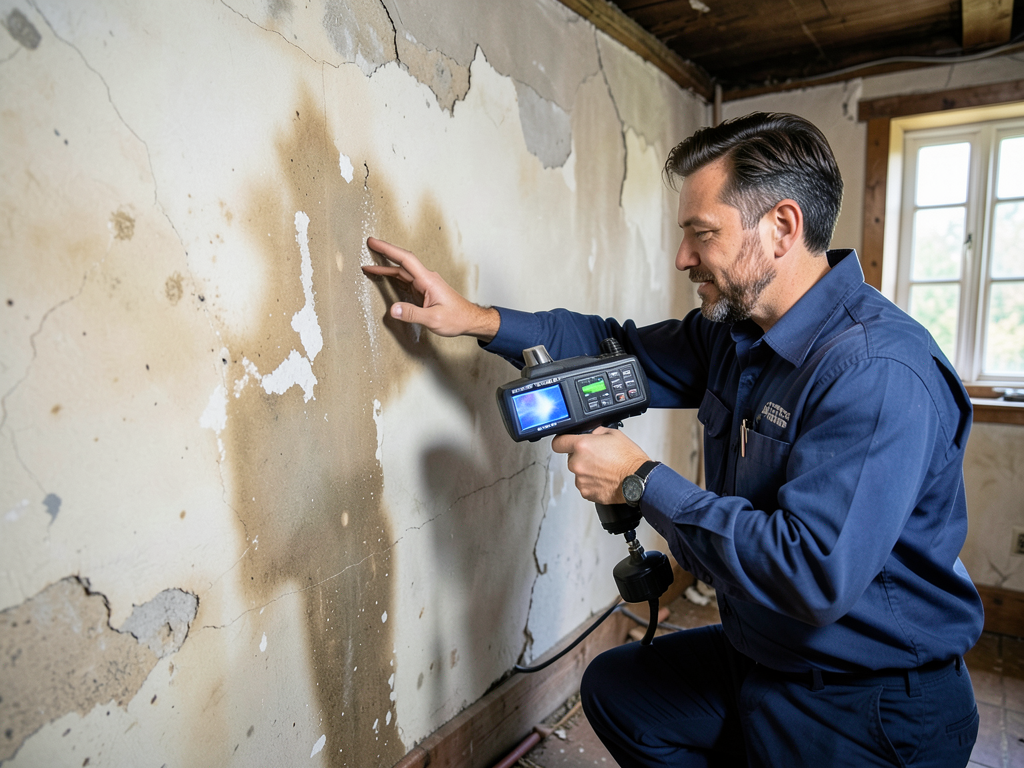
Diagram showing water flow patterns on Strawberry Hill’s slopes and how improper grading directs water toward foundations.
Legal Considerations: Kansas Drainage Laws and the ‘Reasonable Use’ Rule
Kansas follows the ‘Reasonable Use Rule’ for surface water disputes, which differs significantly from the ‘Common Enemy Doctrine’ followed by some neighboring states. Under this rule, uphill property owners must exercise reasonable care to prevent their land alterations from causing damage to downhill properties. This means your neighbor cannot simply redirect all their runoff onto your property, even if it’s the most convenient solution for them.
The Unified Government of Wyandotte County enforces specific drainage ordinances that support these legal principles. Section 7-5-11 of the Unified Government Code requires property owners to maintain proper drainage and prohibits the concentration of surface water onto adjacent properties without proper conveyance systems. Violations can result in fines and mandatory corrective action orders.
Documenting drainage violations strengthens your legal position. Keep records of rainfall events, take time-stamped photos of water flow patterns, and note any conversations with your neighbor about the issue. This documentation proves the ongoing nature of the problem and demonstrates your attempts to resolve it amicably before pursuing formal complaints.
Wyandotte County District Court handles civil disputes related to property damage, including water runoff cases. The court considers factors such as the severity of damage, the reasonableness of the uphill property owner’s actions, and whether alternative drainage solutions were available. Successful cases often require expert testimony from civil engineers or water restoration professionals who can explain the technical aspects of water flow and damage.
Before filing legal action, contact the Unified Government’s stormwater management department. They can inspect the property, determine if ordinances are being violated, and issue compliance orders to your neighbor. This administrative route is often faster and less expensive than court proceedings while still achieving the desired drainage corrections.
Mediation services through Wyandotte County offer another resolution path. A neutral third party can help neighbors reach mutually acceptable solutions, such as shared costs for drainage improvements or agreements about future landscaping changes. These mediated agreements often prove more durable than court orders because both parties have buy-in to the solution.
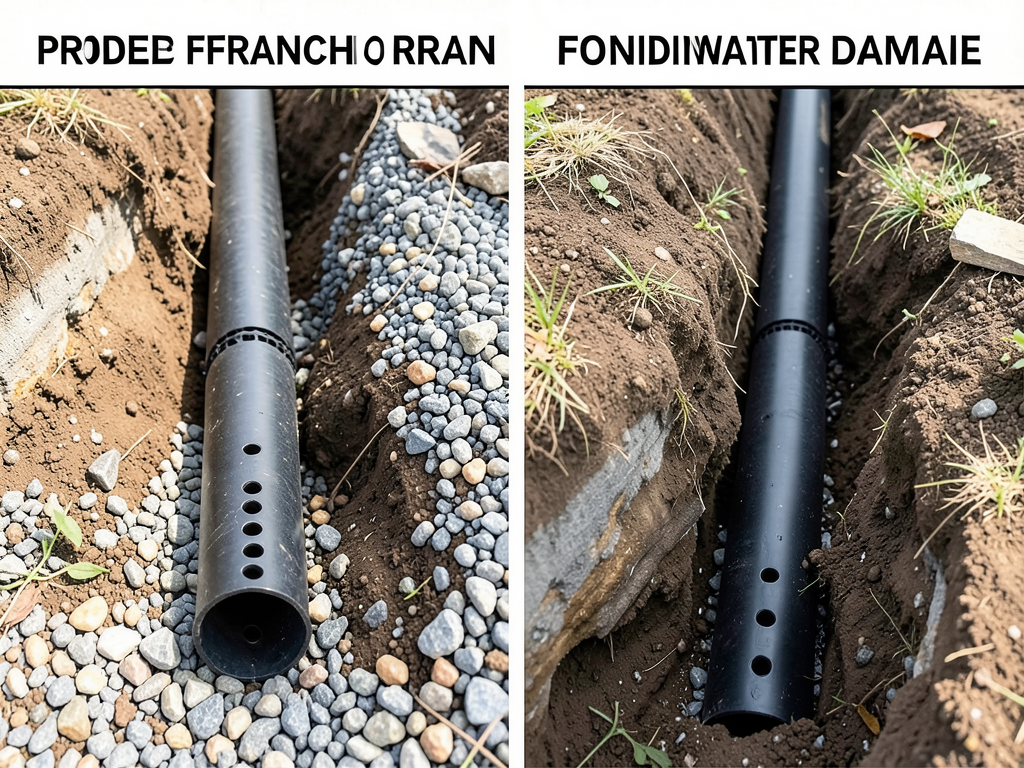
Photo showing proper downspout extensions that direct water away from property lines and neighboring foundations.
Signs Your Neighbor’s Runoff is Damaging Your Foundation
Hydrostatic Pressure and Basement Seepage
Hydrostatic pressure occurs when water-saturated soil pushes against foundation walls with tremendous force. This pressure can reach 30 to 60 pounds per square foot during prolonged wet periods, forcing water through even tiny cracks and pores in concrete or mortar. You’ll notice this as damp spots on basement walls, water trickling down from ceiling joints, or puddles forming along the base of walls after rain.
Efflorescence provides another clear indicator of water intrusion. This white, powdery substance forms when water carrying dissolved minerals evaporates from foundation surfaces. The minerals leave behind visible deposits that look like chalk or salt crystals. While efflorescence itself isn’t harmful, it signals ongoing moisture problems that require attention.
Musty odors in your basement often indicate hidden water damage. These smells come from mold and mildew growth that thrives in damp environments. Even if you don’t see visible mold, persistent musty odors suggest water is present somewhere in your basement, possibly behind walls or under flooring where it’s not immediately visible.
Foundation cracks widen when subjected to hydrostatic pressure. Vertical cracks typically indicate settling, while horizontal cracks suggest lateral pressure from saturated soil. Stair-step cracks in block foundations show where different sections of wall are moving at different rates due to uneven water pressure distribution.
Water stains on basement walls or floors create distinctive patterns that help diagnose the source. Stains that appear in straight lines along walls often indicate groundwater seepage, while stains concentrated in corners or near floor drains suggest surface water intrusion or sewer backup issues.
Soil Erosion and Retaining Wall Failure
Surface erosion patterns reveal where water is flowing across your property. Look for exposed tree roots, bare patches in lawn areas, or soil accumulation in low spots. These signs indicate that water is moving across the surface rather than being absorbed, which increases the volume of water reaching your foundation.
Retaining walls show stress from hydrostatic pressure through horizontal cracking, bulging, or leaning. When soil behind a retaining wall becomes saturated, it exerts tremendous outward pressure that can cause catastrophic failure. Water seeping from the base of retaining walls indicates the drainage system behind them isn’t functioning properly.
Foundation settlement manifests as uneven floors, sticking doors and windows, or diagonal cracks extending from window corners. When soil beneath a foundation becomes saturated and loses bearing capacity, the foundation can sink or shift, creating these structural problems that compound water intrusion issues.
Exterior paint peeling or blistering on basement walls indicates moisture penetration. As water moves through masonry, it carries salts and minerals that can push paint away from the surface. This blistering often appears in patterns that correspond to water entry points or areas of highest hydrostatic pressure.
Grading changes around your home signal drainage problems. Soil should slope away from foundations at a rate of at least 6 inches over the first 10 feet. If you notice soil building up against foundation walls or creating low spots that hold water, your grading needs correction to prevent water damage. Why you should not ignore that musty smell in your Olathe basement.
Practical Solutions: From French Drains to Proper Grading
French drains provide one of the most effective solutions for managing surface and subsurface water. These systems consist of perforated pipes buried in gravel trenches that collect and redirect water away from problem areas. A properly installed French drain can handle thousands of gallons of water per hour, making them ideal for Strawberry Hill’s steep slopes and heavy clay soil.
Surface grading corrections often solve drainage problems without extensive excavation. The goal is creating a gentle slope that directs water away from your foundation toward appropriate drainage areas. This might involve adding soil against foundation walls to create the proper 6-inch drop over 10 feet, then establishing grass or other vegetation to prevent erosion.
Retaining walls with integrated drainage systems help manage steep slopes while preventing hydrostatic pressure buildup. Modern retaining walls include drainage gravel, perforated pipes, and drainage fabric that work together to channel water to safe discharge points. Without these features, retaining walls can actually worsen drainage problems by creating water traps.
Downspout extensions carry roof water away from foundations where it can’t cause damage. Standard downspouts release water just feet from foundation walls, but extensions can carry this water 10 to 20 feet away where it can safely soak into soil or flow to storm drains. Underground extensions keep these pipes out of sight while maintaining their effectiveness.
Sump pump systems provide active water removal for basements that experience chronic seepage. These pumps collect water from foundation drains and automatically pump it outside when levels reach a certain point. In Strawberry Hill’s high water table conditions, sump pumps often run continuously during wet periods, making battery backup systems essential for power outage protection.
Foundation waterproofing membranes create barriers that prevent water penetration through basement walls. These rubberized or asphalt-based coatings are applied to exterior foundation walls below grade, creating an impermeable layer that blocks water while allowing the foundation to breathe. This solution works best when combined with exterior drainage improvements.
Window well drainage prevents one of the most common basement water entry points. Window wells should include gravel bases, drainage pipes connected to foundation drains, and covers that prevent debris accumulation while allowing light to enter. Without proper drainage, window wells fill with water and create pressure against basement windows.
Photo sequence showing French drain installation process from trench excavation through final grading and sod replacement.
When to Call a Professional Water Restoration Expert in Kansas City
Professional assessment becomes necessary when water damage extends beyond visible surfaces. Moisture meters can detect water in wall cavities, under flooring, and in insulation where it’s not visible. Thermal imaging cameras reveal temperature differences that indicate moisture presence, helping technicians locate hidden water damage that could lead to mold growth if left untreated.
Category 3 water damage requires immediate professional intervention. This classification includes water from flooding, sewage backups, or water that has been standing for more than 48 hours. Category 3 water contains harmful bacteria, viruses, and other pathogens that pose serious health risks and require specialized cleanup procedures following IICRC S500 standards. Specialized commercial water damage restoration for Kansas City business owners.
Mold growth indicates water damage has been present for some time. Mold can begin growing within 24 to 48 hours of water exposure and spreads rapidly in Kansas City’s humid climate. Professional remediation involves containment, proper removal procedures, and addressing the underlying moisture source to prevent recurrence.
Structural damage assessment requires expertise beyond basic water removal. Professionals can determine if foundation walls have shifted, if load-bearing elements are compromised, or if electrical systems have been affected by water exposure. These assessments guide repair priorities and help prevent unsafe conditions during restoration work.
Insurance claims for water damage often benefit from professional documentation. Restoration companies can provide detailed damage assessments, moisture mapping, and repair estimates that insurance adjusters require for claim approval. This documentation proves especially valuable for complex cases involving neighbor disputes or multiple damage sources.
Emergency response capabilities make professional services valuable for active water intrusion. 24/7 availability means technicians can begin water removal and damage mitigation immediately, preventing further destruction and reducing overall restoration costs. Quick response also minimizes the risk of mold growth and secondary damage to personal belongings.
Specialized equipment access sets professionals apart from DIY approaches. Industrial-grade dehumidifiers, air movers, and water extraction units remove moisture far more effectively than consumer-grade equipment. Professionals also use moisture meters, hygrometers, and other diagnostic tools that help ensure complete drying and prevent hidden moisture problems.
Long-term solutions require understanding the complete water intrusion pathway. Professionals can identify whether water enters through foundation walls, floor joints, or plumbing failures, then recommend comprehensive solutions that address all entry points rather than just treating symptoms.
Steps to Take if a Neighbor’s Water Floods Your Property
Immediate response to flooding focuses on safety and damage minimization. Turn off electricity to flooded areas before entering, as water and electricity create deadly shock hazards. Move valuable items to dry areas, elevate furniture on blocks if possible, and begin water removal with wet vacuums or pumps if it’s safe to do so.
Document everything before cleanup begins. Take photos and videos of all damaged areas, water levels, and any visible sources of water entry. This documentation becomes crucial for insurance claims and potential legal action. Note the date, time, and weather conditions when flooding occurred.
Contact your insurance company immediately after discovering damage. Most policies require prompt notification of claims, and delays can result in coverage denial. Provide your documentation and be prepared to describe the extent and cause of damage. Ask about coverage limitations and whether you need to mitigate further damage.
Notify your neighbor about the flooding, especially if it appears to originate from their property. Document this communication in writing, noting the date and content of conversations. This notification serves both as a courtesy and as evidence that you’ve informed them of the problem.
Professional assessment should follow initial cleanup efforts. Water restoration experts can identify hidden damage, test for moisture in building materials, and recommend comprehensive repair strategies. Their expertise helps prevent overlooking damage that could cause problems months later.
Preventative measures become priorities after addressing immediate damage. Install backflow preventers on floor drains, consider permanent drainage improvements, and evaluate whether temporary solutions like sandbags might help during future heavy rainfall events. These investments often prove less expensive than repeated flood damage repairs.
Legal consultation may become necessary if neighbor disputes can’t be resolved through direct communication. An attorney familiar with Kansas water law can explain your rights, potential remedies, and the likelihood of success in different approaches. Many attorneys offer initial consultations at reasonable rates to help you understand your options.
Community resources in Wyandotte County can provide additional support. The Unified Government’s stormwater management department offers technical assistance and can mediate disputes between neighbors. Local watershed associations sometimes provide grant funding for drainage improvements that benefit multiple properties.
Maintenance becomes critical after resolving immediate issues. Regularly clean gutters and downspouts, inspect foundation walls for new cracks, and ensure grading remains proper. These simple steps prevent minor issues from becoming major problems and help maintain good relationships with neighbors by demonstrating responsible property management.
Frequently Asked Questions
How do I prove my neighbor’s drainage is causing my foundation problems?
Document water flow patterns during rainfall events with photos and videos showing water traveling from their property to yours. Note the timing of water appearance relative to rain events and measure any standing water depths. Professional moisture testing can also show whether water is entering through specific walls that align with your neighbor’s drainage patterns.
Can I sue my neighbor for water damage in Kansas?
Yes, Kansas law allows property owners to seek damages when neighbors’ actions cause water damage through the ‘Reasonable Use Rule.’ Success typically requires proving the uphill neighbor’s actions were unreasonable and that damage resulted. Courts consider factors like available alternatives, severity of damage, and whether the uphill owner acted negligently.
How much does French drain installation cost in Strawberry Hill?
French drain installation in Strawberry Hill typically ranges from $3,000 to $8,000 depending on linear footage, soil conditions, and whether you need interior or exterior installation. The area’s steep slopes and clay soil can increase costs due to excavation challenges and the need for deeper trenches to achieve proper drainage slope.
Will my homeowners insurance cover neighbor-caused water damage?
Most standard policies cover sudden and accidental water damage regardless of source, but may exclude damage from surface water runoff or gradual seepage. Coverage depends on your specific policy terms and whether the damage resulted from a covered peril. Document everything and contact your insurance company promptly after discovering damage.
How long does water damage restoration take?
Basic water removal takes 24 to 48 hours, but complete restoration including drying, repairs, and preventative measures typically requires 3 to 14 days depending on damage extent. Category 3 water damage or mold presence extends timelines due to required safety protocols and specialized cleanup procedures.
If water from your neighbor’s property is damaging your Strawberry Hill foundation, don’t wait for the next storm to cause more destruction. Call (816) 473-3833 today to schedule your inspection and take the first step toward protecting your home from ongoing water damage. For more information, visit FEMA flood protection guidelines.
You may also find this helpful. Is crawl space encapsulation actually worth the investment for Ruskin Heights homeowners?.
{
“@context”: “https://schema.org”,
“@type”: “BlogPosting”,
“headline”: “What to do when your neighbor’s drainage issues are causing water to pool against your Strawberry Hill foundation”,
“description”: “Water pooling against your Strawberry Hill foundation from uphill runoff? Learn Kansas drainage laws, hydrostatic pressure fixes, and when to call a KCK restoration expert.”,
“wordCount”: 3292,
“datePublished”: “2026-05-09T15:26:00.000Z”,
“dateModified”: “2026-05-09T15:26:00.000Z”,
“inLanguage”: “en-US”,
“mainEntityOfPage”: {
“@type”: “WebPage”,
“@id”: “https://apluswaterdamagerestorationkansascity.com”
},
“publisher”: {
“@type”: “LocalBusiness”,
“name”: “A Plus Water Damage Restoration Kansas City”,
“url”: “https://apluswaterdamagerestorationkansascity.com”
},
“author”: {
“@type”: “Organization”,
“name”: “A Plus Water Damage Restoration Kansas City”,
“url”: “https://apluswaterdamagerestorationkansascity.com”
},
“image”: {
“@type”: “ImageObject”,
“url”: “https://apluswaterdamagerestorationkansascity.com/wp-content/uploads/2026/03/what-to-do-when-your-neighbor-s-drainage-issues-ar-1.png”
}
}
{
“@context”: “https://schema.org”,
“@type”: “LocalBusiness”,
“name”: “A Plus Water Damage Restoration Kansas City”,
“url”: “https://apluswaterdamagerestorationkansascity.com”,
“address”: {
“@type”: “PostalAddress”,
“addressLocality”: “Kansas City”
},
“areaServed”: {
“@type”: “City”,
“name”: “Kansas City”
}
}
{
“@context”: “https://schema.org”,
“@type”: “FAQPage”,
“mainEntity”: [
{
“@type”: “Question”,
“name”: “How do I prove my neighbor’s drainage is causing my foundation problems?”,
“acceptedAnswer”: {
“@type”: “Answer”,
“text”: “Document water flow patterns during rainfall events with photos and videos showing water traveling from their property to yours. Note the timing of water appearance relative to rain events and measure any standing water depths. Professional moisture testing can also show whether water is entering through specific walls that align with your neighbor’s drainage patterns.”
}
},
{
“@type”: “Question”,
“name”: “Can I sue my neighbor for water damage in Kansas?”,
“acceptedAnswer”: {
“@type”: “Answer”,
“text”: “Yes, Kansas law allows property owners to seek damages when neighbors’ actions cause water damage through the ‘Reasonable Use Rule.’ Success typically requires proving the uphill neighbor’s actions were unreasonable and that damage resulted. Courts consider factors like available alternatives, severity of damage, and whether the uphill owner acted negligently.”
}
},
{
“@type”: “Question”,
“name”: “How much does French drain installation cost in Strawberry Hill?”,
“acceptedAnswer”: {
“@type”: “Answer”,
“text”: “French drain installation in Strawberry Hill typically ranges from $3,000 to $8,000 depending on linear footage, soil conditions, and whether you need interior or exterior installation. The area’s steep slopes and clay soil can increase costs due to excavation challenges and the need for deeper trenches to achieve proper drainage slope.”
}
},
{
“@type”: “Question”,
“name”: “Will my homeowners insurance cover neighbor-caused water damage?”,
“acceptedAnswer”: {
“@type”: “Answer”,
“text”: “Most standard policies cover sudden and accidental water damage regardless of source, but may exclude damage from surface water runoff or gradual seepage. Coverage depends on your specific policy terms and whether the damage resulted from a covered peril. Document everything and contact your insurance company promptly after discovering damage.”
}
},
{
“@type”: “Question”,
“name”: “How long does water damage restoration take?”,
“acceptedAnswer”: {
“@type”: “Answer”,
“text”: “Basic water removal takes 24 to 48 hours, but complete restoration including drying, repairs, and preventative measures typically requires 3 to 14 days depending on damage extent. Category 3 water damage or mold presence extends timelines due to required safety protocols and specialized cleanup procedures.”
}
}
]
}
{
“@context”: “https://schema.org”,
“@type”: “BreadcrumbList”,
“itemListElement”: [
{
“@type”: “ListItem”,
“position”: 1,
“name”: “Home”,
“item”: “https://apluswaterdamagerestorationkansascity.com”
},
{
“@type”: “ListItem”,
“position”: 2,
“name”: “Blog”,
“item”: “https://apluswaterdamagerestorationkansascity.com/blog”
},
{
“@type”: “ListItem”,
“position”: 3,
“name”: “What to do when your neighbor’s drainage issues are causing water to pool against your Strawberry Hill foundation”
}
]
}
{
“@context”: “https://schema.org”,
“@type”: “Service”,
“serviceType”: “Water Damage Restoration”,
“provider”: {
“@type”: “LocalBusiness”,
“name”: “A Plus Water Damage Restoration Kansas City”,
“url”: “https://apluswaterdamagerestorationkansascity.com”
},
“areaServed”: {
“@type”: “City”,
“name”: “Kansas City”
},
“description”: “Water pooling against your Strawberry Hill foundation from uphill runoff? Learn Kansas drainage laws, hydrostatic pressure fixes, and when to call a KCK restoration expert.”
}