What to do when your Belton basement floods after a heavy South KC storm
When heavy storms hit the South KC area and your Belton basement floods, every minute counts. Standing water damages flooring, walls, and stored belongings while creating a perfect environment for mold growth. The first 24 hours are critical for preventing long-term structural damage and health hazards. Retail Store Water Cleanup.
Call (816) 473-3833 immediately for 24/7 emergency water extraction. Our IICRC-certified team arrives within 60 minutes to begin water removal and structural drying. We understand Belton’s specific challenges with clay soil expansion and aging storm drainage systems that contribute to basement flooding. IICRC S500 standards.
Common causes of basement flooding in Belton
Belton’s location in Cass County exposes homes to unique flooding risks. The area’s heavy clay soil, known locally as “KC blue clay,” expands when saturated and creates hydrostatic pressure against basement walls. This pressure forces water through foundation cracks and floor seams during heavy rainfall. Water Stains on Drywall.
During South KC storms, the combination of intense rainfall and aging municipal storm drains often overwhelms the system. Water backs up through floor drains and sump pump discharge lines. Many Belton homes built before 2000 lack proper backwater valves required by current building codes. Water Damage Restoration Harrisonville.
Sump pump failures represent another major cause. When power outages occur during storms, battery backup systems may not last long enough. Even with power, pumps can fail from debris clogging intake screens or float switch malfunctions. Regular maintenance prevents most failures but many homeowners discover problems only during emergencies.
Call (816) 473-3833 today to schedule your inspection. Our technicians can assess your current system and recommend upgrades before the next storm hits.
Immediate steps to take when your basement floods
Safety comes first. Never enter standing water without turning off electricity at the main panel. Water conducts electricity and can hide live wires or damaged outlets. If you cannot safely access the panel, call an electrician first.
Stop the water source if possible. For clean water from broken pipes, shut off the main water valve. For storm-related flooding, wait for water levels to drop before attempting cleanup. Document everything with photos and videos before starting any work for insurance purposes.
Remove valuable items from the affected area. Move furniture, electronics, and important documents to dry areas. Use plastic sheeting or aluminum foil under furniture legs to prevent staining on wet carpets. Do not use household vacuums to remove water as they create electrical hazards.
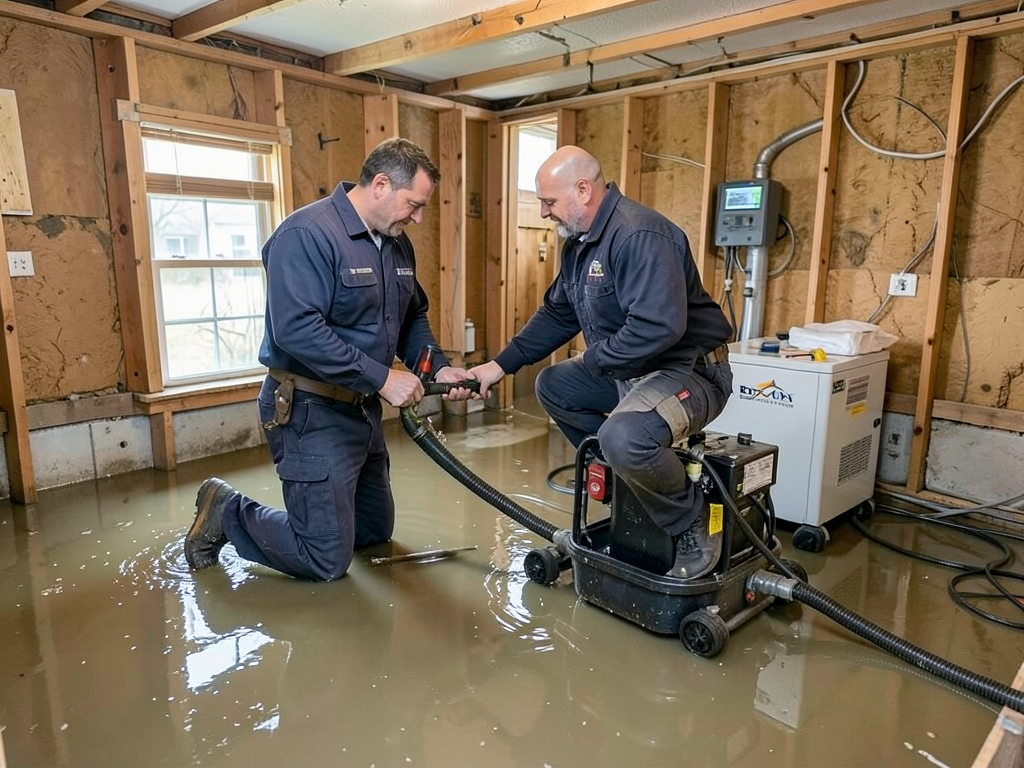
Begin water removal if safe to do so. Use buckets, mops, or wet vacuums for small amounts of water. For larger floods, professional extraction equipment removes water much faster and prevents further damage. Our truck-mounted extraction units remove thousands of gallons per hour.
Learn more about emergency response procedures that apply across the KC metro area.
Professional water damage restoration process
Our restoration process follows IICRC S500 standards for water damage restoration. We begin with moisture mapping using infrared cameras and moisture meters to identify all affected areas. Water travels along the path of least resistance, often hiding behind walls or under flooring.
Water extraction comes next using powerful truck-mounted or portable extraction units. We remove standing water and extract moisture from carpets and padding. The extraction phase removes approximately 95% of the water, significantly reducing drying time.
Structural drying involves placing commercial air movers and dehumidifiers strategically throughout the affected area. We calculate the exact number of equipment needed based on cubic footage and moisture levels. Air movers create airflow across wet surfaces, while dehumidifiers remove moisture from the air.
Monitoring continues daily until all materials return to normal moisture content. We document temperature, humidity, and moisture readings to ensure complete drying. This prevents secondary damage like warping, swelling, or mold growth that occurs when materials remain damp.
Sanitization and antimicrobial treatment protect against bacteria and mold. We use EPA-registered disinfectants on all affected surfaces. For gray or black water situations, we follow Missouri Department of Health guidelines for proper decontamination. EPA mold guidelines.
See how we handle different construction types across the KC area.
Insurance claims and documentation
Most homeowner insurance policies cover sudden and accidental water damage but exclude flooding from surface water or groundwater. We work directly with insurance companies to provide detailed documentation of damage extent and restoration procedures.
Our technicians create moisture maps, photo documentation, and written reports that insurance adjusters need. We understand what information carriers require for claim approval. This expertise speeds up the claims process and ensures you receive proper coverage.
For flood damage from external sources, separate flood insurance through the National Flood Insurance Program may be required. We can help determine coverage types and recommend restoration approaches that comply with insurance requirements.
Keep all receipts for emergency services, temporary repairs, and restoration work. Insurance companies often reimburse for these expenses even if the damage itself falls under a different coverage category.
Commercial property owners can learn about business interruption coverage and restoration planning.
Preventing future basement flooding
Regular maintenance prevents most basement flooding situations. Clean gutters and downspouts at least twice yearly, more often if trees surround your home. Ensure downspouts direct water at least six feet from the foundation. Grade soil away from the foundation to prevent water pooling.
Test your sump pump quarterly by pouring water into the pit until the pump activates. Replace battery backup systems every 3-5 years. Consider installing a secondary pump or water-powered backup system for added protection during power outages.
Install a backwater valve on floor drains and main sewer lines. These valves prevent sewer backup during heavy rainfall when municipal systems become overwhelmed. Many Belton homes lack this protection, making them vulnerable during South KC storms.
Seal foundation cracks with hydraulic cement or epoxy injection. Even small cracks allow significant water intrusion during heavy rains. Professional foundation repair addresses structural issues that contribute to water problems.
Consider interior drainage systems for chronic moisture problems. French drains and sump pump systems collect water before it enters living spaces. These systems work well with Belton’s clay soil conditions by providing an escape route for groundwater pressure.
Learn about winter preparation to prevent frozen pipe bursts that cause similar damage.
Why choose local Belton experts
Local knowledge makes a significant difference in water damage restoration. We understand Belton’s specific soil conditions, building practices, and weather patterns. Our technicians live in the area and respond faster than companies based in downtown Kansas City.
We maintain relationships with local building departments and understand permit requirements for restoration work. This knowledge prevents delays and ensures all work meets current building codes. Missouri has specific requirements for mold remediation that we follow precisely.
Our equipment inventory serves the entire South KC area, allowing us to respond quickly without traveling from distant locations. We stock common replacement parts and materials to complete most restoration projects without delays.
We provide honest assessments and transparent pricing. We will tell you if damage falls below our minimum service threshold or if DIY approaches work for your situation. Our goal is solving your problem, not selling unnecessary services.
Emergency response means 24/7 availability with live operators answering calls. We do not use answering services or call forwarding. When you call (816) 473-3833, you speak directly with someone who can dispatch help immediately.
Learn about hidden moisture problems that may exist even after visible water removal.
Health and safety considerations
Flood water categories determine safety protocols and cleanup requirements. Clean water from broken pipes poses minimal health risks but becomes contaminated within 48-72 hours. Gray water from washing machines or dishwashers contains microorganisms and requires protective equipment.
Black water from sewage backups or flooding contains pathogens, chemicals, and debris. This category requires full personal protective equipment and specialized cleaning procedures. We follow OSHA and EPA guidelines for handling contaminated water.
Mold begins growing within 24-48 hours of water exposure. Some molds produce mycotoxins that cause respiratory problems, especially in children, elderly, or immune-compromised individuals. Rapid water removal and proper drying prevent mold establishment.
Structural integrity concerns arise when water saturates building materials. Wet drywall loses strength and may collapse. Wood framing swells and warps, affecting door and window operation. Electrical systems require inspection after water exposure to prevent fire hazards.
Air quality testing after restoration ensures harmful contaminants do not remain. We use moisture meters and thermal imaging to verify complete drying. This documentation protects your health and property value.
Cost factors and estimates
Water damage restoration costs vary based on several factors. Water category affects procedures and equipment needs. Clean water requires less intensive cleaning than contaminated water. Gray and black water situations involve additional decontamination steps.
Area size directly impacts equipment needs and labor hours. A small bathroom flood costs significantly less than a full basement. We provide accurate estimates after initial assessment rather than over-the-phone quotes that often prove inaccurate.
Material types affect restoration approaches. Hardwood floors require specialized drying equipment to prevent warping. Carpets may need replacement if contaminated. Drywall often requires cutting above water line to prevent wicking.
Insurance coverage influences out-of-pocket costs. We work with most major carriers and can help determine coverage before beginning work. This prevents surprises and ensures you understand financial responsibilities.
Emergency response timing affects costs. Rapid response often prevents secondary damage that increases restoration complexity and expense. The initial service call includes assessment and immediate water removal to minimize further damage.
Call (816) 473-3833 for a free assessment and accurate estimate based on your specific situation.
Frequently Asked Questions
How long does water damage restoration take?
Water extraction typically completes within 4-8 hours for most residential situations. Complete structural drying takes 3-5 days depending on material types and extent of damage. We monitor progress daily and provide updates throughout the process.
Can I stay in my home during restoration?
Clean water situations often allow you to remain in unaffected areas. Contaminated water requires temporary relocation for health and safety. We discuss options during the initial assessment and help arrange accommodations if needed.
Will my insurance cover water damage?
Coverage depends on the water source and your specific policy. Sudden pipe breaks typically have coverage while flooding from external sources may require separate flood insurance. We help document damage and work with adjusters to maximize coverage.
How do I prevent mold after water damage?
Rapid water removal and complete drying prevent mold growth. We use moisture meters to verify all materials return to normal content levels. Antimicrobial treatments provide additional protection in high-risk areas like basements and bathrooms.
What should I do while waiting for help?
Ensure safety by turning off electricity if possible. Move valuable items to dry areas. Document damage with photos. Avoid walking through standing water. Call (816) 473-3833 immediately for professional assessment and water removal.
Emergency contact information
Water damage requires immediate action. Call (816) 473-3833 24 hours a day, 7 days a week for emergency response. Our team serves Belton and surrounding South KC communities with rapid arrival times and professional restoration services.
Do not wait for water to recede or attempt extensive cleanup yourself. Professional equipment and expertise prevent further damage and ensure proper restoration. We handle everything from initial water removal to final repairs and insurance documentation.
Prepare for emergencies by saving our number now. When storms hit and your basement floods, you need immediate help from local experts who understand Belton’s specific challenges. Call (816) 473-3833 before the next heavy storm arrives.
Call (816) 473-3833 today to schedule your inspection and protect your home from future water damage.
{
“@context”: “https://schema.org”,
“@type”: “BlogPosting”,
“headline”: “What to do when your Belton basement floods after a heavy South KC storm”,
“description”: “Emergency basement flooding in Belton MO after heavy storms? Get 24/7 rapid response, water extraction, and drying services from local experts. Call (816) 473-3833 now.”,
“wordCount”: 1924,
“datePublished”: “2026-03-13T16:33:00.000Z”,
“dateModified”: “2026-03-13T16:33:00.000Z”,
“inLanguage”: “en-US”,
“mainEntityOfPage”: {
“@type”: “WebPage”,
“@id”: “https://apluswaterdamagerestorationkansascity.com”
},
“publisher”: {
“@type”: “LocalBusiness”,
“name”: “A Plus Water Damage Restoration Kansas City”,
“url”: “https://apluswaterdamagerestorationkansascity.com”
},
“author”: {
“@type”: “Organization”,
“name”: “A Plus Water Damage Restoration Kansas City”,
“url”: “https://apluswaterdamagerestorationkansascity.com”
},
“image”: {
“@type”: “ImageObject”,
“url”: “https://apluswaterdamagerestorationkansascity.com/wp-content/uploads/2026/03/what-to-do-when-your-belton-basement-floods-after-1.png”
}
}
{
“@context”: “https://schema.org”,
“@type”: “LocalBusiness”,
“name”: “A Plus Water Damage Restoration Kansas City”,
“url”: “https://apluswaterdamagerestorationkansascity.com”,
“address”: {
“@type”: “PostalAddress”,
“addressLocality”: “Kansas City”
},
“areaServed”: {
“@type”: “City”,
“name”: “Kansas City”
}
}
{
“@context”: “https://schema.org”,
“@type”: “FAQPage”,
“mainEntity”: [
{
“@type”: “Question”,
“name”: “How long does water damage restoration take?”,
“acceptedAnswer”: {
“@type”: “Answer”,
“text”: “Water extraction typically completes within 4-8 hours for most residential situations. Complete structural drying takes 3-5 days depending on material types and extent of damage. We monitor progress daily and provide updates throughout the process.”
}
},
{
“@type”: “Question”,
“name”: “Can I stay in my home during restoration?”,
“acceptedAnswer”: {
“@type”: “Answer”,
“text”: “Clean water situations often allow you to remain in unaffected areas. Contaminated water requires temporary relocation for health and safety. We discuss options during the initial assessment and help arrange accommodations if needed.”
}
},
{
“@type”: “Question”,
“name”: “Will my insurance cover water damage?”,
“acceptedAnswer”: {
“@type”: “Answer”,
“text”: “Coverage depends on the water source and your specific policy. Sudden pipe breaks typically have coverage while flooding from external sources may require separate flood insurance. We help document damage and work with adjusters to maximize coverage.”
}
},
{
“@type”: “Question”,
“name”: “How do I prevent mold after water damage?”,
“acceptedAnswer”: {
“@type”: “Answer”,
“text”: “Rapid water removal and complete drying prevent mold growth. We use moisture meters to verify all materials return to normal content levels. Antimicrobial treatments provide additional protection in high-risk areas like basements and bathrooms.”
}
},
{
“@type”: “Question”,
“name”: “What should I do while waiting for help?”,
“acceptedAnswer”: {
“@type”: “Answer”,
“text”: “Ensure safety by turning off electricity if possible. Move valuable items to dry areas. Document damage with photos. Avoid walking through standing water. Call (816) 473-3833 immediately for professional assessment and water removal.”
}
}
]
}
{
“@context”: “https://schema.org”,
“@type”: “BreadcrumbList”,
“itemListElement”: [
{
“@type”: “ListItem”,
“position”: 1,
“name”: “Home”,
“item”: “https://apluswaterdamagerestorationkansascity.com”
},
{
“@type”: “ListItem”,
“position”: 2,
“name”: “Blog”,
“item”: “https://apluswaterdamagerestorationkansascity.com/blog”
},
{
“@type”: “ListItem”,
“position”: 3,
“name”: “What to do when your Belton basement floods after a heavy South KC storm”
}
]
}
{
“@context”: “https://schema.org”,
“@type”: “Service”,
“serviceType”: “Water Damage Restoration”,
“provider”: {
“@type”: “LocalBusiness”,
“name”: “A Plus Water Damage Restoration Kansas City”,
“url”: “https://apluswaterdamagerestorationkansascity.com”
},
“areaServed”: {
“@type”: “City”,
“name”: “Kansas City”
},
“description”: “Emergency basement flooding in Belton MO after heavy storms? Get 24/7 rapid response, water extraction, and drying services from local experts. Call (816) 473-3833 now.”
}