
Managing water damage in historic Northeast Kansas City homes without ruining the original trim
When water invades a century-old home in Kansas City’s historic Northeast, the stakes go far beyond simple cleanup. These architectural treasures built between 1880 and 1930 feature irreplaceable details like hand-carved crown molding, solid oak baseboards, and lath-and-plaster walls that modern contractors often destroy with standard demolition approaches. The challenge requires specialized knowledge of how water behaves in dense old-growth wood, how to dry plaster without cracking it, and how to navigate the Kansas City Landmarks Commission’s strict preservation guidelines. Restoring historic homes in Brookside and Waldo after water damage.
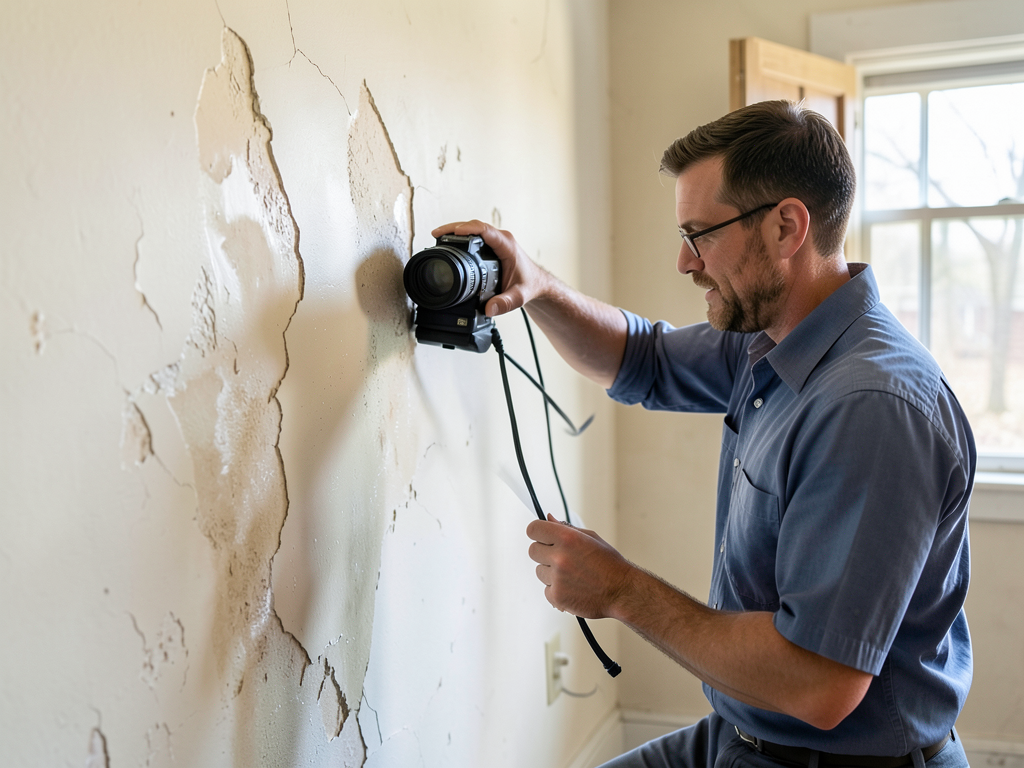
The first 48 hours after water damage determines whether original trim survives or ends up in a dumpster. Our team uses non-invasive moisture mapping with infrared thermography to identify exactly where water has penetrated without removing a single piece of woodwork. This diagnostic approach reveals hidden moisture behind baseboards and inside wall cavities while preserving every inch of irreplaceable trim. Water Stains on Drywall.
Why historic property water damage requires a specialized approach
Historic Northeast Kansas City homes face unique vulnerabilities that modern houses simply don’t have. The area’s combination of aging infrastructure, clay-rich soil, and century-old building methods creates specific failure patterns that demand specialized solutions. Specialized commercial water damage restoration for Kansas City business owners.
The region’s expansive clay soil causes foundation shifting that creates hairline cracks in basement walls. These cracks allow groundwater intrusion during heavy rains, particularly in neighborhoods like Pendleton Heights and Scarritt Renaissance where many homes sit on limestone foundations. The clay soil also retains moisture against foundation walls for weeks after storms, creating prolonged exposure that modern basements with proper drainage rarely experience. What to do when your Overland Park basement floods during a storm.
Historic homes in the Northeast corridor typically feature balloon-frame construction with continuous wall cavities that run from basement to attic. When water enters through a roof leak or basement crack, it travels vertically through these cavities, saturating multiple floors before showing visible signs. This hidden migration pattern means damage often extends far beyond where water first enters.
Old-growth lumber used in these homes contains tighter grain patterns and higher density than modern lumber. While this makes the wood more resistant to rot, it also means water penetrates deeper and dries much slower. A floor joist from 1910 might take 30 days to fully dry compared to 10 days for modern lumber of the same size.. Read more about Why your Fairway chimney might be the reason for that ceiling stain.
Lead-based paint was standard on all trim and woodwork before 1978. When water damage occurs, proper lead-safe procedures become mandatory under EPA’s Renovation, Repair and Painting Rule (RRP Rule 40 CFR Part 745). Any disturbance of painted surfaces requires containment, HEPA filtration, and certified lead-safe practices to protect occupants and workers. EPA Renovation, Repair and Painting Rule.
Our ‘preservation-first’ restoration process
Our approach to historic home water damage centers on preservation rather than replacement. We’ve developed specific protocols that allow us to dry structures in place while maintaining every piece of original craftsmanship.
Initial assessment and moisture mapping
We begin with comprehensive moisture mapping using multiple detection methods. Infrared cameras reveal temperature variations that indicate moisture presence, while penetrating moisture meters measure water content at different depths in wood and plaster. For plaster walls, we use non-penetrating meters that don’t damage the surface.
Our technicians create detailed moisture maps showing exactly where water has traveled. This mapping often reveals that visible damage represents only 30% of the actual affected area. Water might travel along ceiling joists or inside wall cavities for twenty feet from the entry point before finding a path to the surface.
We document everything with photos and moisture readings before any work begins. This documentation serves multiple purposes: it creates a baseline for insurance claims, establishes the extent of damage for the Kansas City Landmarks Commission if permits are needed, and provides a roadmap for the drying strategy.
Non-invasive drying for lath, plaster, and original hardwoods
Traditional drying methods that work for modern drywall often destroy historic plaster. Our specialized approach uses directed airflow and dehumidification to remove moisture without causing the catastrophic cracking that occurs when plaster dries too quickly.
For plaster walls, we create small ventilation holes at the top and bottom of affected areas rather than removing entire sections. These holes allow us to circulate dry air behind the plaster while maintaining structural integrity. We monitor humidity levels inside wall cavities continuously to ensure even drying.
Original hardwood floors require particular care. We use floor drying mats connected to truck-mounted extraction systems that apply gentle suction to draw moisture from deep within the wood. This method can save floors that would otherwise cup and warp beyond repair.
Baseboards and door casings receive special treatment. Rather than removing them, we use injection drying systems that force dry air into the cavity behind trim through tiny, nearly invisible holes. This preserves the finish and eliminates the need for color-matching replacement pieces.
Lead-safe work practices for pre-1978 homes
Any home built before 1978 requires lead-safe work practices when water damage disturbs painted surfaces. Our crews maintain EPA Lead-Safe certification and follow strict protocols that protect both workers and occupants.
We establish containment zones using 6-mil plastic sheeting and negative air pressure to prevent lead dust from spreading. All workers wear proper personal protective equipment including respirators and disposable coveralls. HEPA vacuums capture any dust generated during the drying process.
Before disturbing any painted surface, we test for lead content using EPA-recognized test kits. If lead is present, we follow RRP Rule requirements for containment, cleanup, and disposal. This protects your family from lead exposure while ensuring compliance with federal regulations.
Moisture monitoring and documentation
Drying historic structures requires patience and precision. We monitor moisture levels daily using the same meters that established our initial readings. Our goal is achieving moisture content below 16% for wood and below 12% for plaster before considering the job complete.
We document every step of the process with photos, moisture readings, and daily logs. This documentation proves to insurance companies that proper drying occurred and helps prevent future mold claims. It also provides a record for future homeowners who might need to know the property’s restoration history.. Read more about Why River Market loft owners need to worry about flat roof leaks.
The drying timeline for historic homes typically extends 50-100% longer than for modern construction. While a 2020 home might dry in 3-5 days, a 1920 home with plaster walls and hardwood floors might require 7-14 days. We educate homeowners about this timeline upfront to manage expectations.
Navigating Kansas City’s historic district regulations and insurance
Kansas City’s historic preservation framework adds another layer of complexity to water damage restoration. The city maintains several historic districts where exterior changes and significant interior alterations require approval from the Kansas City Landmarks Commission.
The Landmarks Commission reviews projects in districts like Hyde Park, Pendleton Heights, Scarritt Renaissance, and the Northeast Industrial District. Their standards require that any replacement materials match the original in dimension, profile, and material. This means you cannot simply buy modern trim from a big-box store to replace water-damaged original woodwork. Retail Store Water Cleanup.
Insurance claims for historic homes require special handling. Standard policies often undervalue irreplaceable architectural features. We work directly with insurance adjusters to document the true replacement cost of historic materials and craftsmanship.
For homes listed on the National Register of Historic Places, additional federal protections may apply. While National Register listing doesn’t prevent necessary repairs, it does require that work meet the Secretary of the Interior’s Standards for the Treatment of Historic Properties. Secretary of the Interior’s Standards for the Treatment of Historic Properties.
We help homeowners navigate this regulatory landscape by preparing the documentation needed for Landmarks Commission approval and by advocating for appropriate valuation with insurance companies. Our experience with these processes prevents costly delays and ensures compliance with all applicable regulations.
Serving the Northeast KC corridors with specialized expertise
Our team understands the specific challenges of Northeast Kansas City’s historic housing stock. We’ve restored homes throughout the 64123, 64124, and 64127 zip codes, working in neighborhoods from Independence Avenue to the Paseo.
The area’s architectural diversity requires broad expertise. We work with Victorian homes featuring intricate gingerbread trim, Craftsman bungalows with built-in cabinetry, and Four-Square homes with formal entryways. Each style presents unique restoration challenges that demand specific knowledge and techniques.
Local climate factors affect our restoration approach. Northeast KC’s higher humidity levels compared to other parts of the metro mean we must account for slower drying times and increased mold risk. Our dehumidification strategies reflect these local conditions.
We maintain relationships with local mill shops that can reproduce historic trim profiles when replacement becomes unavoidable. This network ensures we can match original details even when preservation isn’t possible.
Our familiarity with local building patterns helps us anticipate problems. We know that homes built by specific developers in the 1910s often share construction quirks. This knowledge allows us to work more efficiently while maintaining the highest preservation standards.
Frequently Asked Questions About Historic Water Damage
Can you really dry out plaster walls without removing them?
Yes. Our injection drying and ventilation techniques can remove moisture from plaster walls while keeping them intact. We create small access points rather than removing entire wall sections. This approach works for most water damage scenarios, though severe structural damage might require limited plaster replacement.
How long does restoration take for a historic home versus a modern one?
Historic home restoration typically takes 50-100% longer than modern home restoration. While a modern home might dry in 3-5 days, a historic home with plaster and hardwood often requires 7-14 days. The additional time ensures proper drying without damaging irreplaceable materials.
Will my insurance cover the cost of preserving original trim?
Most standard policies cover water damage restoration but may not fully appreciate the value of historic materials. We document everything thoroughly and work with adjusters to ensure appropriate valuation. For truly irreplaceable features, you might need to supplement your policy with historic preservation coverage.
What happens if I need to replace some original features?
When replacement becomes necessary, we work to match original details as closely as possible. We partner with local mill shops that can reproduce historic trim profiles. For homes in historic districts, we also handle the permit process to ensure compliance with Landmarks Commission requirements.
How can I tell if my pre-1978 home has lead paint?
Any home built before 1978 likely contains lead paint somewhere, though it might be buried under later layers. We test any painted surface we need to disturb. If you’re concerned about lead exposure, we can conduct comprehensive testing before beginning any restoration work.
Do I need special permits for water damage restoration in a historic district?
Major alterations typically require Landmarks Commission approval. Water damage restoration usually qualifies for expedited review since it involves necessary repairs. We handle the permit process and ensure all work meets preservation standards while addressing the water damage effectively.
What makes old-growth wood different from modern lumber?
Old-growth wood comes from trees that grew slowly in dense forests, creating tighter grain patterns and higher density. This makes it more dimensionally stable and rot-resistant than modern fast-growth lumber. However, it also absorbs and releases moisture more slowly, requiring longer drying times.
How do you prevent mold in historic homes after water damage?
We use a combination of rapid water extraction, controlled drying, and antimicrobial treatments. Our moisture monitoring continues until all materials reach safe levels. For plaster walls, we ensure even drying to prevent the hairline cracks where mold often establishes itself.
Can you save original hardwood floors that have been flooded?
Often yes. We use specialized floor drying systems that apply gentle suction to draw moisture from deep within the wood. Early intervention is critical – floors left wet for more than 48-72 hours often develop permanent warping that cannot be repaired.
What should I do immediately after discovering water damage in my historic home?
Stop the water source if possible, then call us immediately. The first 24-48 hours are critical for saving original materials. Avoid touching anything or attempting DIY drying, as improper techniques often cause more damage than the water itself.
Preserving Kansas City’s architectural heritage through expert restoration
Historic Northeast Kansas City homes represent more than just buildings – they’re tangible connections to our city’s past. Each hand-carved detail, each piece of old-growth lumber tells a story about craftsmanship and architectural styles that modern construction simply cannot replicate.
When water threatens these irreplaceable features, you need more than just a cleanup crew. You need specialists who understand the unique properties of historic materials, who know how to navigate preservation regulations, and who share your commitment to maintaining architectural integrity.
Our team combines technical expertise in water damage restoration with deep knowledge of historic preservation. We’ve saved countless pieces of original trim, preserved plaster walls that others would have demolished, and helped homeowners maintain the character that makes their properties special.
The next time water threatens your historic home’s irreplaceable details, remember that demolition is not your only option. With the right expertise and approach, most original features can be saved while addressing the water damage effectively.
Call (816) 473-3833 today to schedule your inspection. Our preservation-first approach has saved original trim and plaster in hundreds of Northeast Kansas City homes, and we’re ready to help protect your architectural heritage from water damage.
Don’t let the next storm or plumbing failure destroy what took craftsmen a century to create. Pick up the phone and call (816) 473-3833 before the next water emergency strikes. Your home’s irreplaceable details deserve nothing less than expert care.
{
“@context”: “https://schema.org”,
“@type”: “BlogPosting”,
“headline”: “Managing water damage in historic Northeast Kansas City homes without ruining the original trim”,
“description”: “Expert water damage restoration for historic Northeast Kansas City homes. Learn preservation techniques for original trim, plaster, and hardwood without demolition.”,
“wordCount”: 2273,
“datePublished”: “2026-03-20T15:13:00.000Z”,
“dateModified”: “2026-03-20T15:13:00.000Z”,
“inLanguage”: “en-US”,
“mainEntityOfPage”: {
“@type”: “WebPage”,
“@id”: “https://apluswaterdamagerestorationkansascity.com”
},
“publisher”: {
“@type”: “LocalBusiness”,
“name”: “A Plus Water Damage Restoration Kansas City”,
“url”: “https://apluswaterdamagerestorationkansascity.com”
},
“author”: {
“@type”: “Organization”,
“name”: “A Plus Water Damage Restoration Kansas City”,
“url”: “https://apluswaterdamagerestorationkansascity.com”
},
“image”: {
“@type”: “ImageObject”,
“url”: “https://apluswaterdamagerestorationkansascity.com/wp-content/uploads/2026/03/managing-water-damage-in-historic-northeast-kansas-1.png”
}
}
{
“@context”: “https://schema.org”,
“@type”: “LocalBusiness”,
“name”: “A Plus Water Damage Restoration Kansas City”,
“url”: “https://apluswaterdamagerestorationkansascity.com”,
“address”: {
“@type”: “PostalAddress”,
“addressLocality”: “Kansas City”
},
“areaServed”: {
“@type”: “City”,
“name”: “Kansas City”
}
}
{
“@context”: “https://schema.org”,
“@type”: “FAQPage”,
“mainEntity”: [
{
“@type”: “Question”,
“name”: “Can you really dry out plaster walls without removing them?”,
“acceptedAnswer”: {
“@type”: “Answer”,
“text”: “Yes. Our injection drying and ventilation techniques can remove moisture from plaster walls while keeping them intact. We create small access points rather than removing entire wall sections. This approach works for most water damage scenarios, though severe structural damage might require limited plaster replacement.”
}
},
{
“@type”: “Question”,
“name”: “How long does restoration take for a historic home versus a modern one?”,
“acceptedAnswer”: {
“@type”: “Answer”,
“text”: “Historic home restoration typically takes 50-100% longer than modern home restoration. While a modern home might dry in 3-5 days, a historic home with plaster and hardwood often requires 7-14 days. The additional time ensures proper drying without damaging irreplaceable materials.”
}
},
{
“@type”: “Question”,
“name”: “Will my insurance cover the cost of preserving original trim?”,
“acceptedAnswer”: {
“@type”: “Answer”,
“text”: “Most standard policies cover water damage restoration but may not fully appreciate the value of historic materials. We document everything thoroughly and work with adjusters to ensure appropriate valuation. For truly irreplaceable features, you might need to supplement your policy with historic preservation coverage.”
}
},
{
“@type”: “Question”,
“name”: “What happens if I need to replace some original features?”,
“acceptedAnswer”: {
“@type”: “Answer”,
“text”: “When replacement becomes necessary, we work to match original details as closely as possible. We partner with local mill shops that can reproduce historic trim profiles. For homes in historic districts, we also handle the permit process to ensure compliance with Landmarks Commission requirements.”
}
},
{
“@type”: “Question”,
“name”: “How can I tell if my pre-1978 home has lead paint?”,
“acceptedAnswer”: {
“@type”: “Answer”,
“text”: “Any home built before 1978 likely contains lead paint somewhere, though it might be buried under later layers. We test any painted surface we need to disturb. If you’re concerned about lead exposure, we can conduct comprehensive testing before beginning any restoration work.”
}
},
{
“@type”: “Question”,
“name”: “Do I need special permits for water damage restoration in a historic district?”,
“acceptedAnswer”: {
“@type”: “Answer”,
“text”: “Major alterations typically require Landmarks Commission approval. Water damage restoration usually qualifies for expedited review since it involves necessary repairs. We handle the permit process and ensure all work meets preservation standards while addressing the water damage effectively.”
}
},
{
“@type”: “Question”,
“name”: “What makes old-growth wood different from modern lumber?”,
“acceptedAnswer”: {
“@type”: “Answer”,
“text”: “Old-growth wood comes from trees that grew slowly in dense forests, creating tighter grain patterns and higher density. This makes it more dimensionally stable and rot-resistant than modern fast-growth lumber. However, it also absorbs and releases moisture more slowly, requiring longer drying times.”
}
},
{
“@type”: “Question”,
“name”: “How do you prevent mold in historic homes after water damage?”,
“acceptedAnswer”: {
“@type”: “Answer”,
“text”: “We use a combination of rapid water extraction, controlled drying, and antimicrobial treatments. Our moisture monitoring continues until all materials reach safe levels. For plaster walls, we ensure even drying to prevent the hairline cracks where mold often establishes itself.”
}
},
{
“@type”: “Question”,
“name”: “Can you save original hardwood floors that have been flooded?”,
“acceptedAnswer”: {
“@type”: “Answer”,
“text”: “Often yes. We use specialized floor drying systems that apply gentle suction to draw moisture from deep within the wood. Early intervention is critical – floors left wet for more than 48-72 hours often develop permanent warping that cannot be repaired.”
}
},
{
“@type”: “Question”,
“name”: “What should I do immediately after discovering water damage in my historic home?”,
“acceptedAnswer”: {
“@type”: “Answer”,
“text”: “Stop the water source if possible, then call us immediately. The first 24-48 hours are critical for saving original materials. Avoid touching anything or attempting DIY drying, as improper techniques often cause more damage than the water itself.”
}
}
]
}
{
“@context”: “https://schema.org”,
“@type”: “BreadcrumbList”,
“itemListElement”: [
{
“@type”: “ListItem”,
“position”: 1,
“name”: “Home”,
“item”: “https://apluswaterdamagerestorationkansascity.com”
},
{
“@type”: “ListItem”,
“position”: 2,
“name”: “Blog”,
“item”: “https://apluswaterdamagerestorationkansascity.com/blog”
},
{
“@type”: “ListItem”,
“position”: 3,
“name”: “Managing water damage in historic Northeast Kansas City homes without ruining the original trim”
}
]
}
{
“@context”: “https://schema.org”,
“@type”: “Service”,
“serviceType”: “Water Damage Restoration”,
“provider”: {
“@type”: “LocalBusiness”,
“name”: “A Plus Water Damage Restoration Kansas City”,
“url”: “https://apluswaterdamagerestorationkansascity.com”
},
“areaServed”: {
“@type”: “City”,
“name”: “Kansas City”
},
“description”: “Expert water damage restoration for historic Northeast Kansas City homes. Learn preservation techniques for original trim, plaster, and hardwood without demolition.”
}